
Building a successful brand is not only about selling products or promoting services. It is also about creating meaningful relationships with people who are interested in what your business offers. An engaged online community gives customers a place to connect with your brand, share experiences, ask questions, and communicate with other people who have similar interests. Social media platforms, online groups, discussion forums, and brand communities make these connections easier than ever. Businesses that focus on genuine conversations and valuable experiences can develop stronger customer relationships and long-term loyalty. With the right approach and support from a professional digital marketing agency Karachi, brands can create an online community that supports their marketing goals and business growth.
What Is an Online Community Around a Brand?
An online brand community is a group of people who connect through shared interests, experiences, and relationships with a particular business. Members may include existing customers, potential buyers, industry professionals, brand followers, and people who regularly engage with the company’s content.
These communities can exist on Facebook groups, Instagram, LinkedIn, Reddit, Discord, WhatsApp, and dedicated website forums. Their purpose is not simply to increase followers but to encourage meaningful communication between a brand and its audience.
For example, a fitness brand can create a community where members share workout routines, discuss healthy habits, and exchange fitness experiences. Similarly, a clothing brand can encourage customers to share outfit ideas, styling tips, and product photographs.
When people feel connected to a brand, they are more likely to participate in conversations, recommend products, and remain interested in future updates.
Why Is Building an Online Community Important for Businesses?
Creates Stronger Customer Relationships
Customers want to feel valued rather than treated as numbers or sales opportunities. An online community gives businesses an opportunity to communicate directly with their audience and understand their needs.
When brands respond to questions, appreciate feedback, and participate in discussions, customers feel that their opinions matter. These small interactions can create positive experiences and strengthen relationships over time.
Regular communication also helps businesses understand what customers expect from their products and services. This information can guide future marketing campaigns, product improvements, and customer support decisions.
Builds Brand Trust and Credibility
Trust is an important part of every successful business relationship. People are more comfortable purchasing from brands that communicate openly and demonstrate genuine customer experiences.
Online communities support trust by allowing customers to share reviews, recommendations, questions, and personal experiences. Potential buyers can learn from existing customers instead of depending entirely on promotional messages.
Businesses should encourage honest discussions and respond professionally to both positive and negative feedback. This shows that the company values transparency and takes customer concerns seriously.
Increases Brand Awareness
An active online community can introduce a business to people who may not have discovered it through traditional marketing. When members share posts, recommend products, or invite others to participate, the brand gains additional exposure.
For example, a customer sharing a positive experience with a product may encourage friends and followers to explore the business. These personal recommendations can help brands reach relevant audiences and generate new opportunities.
Encourages Customer Loyalty
A strong community gives customers more reasons to stay connected with a brand even after completing a purchase. They can follow product updates, participate in discussions, access helpful information, and interact with other members.
This ongoing relationship helps businesses remain familiar to their audience. Over time, satisfied community members may become repeat customers and recommend the brand to others.
How to Build an Engaged Online Community Around Your Brand
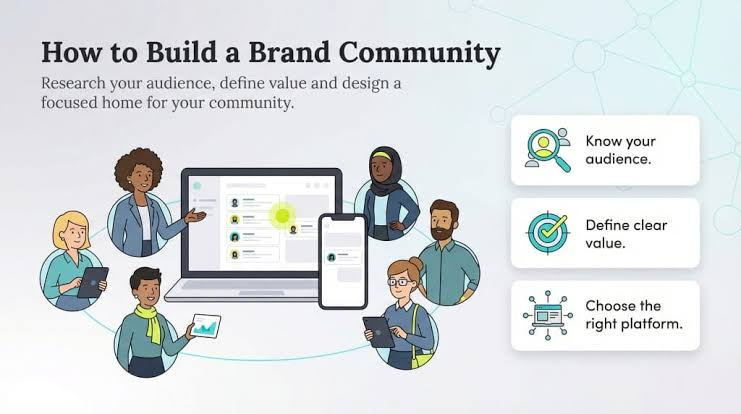
Understand Your Target Audience
The first step in building an active community is understanding the people you want to attract. Businesses should identify their audience’s interests, preferences, challenges, and online habits.
For example, a fashion business may attract people interested in styling inspiration, clothing trends, and outfit combinations. A technology company may connect with professionals who want product information, technical advice, and industry updates.
Understanding these interests helps businesses choose suitable platforms and develop content that encourages participation. Instead of trying to attract everyone, focus on people who are genuinely interested in your brand and its industry.
Choose the Right Social Media Platforms
Every social media platform serves a different purpose, so businesses should select channels according to their audience and communication goals.
Facebook groups are useful for discussions, community announcements, and customer interaction. Instagram works well for visual storytelling, product showcases, and interactive stories. LinkedIn is suitable for professional communities, industry discussions, and business networking.
WhatsApp communities can support direct communication, customer updates, and smaller groups with shared interests. Discord may be useful for gaming, technology, and other interest-based communities where members want regular conversations.
Businesses do not need to maintain an active community on every platform. It is better to manage a few suitable channels consistently than to create multiple inactive accounts.
Create Valuable and Relevant Content
Content gives people a reason to visit your community and participate in discussions. However, businesses should avoid making every post about product promotions or sales offers.
Instead, share information that helps, entertains, or inspires your audience. Educational guides, industry updates, practical tips, customer stories, short videos, and discussion topics can make your community more interesting.
For example, a skincare brand can share basic skincare routines and answer common product questions. A clothing business can publish seasonal styling inspiration and invite customers to share their favourite looks.
When content addresses real audience interests, people are more likely to comment, share their opinions, and return for future updates.
Encourage Conversations and Audience Participation
An engaged community needs two-way communication. Simply publishing posts and waiting for reactions will not create meaningful relationships.
Ask open-ended questions that encourage members to share their experiences. Invite them to discuss their favourite products, suggest improvements, or provide opinions about industry topics.
Polls, quizzes, question sessions, and interactive stories can also encourage participation. Businesses should respond to comments and acknowledge useful contributions rather than leaving conversations unanswered.
The goal is to make members feel that they are part of an active community instead of an audience that only receives promotional messages.
User-generated content is an effective way to bring customers into your brand story. It includes customer photographs, videos, reviews, testimonials, product experiences, and social media mentions.
When customers share their experiences, other members can see how real people interact with the brand. This creates social proof and makes the community more relatable.
Businesses can encourage customers to share their photographs, participate in branded challenges, or submit product reviews. Always request permission before reposting someone’s content and give appropriate credit.
Recognizing customer contributions also makes members feel appreciated and motivates others to participate.
Maintain Consistent Communication
Consistency is important for keeping an online community active. If a business publishes content regularly but disappears from conversations for long periods, members may gradually lose interest.
Developing a practical content schedule helps businesses maintain regular communication. Plan educational posts, interactive discussions, customer stories, announcements, and community updates according to audience preferences.
Brands should also monitor comments and messages regularly so members receive timely responses. For more ideas about maintaining a regular social presence, businesses can explore this guide on social media consistency.
Consistency does not mean publishing content every few hours. It means maintaining a reliable communication schedule and giving the audience a reason to stay connected.
Provide Exclusive Experiences to Community Members
People are more interested in joining communities when they receive something valuable in return. Businesses can offer exclusive experiences that make members feel appreciated.
These experiences may include early product announcements, special discounts, members-only discussions, live sessions, useful resources, or access to new product updates.
For example, an online clothing store can invite community members to preview an upcoming collection before its public launch. A software company can organize a live session where customers ask questions about new features.
These activities create excitement and give members additional reasons to participate.
Best Practices for Managing an Online Brand Community
Managing a community requires more than creating a group and publishing occasional updates. Businesses need clear communication guidelines to maintain a positive environment.
Start by establishing simple rules about respectful discussions, spam, promotional messages, and inappropriate behaviour. Members should understand what type of communication is acceptable and how moderators handle problems.
Businesses should also respond to criticism professionally. Negative comments should not automatically be deleted simply because they are uncomfortable. When customers raise genuine concerns, acknowledge the issue and provide helpful information.
Another important practice is recognizing active members. Thank people who contribute useful suggestions, answer questions, and share valuable experiences. Their participation can encourage other members to become more involved.
Most importantly, businesses should make community management an ongoing responsibility. Regular moderation, meaningful conversations, and useful content help create a welcoming environment.
How to Measure the Success of Your Online Community
Building a community takes time, so businesses need to evaluate its performance through meaningful indicators. The total number of followers or group members does not always reflect how active or valuable a community is.
Engagement rate is one useful indicator because it shows how frequently people interact with content through comments, reactions, and shares. Active members can also indicate whether the community is developing regular participation.
Businesses should monitor returning visitors, discussion quality, customer questions, user-generated content, and audience feedback. These indicators provide a clearer understanding of how people interact with the brand.
Website visits, referral traffic, inquiries, and conversions can also help connect community activity with business results.
For example, if a product discussion generates relevant website visits and customer inquiries, it may show that the community is helping people move closer to a purchasing decision.
Common Mistakes to Avoid When Building an Online Community
One common mistake is focusing only on increasing followers. A large audience does not automatically create an active community. Businesses should prioritize meaningful conversations and relevant participation.
Another mistake is using every discussion as a sales opportunity. People join communities to learn, connect, and share experiences, not to receive constant advertisements.
Ignoring customer comments can also damage engagement. When members ask questions and receive no response, they may stop participating. Businesses should make communication a regular part of their community management process.
Some brands also expect immediate results. Building trust and encouraging people to participate requires time and consistent effort. A smaller community with active and interested members can be more valuable than a large group with very little interaction.
The Future of Online Brand Communities
Online communities are becoming an important part of how businesses communicate with their audiences. Customers increasingly expect brands to provide more than promotional content. They want useful information, personal experiences, responsive support, and opportunities to connect with others.
Artificial intelligence can help businesses organize customer questions, analyze engagement patterns, and generate content ideas. However, technology should support communication rather than replace genuine human interaction.
Live sessions, short-form videos, private communities, customer-led discussions, and interactive content are also creating new opportunities for businesses to strengthen audience relationships.
Brands that listen to their communities and adapt to changing customer expectations can build more meaningful connections over time.
Conclusion
Building an engaged online community around your brand requires a clear understanding of your audience, valuable content, consistent communication, and genuine customer interaction. Social media groups, discussion platforms, and online forums give businesses opportunities to connect with people beyond traditional advertising.
By encouraging conversations, sharing customer experiences, recognizing active members, and providing useful information, brands can create communities that support trust and long-term loyalty.
The most successful brand communities are not built around constant promotions. They grow through shared interests, helpful communication, and relationships that make people want to stay connected with the business.
 javiers painting
 william.anderson
 aarush.shikhare