
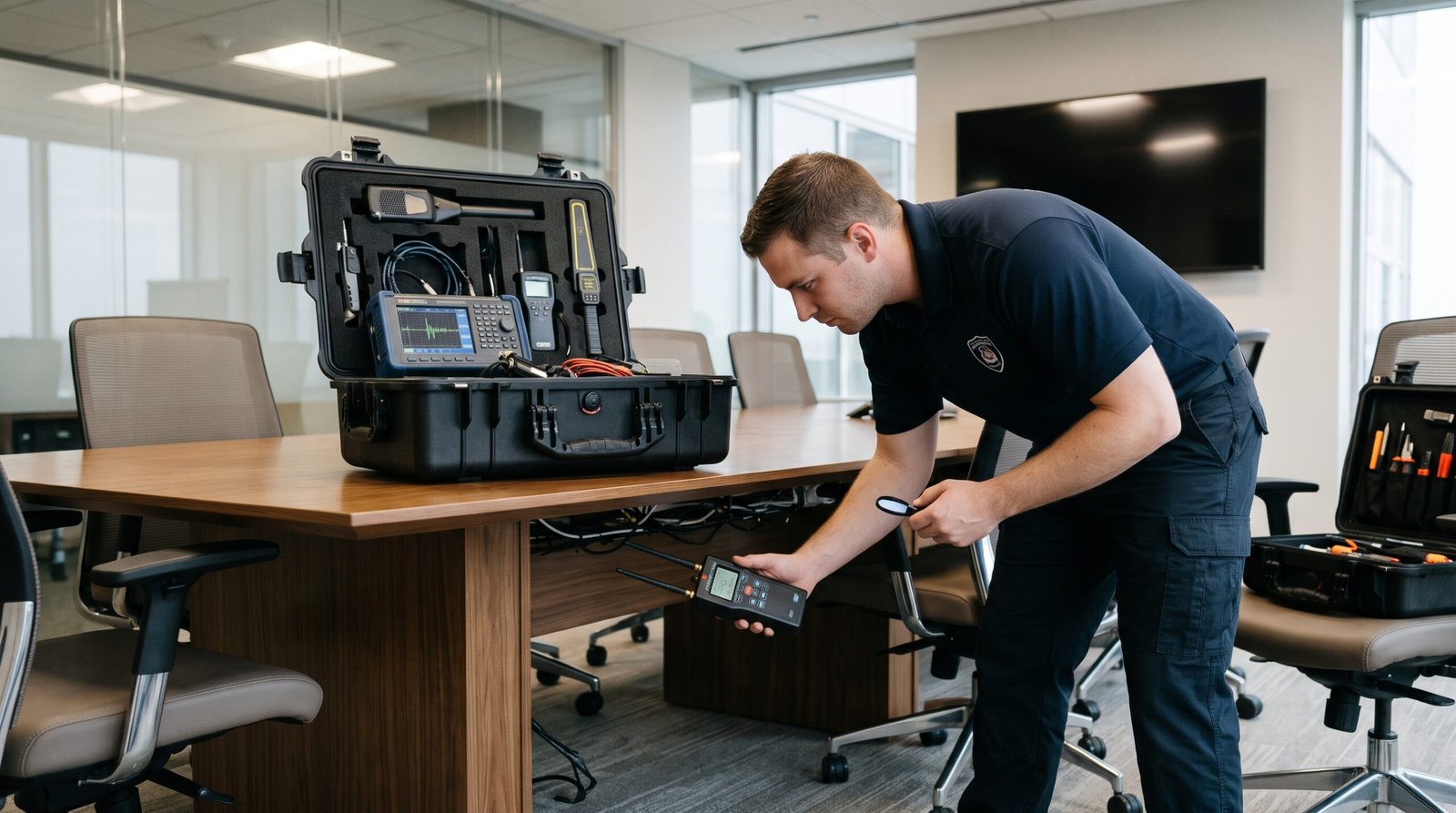
Business privacy is essential for maintaining trust, protecting sensitive information, and securing confidential conversations. Whether you manage a corporate office, a financial institution, or a private organisation, the risk of unauthorised listening devices should not be overlooked. A professional commercial hidden listening device service helps businesses identify potential surveillance threats and maintain a secure working environment. With confidential meetings, financial discussions, and business strategies taking place every day, even a small security weakness can create serious problems.
Modern surveillance technology has become increasingly sophisticated. Some listening devices are designed to operate discreetly, making them difficult to identify through ordinary visual inspections. Businesses should therefore take appropriate precautions to ensure that private discussions remain protected. Professional technical surveillance countermeasures (TSCM) can help organisations assess their premises and identify potential privacy concerns before they develop into larger security issues.
Why Business Privacy Should Be a Priority
Every organisation handles information that should remain confidential. This may include employee records, financial documents, client information, upcoming business strategies, and internal management discussions. If such information reaches unauthorised individuals, the consequences can affect both business operations and reputation.
A lack of proper security measures can expose organisations to unnecessary risks. For example, confidential discussions may be overheard, sensitive information may be shared without permission, and business decisions could be affected by external interference.
Businesses should consider professional security assessments because:
- Confidential meetings require a protected environment.
- Client information must be handled responsibly.
- Financial and commercial discussions should remain private.
- Unauthorised surveillance can create legal and reputational concerns.
- Regular security assessments help identify potential vulnerabilities.
Taking privacy seriously is not simply a precaution. It is an important part of responsible business management.
What Is a Commercial Hidden Listening Device Service?
A commercial hidden listening device service involves professional security inspections designed to identify suspected unauthorised audio surveillance equipment within business premises. These inspections are generally carried out by trained security professionals using specialised detection equipment and established technical procedures.
The purpose is to assess whether a workplace may contain hidden listening devices or other unauthorised monitoring equipment. Depending on the scope of the inspection, specialists may also review areas where confidential conversations regularly take place.
These services can be particularly useful for organisations that handle sensitive commercial information or regularly conduct private meetings.
A professional assessment may cover:
- Corporate offices and executive rooms.
- Boardrooms and conference facilities.
- Private meeting rooms.
- Financial and legal offices.
- Management and administrative areas.
- Other locations where confidential discussions take place.
The inspection process should be conducted professionally, with respect for business operations and the privacy of employees and visitors.
Common Signs That Your Workplace May Have a Privacy Concern
Not every unusual occurrence indicates surveillance. However, businesses should take reasonable steps when something raises legitimate concerns about workplace privacy.
Some situations may justify a professional security assessment.
Unusual Items in Private Meeting Rooms
Unexpected objects or equipment appearing in restricted areas may require further attention. This does not automatically mean that surveillance equipment is present, but unexplained changes should be investigated appropriately.
Confidential Information Appearing Outside the Organisation
If sensitive business discussions repeatedly become known to people who were not involved, management may need to review its information security practices.
There can be several explanations, including unauthorised access, poor communication controls, or weaknesses in existing security arrangements.
Unexplained Security Concerns
Businesses may notice unfamiliar equipment, unauthorised access to restricted rooms, or other inconsistencies in their workplace security arrangements. Such issues should be documented and reviewed rather than treated as proof of hidden surveillance.
Increased Need for Confidential Meetings
Organisations handling acquisitions, legal matters, financial negotiations, or sensitive corporate decisions may require additional privacy assessments to protect their discussions.
How Professional Listening Device Detection Services Work
Identifying potential listening devices requires more than simply checking furniture, walls, or electrical equipment. Professional inspections follow a structured approach that considers the premises, the organisation’s concerns, and the nature of the suspected security risk.
A qualified TSCM specialist may use a combination of technical assessment methods and physical inspection techniques.
1. Initial Security Consultation
The process generally begins with a discussion about the organisation’s concerns. Specialists gather information about the premises, the areas requiring inspection, and any previous security incidents.
This helps establish the scope of the assessment and ensures that the inspection is relevant to the business.
2. Physical Security Inspection
Relevant areas are examined for unusual or unauthorised equipment. Existing workplace devices and installations may also be reviewed to distinguish legitimate equipment from items requiring further investigation.
3. Technical Assessment
Specialised detection equipment may be used to assess potential electronic surveillance concerns. The appropriate methods depend on the building, the equipment involved, and the inspection requirements.
It is important to understand that no single detection method can guarantee the identification of every possible surveillance device.
4. Findings and Professional Recommendations
After the assessment, the service provider should explain the findings clearly. Any suspected equipment or security weaknesses should be documented, and appropriate recommendations should be provided.
Where suspicious equipment is identified, its handling should follow applicable legal requirements and evidence-preservation procedures.
Which Businesses Can Benefit From Professional Listening Device Detection?
Privacy protection is relevant to organisations of different sizes and industries. However, some businesses have a greater need for regular security assessments because of the confidential nature of their work.
Corporate Offices
Corporate organisations regularly discuss internal strategies, financial decisions, partnerships, and future business plans. Protecting these conversations can help reduce the risk of commercial information being disclosed without authorisation.
Law Firms
Legal professionals handle confidential client information, case strategies, and sensitive discussions. Maintaining appropriate workplace privacy is an important part of professional responsibility.
Financial Institutions
Banks, investment firms, and financial organisations manage sensitive financial information. Additional security assessments can support existing confidentiality and information protection policies.
Healthcare Organisations
Healthcare providers handle private patient information and administrative records. Protecting confidential discussions and maintaining appropriate workplace security should remain a priority.
Government and Private Organisations
Organisations dealing with sensitive projects, policy discussions, or confidential negotiations may benefit from professional assessments of their working environments.
Why Professional Experience Matters When Choosing a Service Provider
Selecting a reliable security provider is an important decision. Not all security inspections offer the same level of expertise, equipment, or reporting standards.
Businesses should look beyond basic service descriptions and evaluate the provider’s professional background, inspection methods, and approach to confidentiality.
Consider the following factors before making a decision:
- Relevant Experience: Choose specialists with experience in technical surveillance countermeasures and commercial security assessments.
- Professional Equipment: Ask whether suitable detection equipment is used for the required inspection.
- Confidentiality: Ensure that sensitive business information and inspection findings are handled responsibly.
- Clear Reporting: A professional provider should explain the assessment findings and provide practical recommendations.
- Transparent Service Scope: Understand which areas and security concerns are included before arranging an inspection.
- Legal Compliance: Confirm that the inspection and any subsequent handling of suspected equipment comply with applicable laws.
A trustworthy provider should explain what can realistically be identified during an assessment rather than making unrealistic promises about complete protection.
How Regular Security Assessments Support Long-Term Business Protection
Workplace security should not be treated as a one-time responsibility. Businesses change over time, new equipment is introduced, office layouts are modified, and employees or external contractors may gain access to different areas.
These changes can create new security considerations.
A planned commercial hidden listening device service can form part of a broader workplace privacy strategy, particularly for organisations where confidential conversations are a regular part of daily operations.
Regular assessments can help businesses:
- Review the privacy of important meeting spaces.
- Identify potential weaknesses in workplace security.
- Maintain greater awareness of unauthorised monitoring risks.
- Support internal confidentiality policies.
- Address security concerns through professional recommendations.
The frequency of inspections should depend on the organisation’s risk profile, operational requirements, and any relevant security incidents.
Protect Your Business Conversations With the Right Security Approach
Confidentiality is an important part of building and maintaining a successful organisation. Businesses invest significant time and resources in protecting their systems, documents, employees, and customer information. The privacy of face-to-face conversations deserves similar attention.
Professional listening device detection can provide additional reassurance when genuine concerns about unauthorised surveillance exist. Rather than relying on assumptions or attempting to investigate complex security issues without the right expertise, organisations can seek an assessment from qualified professionals.
Combining technical surveillance countermeasures with access controls, employee awareness, and established information security policies creates a more complete approach to workplace privacy.
Final Thought
Protecting confidential business conversations requires awareness, preparation, and the right professional support. Unauthorised listening devices can present a serious privacy concern, particularly for organisations that regularly discuss sensitive commercial matters. A professional commercial hidden listening device service can help businesses assess potential surveillance risks, identify security concerns, and make informed decisions about workplace protection. By investing in appropriate security assessments and maintaining responsible confidentiality practices, organisations can create a more secure environment for their employees, clients, and business operations.
 lili.otis