
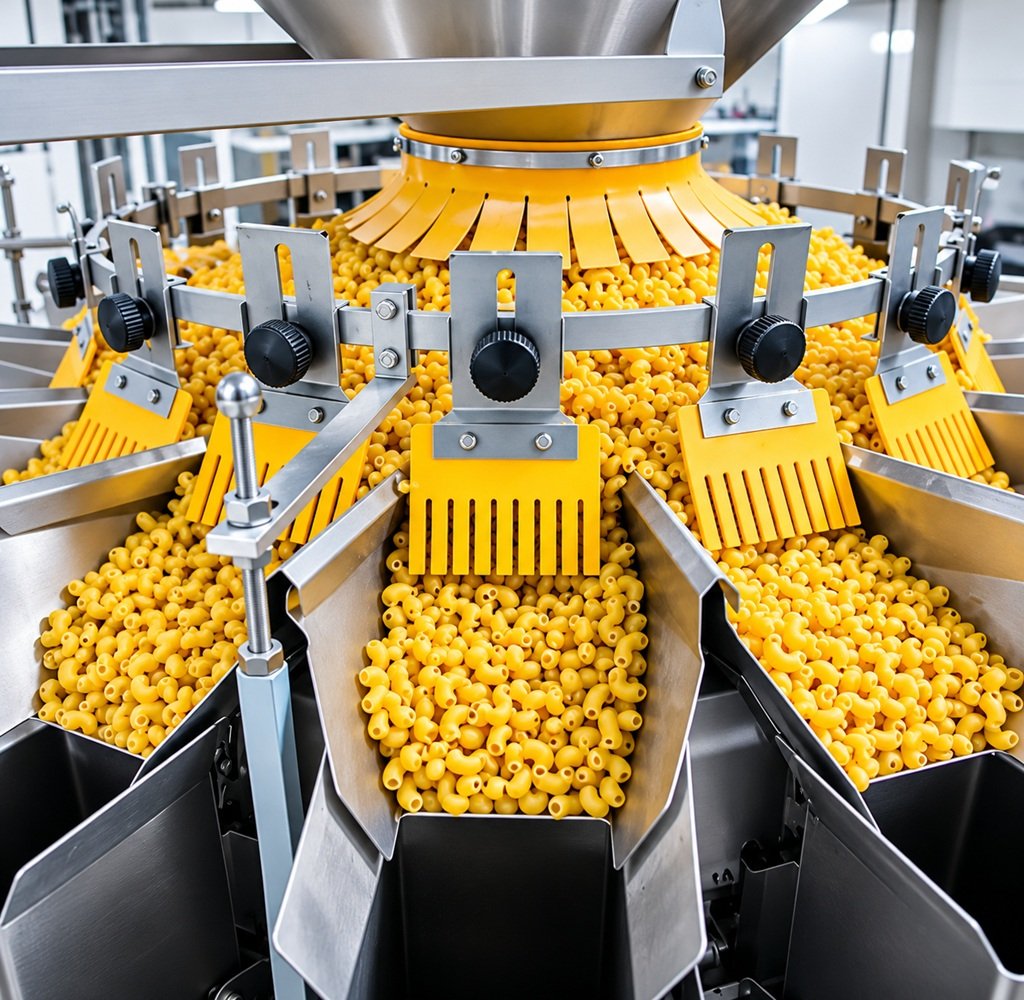
Expanding a pasta manufacturing business requires more than increasing production capacity. Manufacturers must make strategic decisions about machinery, factory infrastructure, automation, product quality, and operating costs. The right equipment investment can help a business respond to market demand, introduce new pasta varieties, and build a sustainable manufacturing operation.
A reliable pasta making machine is at the centre of this investment. Whether a company is establishing its first production facility or upgrading an existing factory, selecting machinery that matches its business objectives is essential.
KP AUTOMATIONS, an Indian pasta machinery manufacturer with experience dating back to 1998, offers production equipment and solutions for manufacturers with different operational requirements.
Planning a Pasta Manufacturing Investment
Before purchasing machinery, business owners should understand their current requirements and future growth plans. Investing in equipment without considering production demand can lead to unnecessary expenses or insufficient capacity.
A practical investment plan should consider:
- Market demand: Estimate the quantity and varieties of pasta customers are likely to purchase.
- Production targets: Determine the required output per hour and expected operating schedule.
- Factory infrastructure: Assess available space, utilities, material movement, and installation requirements.
- Product portfolio: Decide whether to manufacture short-cut pasta, long-cut pasta, or multiple varieties.
- Expansion potential: Consider whether the equipment configuration can support future business growth.
These factors help manufacturers identify machinery that fits both their immediate production requirements and longer-term commercial objectives.
Understanding Industrial Pasta Making Machine Requirements
An industrial pasta making machine is generally selected for manufacturing facilities that require higher production capacity, coordinated operations, and consistent output.
Industrial production involves several connected activities, including raw material preparation, dough mixing, extrusion, shaping, cutting, and drying. Each stage must be planned according to the product type and production target.
When evaluating industrial machinery, manufacturers should examine:
Capacity and operating requirements: The machine should be suitable for the intended production volume and operating schedule.
Process control: Appropriate control systems can help operators manage production settings and maintain repeatable operating conditions.
Product flexibility: Die configurations and suitable equipment arrangements can support the production of different pasta shapes.
Maintenance access: Equipment should be designed and installed with practical maintenance and cleaning requirements in mind.
Line integration: The machinery should work effectively with upstream and downstream equipment.
A well-planned industrial installation can provide a stronger foundation for manufacturing growth.
Selecting a Pasta Machine That Matches Business Goals
Every pasta manufacturer has different priorities. A small production facility may focus on manageable investment and flexibility, while a large manufacturer may prioritize continuous operation and higher output.
When comparing a pasta machine, buyers should look beyond the initial purchase price. The total investment includes installation, utilities, operator training, maintenance, spare parts, and ongoing operating expenses.
A useful evaluation process includes:
- Comparing machinery capacity with realistic sales projections.
- Reviewing the range of pasta products the equipment can manufacture.
- Understanding the level of automation included.
- Checking compatibility with the proposed drying and packing systems.
- Evaluating the manufacturer’s technical experience and service support.
The most suitable machine is not necessarily the one with the highest capacity. It is the one that supports the manufacturer’s actual production strategy.
When a Fully Automatic Pasta Making Machine Makes Sense
As a manufacturing business grows, manual coordination between production stages can become increasingly challenging. A fully automatic pasta making machine can help streamline operations by coordinating multiple processes through an integrated equipment arrangement.
Depending on its configuration, an automated production system may include dough preparation, extrusion, shaping, cutting, and connections to drying equipment.
Automation can offer several operational benefits:
- Reduced dependence on repetitive manual activities.
- Better coordination between production stages.
- More consistent control of operating parameters.
- Improved production planning.
- Greater suitability for organized, high-volume manufacturing.
However, automation should be selected according to the company’s actual needs. Manufacturers should understand which processes are automated, what operator involvement remains necessary, and how the system will be maintained.
Evaluating an Automatic Pasta Making Machine Before Purchase
An automatic pasta making machine can be an important investment for manufacturers seeking improved process control and production efficiency.
Before finalizing a purchase, buyers should ask machinery suppliers detailed technical questions. These discussions can prevent misunderstandings during installation and commissioning.
Important questions include:
- What production capacity is suitable for the planned product range?
- Which pasta shapes can be manufactured with the proposed dies?
- What raw materials are supported?
- Which production stages are included in the machine configuration?
- What electrical and utility requirements are necessary?
- What training, documentation, and technical support are provided?
- Which spare parts should be maintained at the factory?
A supplier that understands the complete manufacturing process can help buyers make more informed equipment decisions.
Why Drying Technology Should Be Included in Investment Planning
Purchasing extrusion equipment without planning the drying stage can create production bottlenecks. Drying is essential to achieving the required moisture level, texture, and storage stability of finished pasta.
An automatic pasta dryer can support controlled drying operations through managed temperature, humidity, and airflow conditions. The appropriate system depends on pasta shape, production capacity, and the manufacturing process.
For example, long-cut pasta and short-cut pasta may require different handling arrangements. Manufacturers should therefore evaluate drying equipment alongside the extrusion line rather than selecting it as an unrelated purchase.
Choosing the Right Pasta Dryer for Operating Efficiency
A suitable pasta dryer contributes to finished-product consistency and overall factory performance. Manufacturers should assess the drying process in relation to the complete production schedule.
Important considerations include:
Drying capacity: The dryer should be compatible with the output of the extrusion section.
Air circulation: Uniform airflow helps support consistent drying conditions throughout the product.
Temperature and humidity management: Appropriate control is important for managing moisture reduction.
Energy requirements: Operating efficiency should be considered when estimating long-term production costs.
Maintenance and cleaning: Practical access to equipment components helps support routine factory operations.
A properly matched drying system can help prevent unnecessary waiting between production stages and improve coordination across the facility.
KP AUTOMATIONS: Machinery Solutions for Growing Pasta Businesses
KP AUTOMATIONS has been involved in pasta machinery manufacturing since 1998. Its equipment portfolio includes short-cut and long-cut pasta production lines, pasta-making machinery, drying systems, packaging equipment, and related machinery solutions.
For businesses planning a new facility or expanding an existing one, equipment selection can be approached according to production capacity, product requirements, automation objectives, and factory layout.
A machinery investment should also include discussions about installation planning, operator training, maintenance, and technical support. These considerations are important for establishing a dependable manufacturing operation.
Manufacturers can explore available equipment and production solutions through the KP AUTOMATIONS website.
Conclusion
Investing in pasta manufacturing equipment is a long-term business decision. The right pasta making machine should match production targets, product variety, factory infrastructure, and future expansion plans.
An industrial pasta making machine can support larger manufacturing requirements, while a fully automatic pasta making machine may improve process coordination. Equally important are the automatic pasta dryer and pasta dryer systems that help maintain appropriate drying conditions.
By evaluating the entire production process before purchasing equipment, manufacturers can make more informed investment decisions and build a facility prepared for sustainable growth.
KP AUTOMATIONS supports pasta manufacturers with machinery solutions developed through years of experience in the industry.
 ju agri.sciences pvt ltd
 BM Lightsabers
 johnes.neil