
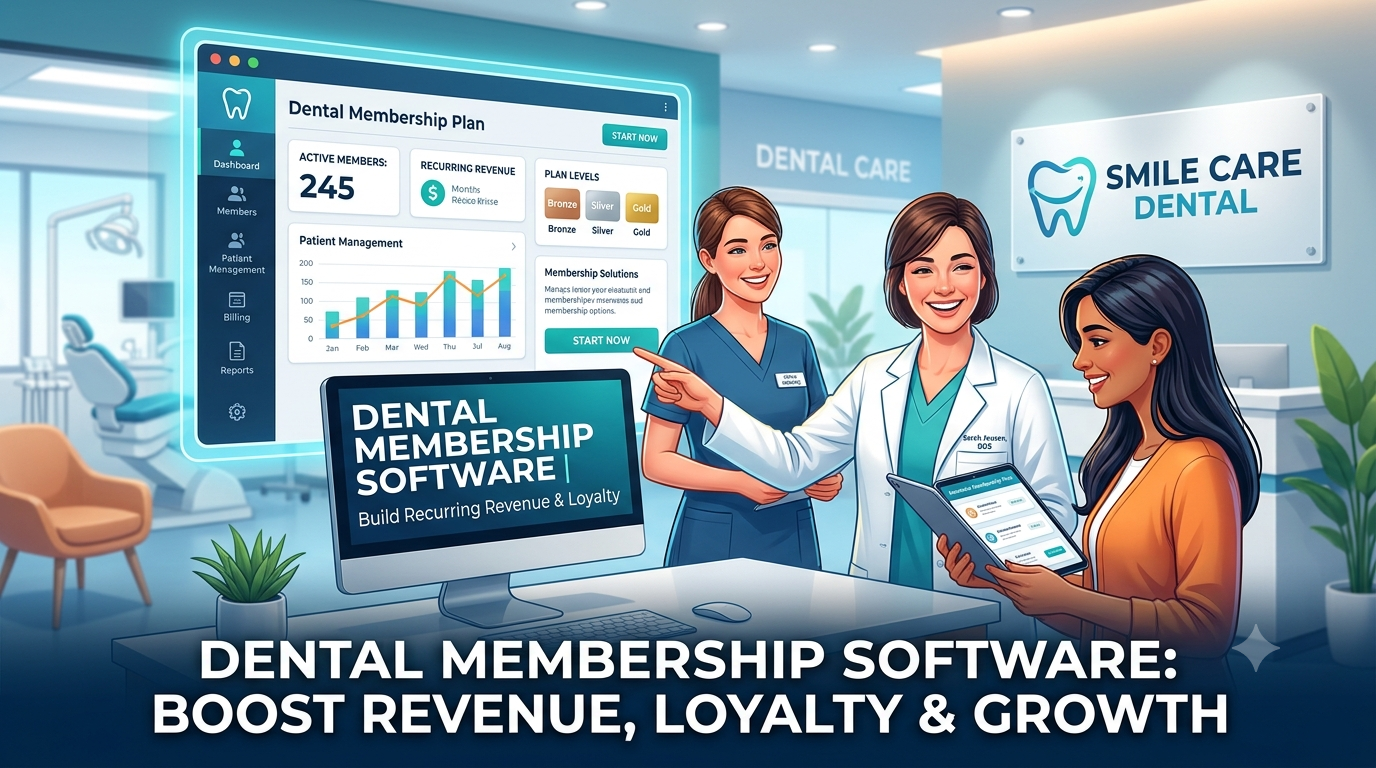
Patient loyalty is an important part of building a stable dental practice. While attracting new patients helps a clinic grow, maintaining relationships with existing patients creates opportunities for consistent appointments, ongoing preventive care, and long-term trust. However, patients may delay visits when dental expenses feel unpredictable or when they do not understand the financial options available to them.
Using dental membership software, practices can create structured in-house membership programs that give patients clear pricing, convenient payment options, and an ongoing reason to stay connected with the same dental team. These programs can also help practices organize recurring payments, monitor membership activity, and improve the overall patient experience.
Why Patient Loyalty Matters for Dental Practices
A patient who regularly visits the same practice is more familiar with its services, staff, and treatment approach. This ongoing relationship can make communication easier and help dental professionals understand a patient’s changing oral health needs over time.
When patients stop attending appointments, practices may lose opportunities to provide routine care and discuss recommended treatments. Rebuilding that relationship later can require additional communication and effort.
Patient loyalty is influenced by several factors:
- Convenient appointment scheduling and communication.
- Transparent explanations of treatment costs.
- Consistent service and patient support.
- Clear information about available payment options.
- A positive experience before, during, and after appointments.
A membership program can support these efforts by creating a structured financial relationship between the patient and the practice.
Give Patients a Clear Alternative to Traditional Dental Insurance
Not every patient has dental insurance, and some may prefer a direct arrangement with their dental provider. An in-house membership program offers another way to organize routine dental care and eligible treatment discounts.
Under this arrangement, patients pay the practice a monthly or annual membership fee. In return, they receive the preventive services specified in their plan and may qualify for discounts on additional treatments according to the membership terms.
Unlike traditional insurance, an in-house membership program is a direct agreement between the dental practice and the patient. It does not involve submitting insurance claims for membership benefits. Practices should clearly explain the distinction and review applicable state requirements before launching a plan.
Make Membership Benefits Easy to Understand
Patients are more likely to consider a membership when they can quickly understand what they are paying for. Complicated benefit structures can create confusion and make it harder for staff to explain the program.
Keep the membership offer straightforward by clearly describing:
- Included preventive services.
- How frequently each included service can be used.
- Discounts available on eligible additional procedures.
- Monthly or annual payment amounts.
- Membership duration, renewal, and cancellation terms.
- Any exclusions or limitations that apply.
For example, a practice might offer separate adult and child plans, each with its own included services and pricing. A periodontal maintenance option could be designed for patients who need a different preventive care schedule.
Clear membership information helps patients compare options and decide whether a plan matches their needs.
Use Family Plans to Build Long-Term Patient Relationships
Dental care decisions often involve an entire household. Parents may coordinate appointments for children while managing their own dental needs. A family membership option can make it easier to organize these relationships through one convenient account.
Instead of requiring every family member to manage a completely separate administrative process, a practice can offer a household arrangement with individual membership details.
Dentaloo supports family accounts that allow one account holder to manage multiple members. Each person can have an individual subscription and billing date, while practices can configure automatic family discounts. Mixed adult and child membership arrangements can also be managed within the same household.
This flexibility can make membership administration more convenient while helping practices present their services to families in a consistent way.
Remove Payment Friction With Recurring Billing
Payment convenience can influence whether patients remain comfortable with a membership arrangement. If every payment requires a phone call, manual transaction, or repeated office visit, the process may become inconvenient over time.
Recurring billing provides a more organized approach. Patients select an available payment schedule, and the system processes payments according to the membership terms.
Dentaloo supports monthly and annual recurring billing, automatic retries for failed payments, and payment-related email and SMS notifications. This helps practices reduce repetitive payment follow-ups and gives members clearer information when an account needs attention.
Practices should establish transparent policies for failed payments, renewals, cancellations, and refunds. Patients should know what happens when a payment cannot be processed and how they can update their payment details.
Improve the Patient Experience With Online Self-Service
Modern patients often prefer completing simple account tasks online instead of calling the office. A membership program should make it easy to access important information without adding unnecessary work for the front desk.
A self-service portal can allow members to:
- View their membership benefits and plan information.
- Check payment history and download invoices.
- Update saved payment methods.
- Enroll in available membership options.
- Add and manage family members.
Dentaloo provides a patient portal with online enrollment and passwordless access through a one-time login code. Members can manage basic account activities without needing staff assistance for every request.
Giving patients more control over their membership can make the program easier to use and help reduce routine administrative interruptions.
Keep Your Practice Connected With Members Through Communication
Membership retention does not happen automatically after enrollment. Patients should receive relevant information throughout their membership, including payment confirmations, renewal reminders, and updates about their account.
A consistent communication process can include:
- Enrollment confirmation: Welcome new members and explain how to access their account.
- Membership reminders: Keep patients informed about upcoming renewals.
- Payment notifications: Confirm successful transactions and identify payment issues.
- Benefit education: Remind patients what their plan includes and how to use their benefits.
- Practice updates: Share relevant announcements and information about available services.
Dentaloo includes automated email and SMS notifications with customizable practice branding. Its white-label features also support branded enrollment pages, patient portals, and email communications, helping create a consistent experience across patient touchpoints.
Help the Front Desk Introduce Membership Plans
The front desk plays an important role in explaining membership options. Patients may have questions about pricing, included services, payment schedules, or how a plan compares with their current arrangement.
Staff members should have simple materials and clear explanations ready so they can answer common questions without making the conversation feel like a sales pitch.
Useful ways to introduce a membership program include:
- Displaying a membership information sheet at reception.
- Adding a dedicated membership page to the practice website.
- Providing a simple comparison of available plans.
- Including membership information in appropriate new-patient communications.
- Sharing educational social media posts about the program.
Dentaloo offers an AI Designer for creating branded membership materials and social posting tools for Facebook and Instagram. These features can help practices prepare consistent promotional content for patients.
Measure Retention Instead of Looking Only at Enrollment
A growing membership count is useful, but it does not automatically indicate that a program is performing well. Practices should also review how long members stay enrolled, whether payments are successful, and which plans generate consistent interest.
Consider tracking these indicators:
- Active members: The number of patients currently enrolled.
- New memberships: The number of new enrollments over a selected period.
- Renewal rate: The percentage of memberships continuing after their renewal date.
- Cancellation rate: The percentage of memberships ending during a specific period.
- Recurring revenue: The income generated from active subscriptions.
- Failed payments: The number of unsuccessful transactions and how many are recovered.
Dentaloo’s dashboard provides visibility into active members, recurring revenue, new signups, renewals, and past-due accounts. These details can help practice owners identify patterns and determine where changes to communication, pricing, or plan structure may be useful.
Choose Software That Supports Your Existing Practice Workflow
Introducing a membership program should not create unnecessary disruption to daily operations. Dental practices already use systems for scheduling, patient records, and clinical workflows. Membership administration needs to fit alongside those responsibilities.
Before choosing a platform, consider its ability to manage subscriptions, recurring payments, family accounts, patient access, and reporting. Also review how membership information will be recorded and communicated to the clinical team.
Dentaloo is designed to work alongside practice management systems such as Dentrix, Dentrix Ascend, Open Dental, Eaglesoft, and Denticon. It operates as a separate membership platform, with options such as CSV imports and manual ledger entries for managing information alongside existing workflows.
Security should also be part of the evaluation. Review the platform’s data protection practices, payment handling, access controls, and available Business Associate Agreement documentation before using it for patient information.
Turn Membership Management Into a Long-Term Growth Strategy
Patient loyalty develops through consistent experiences, clear communication, and convenient ways to manage dental care. An in-house membership program can support these goals by giving patients a transparent payment arrangement and a direct connection to their dental practice.
With automated billing, family account management, patient self-service, branded communication, and membership reporting, Dentaloo helps practices organize the operational side of their programs. Explore how dental membership software can help your practice strengthen patient relationships, simplify membership administration, and build a more consistent in-house dental membership experience.
 steve.smith-6235
 ny american.jacket
 kp.automations