
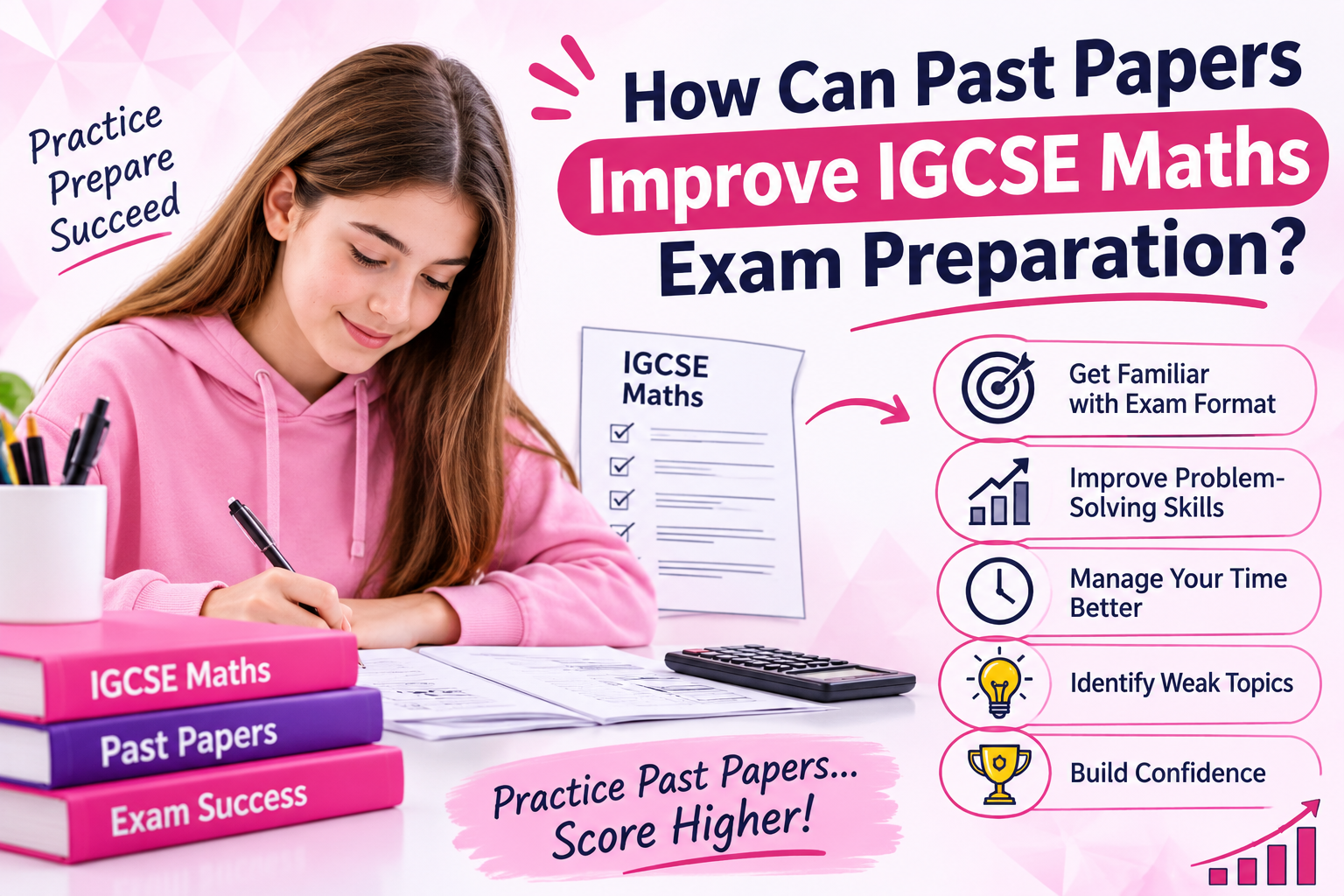
Preparing for IGCSE Maths exams requires regular practice, a clear understanding of mathematical concepts and good exam techniques. Using past papers is one of the most effective ways to prepare for important examinations. Students can understand the exam format, practise different types of questions and identify areas that need improvement. With support from online igcse maths tutors, learners can use past papers more effectively and develop the skills needed to approach their exams with confidence. For students in the UAE, including those studying in Dubai, consistent practice can make a real difference to their preparation.
1. Understand the IGCSE Maths Exam Format
One of the biggest benefits of using past papers is that students become familiar with the exam structure. IGCSE Maths exams include different question types, covering topics such as algebra, geometry, statistics, probability and number.
By completing previous exam papers, students can understand how questions are presented and how marks are awarded. They also become familiar with the wording used in examination questions.
This familiarity helps reduce uncertainty during the actual examination. Instead of spending valuable time understanding the question format, students can focus on applying their mathematical knowledge.
2. Identify Strengths and Weak Topics
Every student has areas of mathematics they understand well and topics that require more attention. Past papers help learners identify these areas through practical assessment. For example, a student may perform well in basic number operations but struggle with algebraic expressions or trigonometry. Reviewing their answers makes it easier to recognise these weaknesses.
Students should keep a record of questions they find difficult. They can then revisit those topics, review the relevant methods and practise similar exercises. This approach makes revision more organised. It also prevents students from spending too much time on topics they already understand.
3. Improve Mathematical Problem-Solving Skills
IGCSE Maths is not only about remembering formulas. Students must also know how to apply mathematical methods to different problems.
Past papers provide opportunities to practise calculations, interpret information and solve questions that require several steps.
For instance, a geometry question may require students to use more than one formula to reach the correct answer. Regular practice helps them understand how different mathematical concepts work together.
Students should avoid looking at the answer immediately when they face a difficult question. Instead, they should try different methods and review the solution afterwards.
With guidance from experienced online math tutors in Dubai, learners can understand alternative approaches and improve their problem-solving techniques.
4. Develop Better Time Management
Managing time during an IGCSE Maths examination is important. Students may understand the questions but still lose marks if they spend too long on one section. Past papers help learners practise working within the actual examination time limit. They can learn how to divide their time between different questions and avoid getting stuck on challenging problems.
A useful approach is to complete a paper under timed conditions. Students should follow the examination instructions and avoid unnecessary breaks during the practice session.
After completing the paper, they can review how much time they spent on each section. Over time, this practice helps students work more efficiently and make better decisions about which questions to attempt first.
5. Learn from Previous Mistakes
Making mistakes is a normal part of learning mathematics. However, repeating the same mistakes can affect examination performance. Past papers allow students to review incorrect answers and understand where they went wrong. Some common mistakes include incorrect calculations, missing steps, using the wrong formula and misunderstanding question requirements. Students should not simply check their final marks. They should carefully review every incorrect answer and understand the correct method.
Keeping a mistake notebook can also be useful. Students can write down difficult questions, important formulas and common calculation errors. Reviewing these notes regularly helps them avoid similar mistakes in future examinations.
6. Improve Confidence Before the Examination
Exam preparation can sometimes feel challenging, particularly when students are unsure about certain mathematical topics. Regular past paper practice can make examinations feel more familiar. Students become comfortable with different question styles and gain a clearer understanding of what to expect.
Completing practice papers successfully can also help learners recognise their progress. However, students should remember that confidence comes from understanding concepts and learning from mistakes rather than simply completing a large number of papers. A balanced revision routine that includes topic-based practice, past papers and regular feedback can help students feel better prepared.
7. Understand Marking Schemes and Examiner Expectations
Mark schemes are another valuable resource for igcse Maths preparation. They explain how marks are awarded for different answers and mathematical steps. Students should review mark schemes after attempting a past paper. This helps them understand why a particular answer receives marks and how working should be presented. For example, some questions award method marks even when the final answer is incorrect. Showing clear working can therefore be important.
Students should also pay attention to mathematical notation, units and rounding instructions. Understanding marking schemes helps learners develop better answering techniques and avoid losing marks unnecessarily.
8. Create a Consistent Past Paper Revision Plan
Using past papers without a clear revision plan may not produce the best results. Students should follow a structured routine that gives enough attention to every topic.
A practical weekly plan could include:
- Monday: Revise algebra and practise topic-based questions.
- Tuesday: Work on geometry and measurement.
- Wednesday: Review statistics and probability.
- Thursday: Practise number and ratio questions.
- Friday: Complete a timed past paper.
- Saturday: Review mistakes and revisit difficult topics.
- Sunday: Revise important formulas and take a short practice test.
Students can adjust this schedule according to their examination dates, school commitments and individual learning needs.
The most important thing is to practise consistently rather than completing several papers at the last minute.
9. Get Additional Support from Online Maths Tutors
Although past papers are useful, some students may need additional guidance to understand difficult questions. Personalised tutoring can help learners overcome these challenges. Mixt Academy provides learning support through experienced tutors who help students understand mathematical concepts, practise examination questions and improve their problem-solving skills.
Students looking for online IGCSE maths tutors can benefit from structured lessons that focus on their individual learning needs. Tutors can explain difficult topics, review past paper answers and help learners understand common examination mistakes. For families in the UAE, online math tutors in Dubai can also provide flexible learning support without the need to travel to a physical tuition centre.
Combining personalised tuition with regular past paper practice can help students build a stronger understanding of IGCSE Maths.
10. Track Your Progress Before Exam Day
Tracking progress is an important part of effective examination preparation. Students should compare their performance across different past papers to understand whether their revision is working.
For example, if a student initially struggles with algebra but achieves better results after practising similar questions, this shows improvement.
It is useful to record:
- Marks achieved in each practice paper.
- Topics that need further revision.
- Questions that take too much time.
- Repeated calculation mistakes.
- Improvements in accuracy and understanding.
Students should focus on steady progress rather than expecting perfect results immediately.
Regular feedback from teachers or tutors can also help learners decide which topics need additional attention before the examination.
Conclusion
Past papers play an important role in effective IGCSE Maths exam preparation. They help students understand the examination format, improve problem-solving skills, manage their time and recognise areas that require further revision.
However, simply completing past papers is not enough. Students should review their answers, understand their mistakes and practise difficult topics regularly. With a consistent revision routine and guidance from experienced tutors, learners can develop stronger mathematical skills and approach their examinations with greater confidence.
At Mixt Academy, students can access personalised learning support to strengthen their understanding of mathematics and prepare for important examinations. Combining regular practice with the right guidance can make IGCSE Maths preparation more organised, focused and effective.
 exotisch.erleben
 matt.grayson