
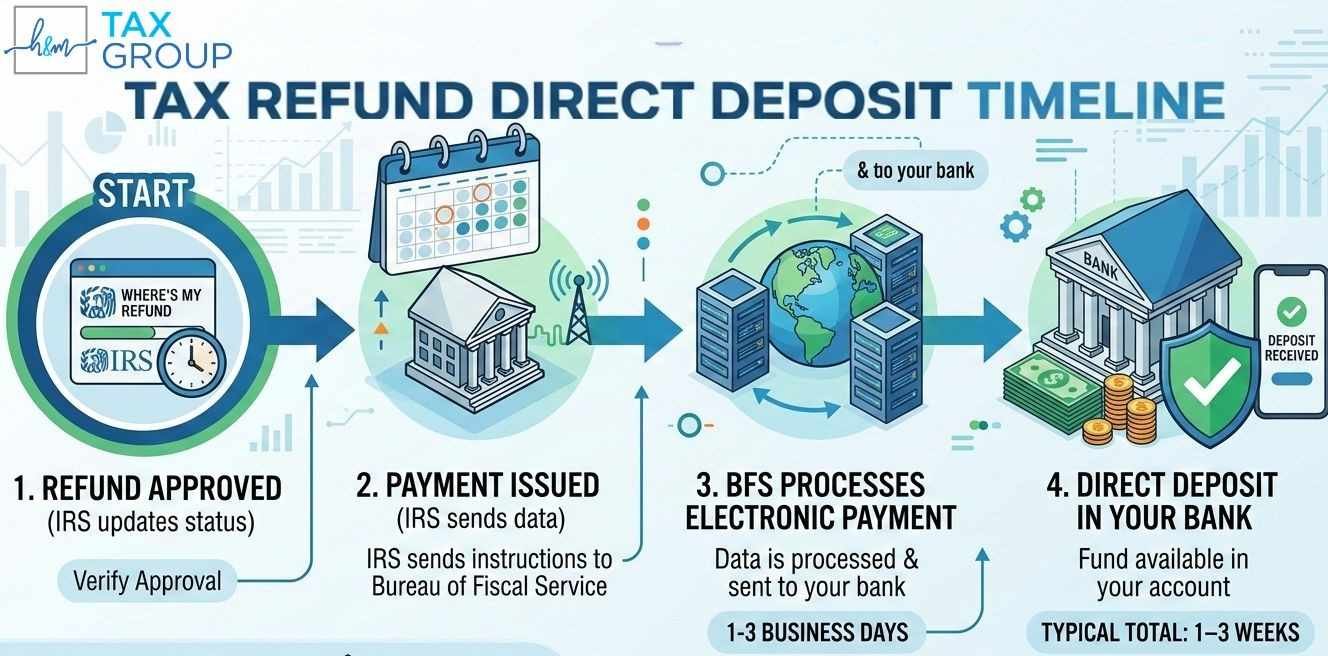
Waiting for a tax refund can be frustrating, especially when you have bills to pay or important expenses coming up. Even after submitting your return successfully, the money may not arrive as quickly as expected. While many taxpayers receive their refunds within a few weeks, certain circumstances can extend the waiting period.
Understanding the tax refund timeline can help you set realistic expectations and identify potential problems before they become bigger concerns. From filing errors and identity verification to payment methods and refundable tax credits, several factors influence how quickly the IRS processes a return and issues a refund.
How You File Your Tax Return Matters
Refunds process slower when returns are submitted using certain methods.
Electronically filed returns are processed faster than paper returns. Less manual data entry and processing of the return allows for early identification of certain errors in the electronically filed returns.
Direct deposit of refunds to a taxpayer’s account is the normal method for the issuance of the taxpayer’s refund. For returns filed electronically, the IRS states most refunds are issued within 21 days if there are no issues that require additional review. It can take considerably longer for the IRS to process paper returns.
As much as possible, cross-check your information before submitting your return.
Errors and Missing Information Can Cause Delays
An error of any kind may cause the IRS to be unable to process your tax return. Common examples are: Typos in Social Security numbers, missing information resulting in incorrect documentation, mismatched income reported The IRS may need to check the reason for the difference for reported income and the income reported to them by your employer.
Other common issues:
- Incorrect personal or dependent information
- Employment or other income not reported
- Math errors
- Missing information or forms
Before filing your return, ensure you review it to spot any mistakes.
Certain Tax Credits Require Additional Review
Some tax returns take longer because federal law requires additional checks before refunds can be issued.
The PATH Act requires the IRS to hold refunds that include the Earned Income Tax Credit (EITC) or Additional Child Tax Credit (ACTC) until at least mid-February. This applies to the entire refund, not just the portion associated with these credits.
The additional time allows the IRS to verify information and reduce fraudulent refund claims.
Taxpayers claiming these credits should therefore avoid assuming that their refund will arrive within the standard 21-day period.
Why Your Tax Refund Direct Deposit May Take Longer
Direct deposit is usually the quickest way to get a refund. But just because you picked direct deposit doesn’t mean you’ll get your refund as soon as the IRS accepts your return. There are a number of things that can affect the arrival of an IRS refund direct deposit. These can include the correctness of the bank information, processing schedules, and various procedures of the financial institution.
For instance, if you accidentally enter the wrong routing number, your financial institution might reject the payment. The IRS would then issue you a paper check and extend your waiting period.
What Is the Tax Refund Deposit Time?
The IRS has its own processes, and the bank has its own processes for issuing refunds. Weekends, holidays, and individual bank policies can also influence when your refund is posted.
It’s important to double-check your bank account to make sure your account information is correct in order to prevent any uncertainty.
How to Check Your IRS Refund Status
Taxpayers do not need to contact the IRS repeatedly to find out whether their refund has been processed.
The IRS provides an online tool called Where’s My Refund? It allows taxpayers to check their refund status using their Social Security number or ITIN, filing status, and exact refund amount.
The tool generally provides three status updates:
- Return Received: The IRS has received your tax return.
- Refund Approved: The IRS has approved your refund.
- Refund Sent: The IRS has issued your refund.
For electronically filed returns, status information is generally available within 24 hours after the IRS receives the return. Updates may take longer for paper filings. Taxpayers dealing with filing complications, IRS correspondence, or questions about refund-related issues may consider H&M Tax Group, based in Dallas, Texas, which provides tax preparation and IRS-related support for individuals and businesses.
Final Thoughts
However, the following criteria can affect the IRS refund timeline: the method used to file your tax form; the correctness of your tax return; the presence of any refundable tax credits; and the procedure involved in the payment processing process.
In order to reduce the risk of unnecessary delays, make sure you provide all the necessary information correctly; keep track of your refund using the Internet; and if you receive a notice from the IRS asking for some additional documents, be prompt in answering it.
 exotisch.erleben
 matt.grayson