
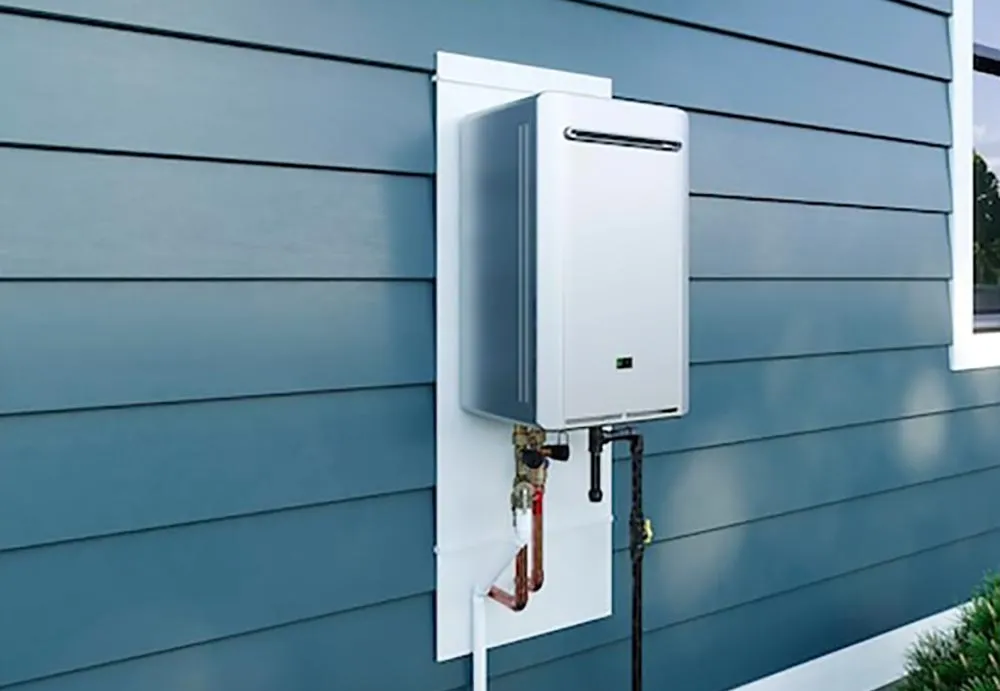
A tankless heater that needs attention every few weeks can become difficult to trust. You may start planning showers around its shutdowns or wondering whether another service visit will solve the problem. At that point, replacement deserves a conversation—but the reason for the trouble still matters.
A new unit should address a clear need. That might be a major equipment fault, repeated failures, or hot-water demand the existing installation cannot meet. Identifying that need helps you judge whether another repair or a replacement offers the more useful result.
Start with What Has Changed
Describe how the heater behaves now and how it worked before. Does it shut down at every fixture, or does one shower have a temperature problem? Has hot-water flow changed? Did the trouble begin after plumbing work or after the household added another bathroom?
Those details help distinguish a developing equipment fault from a change in use. A unit that once met the same household demand but now struggles needs a diagnosis. A healthy unit serving more fixtures than before raises a different sizing question.
Keep any error messages and service findings. Give the technician the exact code, when it appears, and what was happening at the time. Avoid repeatedly clearing a fault just to make the display look normal before the appointment.
Conditions That Make Replacement Worth Considering
Age belongs in the assessment, but it does not establish the condition of the heat exchanger, controls, or connections. The technician should explain what has failed, what can be repaired, and what uncertainty would remain afterward.
Several findings can make replacement a reasonable option.
A major component has failed
A diagnosed heat-exchanger problem can lead to a substantial repair decision. However, water near the heater does not by itself identify the leaking component. A connection, valve, or another part of the installation may be responsible.
Ask for the source to be identified and have any applicable warranty coverage checked. The decision should reflect the actual repair required and the condition of the rest of the equipment.
Separate faults keep returning
A heater with several unrelated failures presents a different picture from one with a single repairable fault. Review the service history to see whether visits have addressed the same unresolved complaint or genuinely different problems.
Repeated visits alone do not prove the unit needs replacement. They do justify asking for a clear explanation of the cause, work already completed, and likely next steps.
The necessary repair cannot be completed reliably
Ask whether the required part is available, compatible, and supported for the model. An older unit may still have a practical repair option, while a particular component can sometimes be difficult to obtain.
Have that finding confirmed rather than assuming every older heater lacks parts. If replacement is recommended because of availability, ask which component is affected and how that limits the repair.
Separate Equipment Trouble from Installation Trouble
Some complaints involve the system around the heater. Restricted water flow, venting problems on gas models, unsuitable energy supply, or fixture mixing issues may affect performance. Replacing the appliance without addressing the cause can leave the household with a similar complaint.
Before approving tankless water heater replacement, ask whether the assessment covered both the unit and its installation. The recommendation should identify what the new heater will solve and any supporting work needed to make that happen.
For example, a heater that cannot meet overlapping shower demand may require a different capacity or system design. A heater that has trouble only at one shower may need investigation of that fixture. These situations should not produce the same recommendation automatically.
Define the Improvement You Want from an Upgrade
Write down the result you expect. You might want fewer shutdowns, enough capacity for two simultaneous showers, or a system that supports a planned bathroom. A specific goal gives the installer something useful to assess.
Also distinguish hot-water capacity from delivery time. A heater may produce enough hot water while the farthest bathroom still takes time to warm up. The water already sitting in the pipe has to be displaced. Replacing the heater alone may not resolve that waiting period.
If faster delivery is a priority, discuss the distribution piping and whether a suitable recirculation arrangement is appropriate. That decision has its own installation and maintenance implications. It should be assessed as part of the design rather than promised as an automatic benefit of a newer unit.
Efficiency claims deserve the same care. Compare the proposed model with the existing equipment and explain how the household uses hot water. Newer equipment should have a practical benefit for the home beyond simply being newer.
Check What the New Unit Requires
A replacement tankless heater may fit roughly the same wall area while having different connection or venting requirements. The installer needs to assess the proposed model and its instructions. Existing components should be reused only after their suitability and condition have been checked.
For gas equipment, the review may include gas input, supply capacity, combustion air, exhaust arrangements, and condensate handling where applicable. Electric tankless equipment needs assessment of the electrical supply and the work required for the selected unit.
Capacity also needs to match colder incoming water. In New Jersey, seasonal conditions can affect how much temperature rise the heater must provide. Ask the installer to check the model’s performance at the conditions used for your sizing assessment.
Finally, retain enough access for future service. Isolation arrangements, connections, clearances, and the space around the unit influence how easily it can be maintained. A replacement should leave the next inspection or descaling visit practical to carry out.
Compare Another Tankless System with a Storage Alternative
A homeowner already using tankless equipment may prefer to keep the same general arrangement. That can be sensible when it suits the home and the replacement can be installed appropriately. Still, it is useful to understand any realistic alternative before committing.
Include hot water tank replacement cost in the discussion if a storage system is being considered. Compare complete installation scopes, including space, connections, removal, and supporting work. The equipment price alone does not describe the whole change.
The operating experience also differs. A storage heater relies on stored hot water and recovery, while a tankless system must meet the required flow and temperature rise during use. Ask how each proposed option would handle your busiest routine.
Choose according to the installation and household needs. A storage alternative may require space or changes the home does not easily accommodate. Another tankless system may need upgrades that should be clearly explained. Both proposals need to address the same expected demand.
Plan the Changeover Around the Household
Once replacement is justified, confirm equipment availability and the installation arrangements. Ask when the old heater will be disconnected, how the work will be coordinated, and what must be completed before the new system can operate.
Do not wait for a planned date if there is an active leak or another urgent fault. Have the immediate condition assessed and follow the contractor’s instructions. Planning ahead is useful, but the equipment’s current condition determines what can safely remain in service.
When reviewing options with Doctor Water Heater, bring the service history and a short description of the performance you expect. Ask for the proposed model, supporting work, and reason for replacement to be written into the scope.
At handover, collect the equipment information, warranty details, maintenance requirements, and completion records. Have the controls explained and confirm whom to contact if the original complaint continues. A worthwhile upgrade should have a defined purpose, an installation suited to the home, and a result you can assess through everyday use.
 tech.softtss
 aliza.beth