
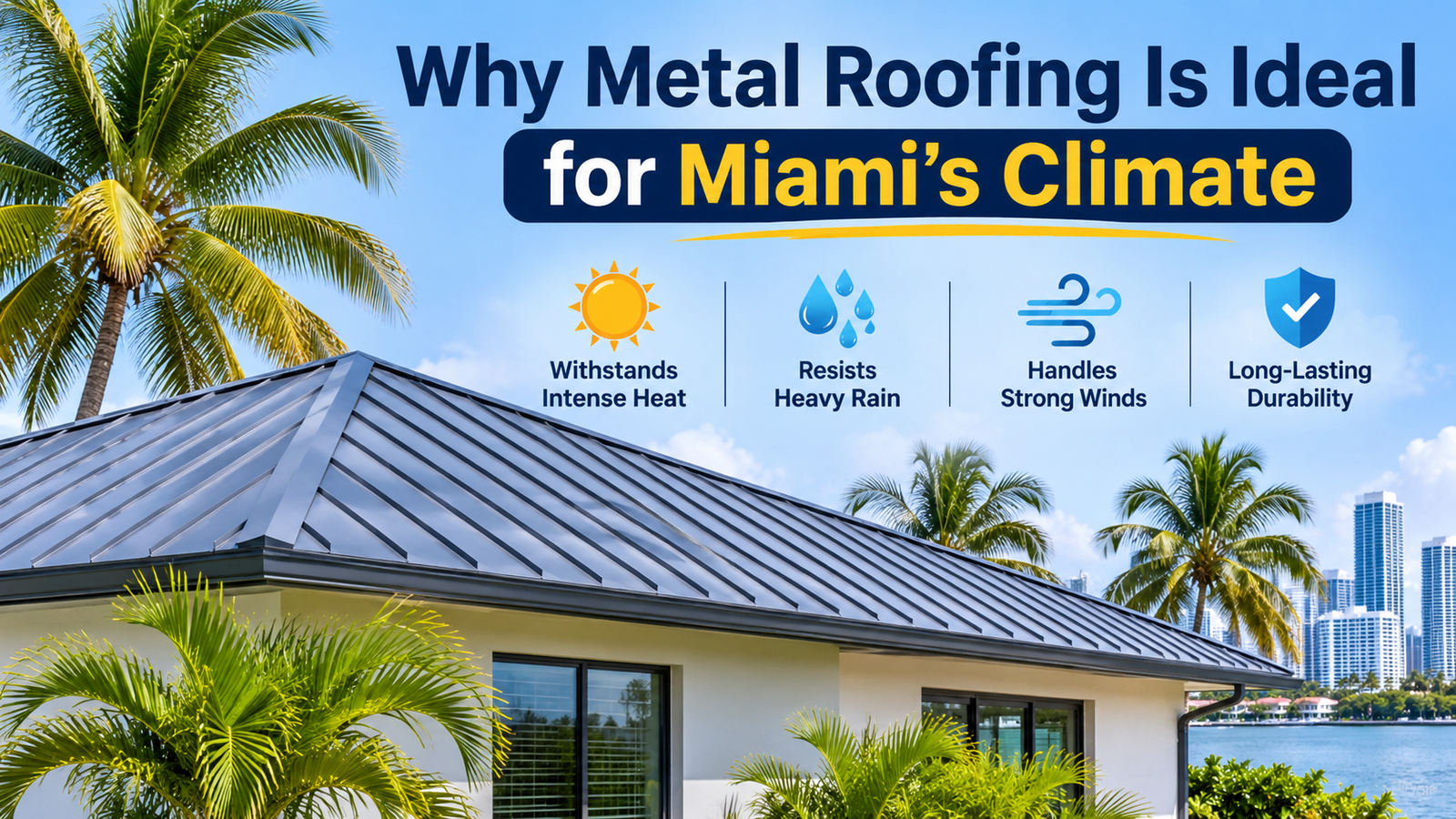
Living in Miami means planning your home around the weather. Between hurricane season, relentless sun, salty coastal air, and humidity that rarely lets up, a roof here works harder than almost anywhere else in the country. That is why more homeowners are turning to metal roofing Miami residents can rely on year after year. Metal offers a rare combination of strength, heat reflection, and durability that suits South Florida conditions better than many traditional materials.
In this guide, we’ll look at what Miami’s climate does to a roof, why metal handles those challenges so well, and what to consider before you invest.
What Miami’s Climate Does to a Roof
Before comparing materials, it helps to understand what your roof is up against.
- Hurricanes and tropical storms: Wind-driven rain, flying debris, and sustained high winds put enormous stress on roofing systems from June through November.
- Intense UV exposure and heat: Miami’s sun bakes roofs for most of the year, which can dry out, crack, and age materials faster.
- Salt air: Homes near Biscayne Bay and the coast face airborne salt that corrodes unprotected metals and wears down finishes.
- High humidity and frequent rain: Constant moisture encourages algae, mildew, and mold, and it can work its way into weak points in the roof.
A roof that performs well in a milder climate may struggle here. Choosing a material designed for these conditions can save you repairs, insurance headaches, and replacement costs down the road.
Hurricane and Wind Resistance
Wind is the biggest threat to Miami roofs, and this is where metal stands out. Metal panels interlock or are fastened in long, continuous sections, which spreads wind loads across the whole roof instead of leaving individual pieces to be pried loose. Properly installed systems, especially standing seam panels with concealed fasteners, can withstand very high wind speeds.
Metal is also lightweight compared to concrete tile, yet strong enough to resist impact from wind-blown debris. Unlike shingles, which can lift, curl, or blow off in storms, metal panels stay locked together.
If you are building or replacing a roof in Miami-Dade County, keep in mind that the area has some of the strictest building requirements in the nation. Roofing products generally need to carry Miami-Dade product approval (often called an NOA) and meet the Florida Building Code’s high-velocity hurricane zone standards. Always confirm that the system you choose, and the crew installing it, meet these requirements.
Heat Reflection and Lower Energy Bills
With air conditioning running most of the year, your roof plays a big role in your energy costs. Metal roofs can be finished with reflective, cool-roof coatings that bounce a large share of the sun’s rays away from your home rather than absorbing them. Dark asphalt shingles, by contrast, soak up heat and radiate it into your attic.
The result is a cooler attic, less strain on your AC system, and potentially lower monthly cooling bills. Light-colored or specially coated metal panels give you the biggest benefit, though many darker finishes now include reflective pigments that improve performance too.
Built to Handle Salt Air and Humidity
Coastal living is wonderful, but it is tough on building materials. Metal roofing designed for Florida is made to handle it:
- Aluminum is naturally rust-resistant and a popular choice for homes close to the water.
- Coated steel (such as Galvalume) offers strong protection when paired with quality finishes and proper installation.
- Protective paint systems help resist fading from UV exposure and wear from salt and moisture.
Metal does not rot, and it resists the algae, moss, and mold growth that often shows up on roofs in humid climates. That means your roof looks better for longer and avoids many of the moisture-related problems that plague other materials. Matching the right metal and finish to your location, especially within a few miles of the coast, is key to getting the full benefit.
Longevity and Low Maintenance
A well-installed metal roof can last 40 to 70 years depending on the material, compared with roughly 15 to 25 years for many asphalt shingle roofs in Florida’s harsh conditions. Because metal is durable and sheds water quickly, it typically needs less maintenance, usually just periodic inspections, clearing debris, and checking sealants and fasteners.
Over the life of your home, that can mean one roof instead of two or three. When you factor in fewer repairs and storm damage, the higher upfront cost often balances out.
How Metal Compares With Shingles and Tile
| Feature | Metal | Asphalt Shingles | Concrete Tile |
|---|---|---|---|
| Wind resistance | Excellent | Moderate | Good, but can crack or become projectiles |
| Heat performance | Excellent with reflective finish | Poor to fair | Good |
| Typical lifespan | 40 to 70 years | 15 to 25 years | 30 to 50 years |
| Weight | Light | Light | Very heavy |
| Maintenance | Low | Moderate | Moderate |
Tile is popular in Miami for its look and can perform well, but it is heavy and can crack under impact. Shingles are affordable up front but tend to age quickly in sun and storms. Metal offers the best balance of performance and longevity for most homeowners.
Cost, Insurance, and Long-Term Value
Metal roofing usually costs more initially than shingles, though the gap narrows when you consider lifespan, energy savings, and reduced maintenance. Some Florida insurers also offer discounts for wind-resistant roofs, so ask your provider what documentation they require, such as wind mitigation inspection results. Rates and discounts vary, so it is worth getting quotes.
A metal roof can also boost curb appeal and resale value. Buyers in hurricane-prone areas increasingly look for roofs that are durable and storm-ready.
Popular Metal Roof Styles for Miami Homes
- Standing seam: Clean, modern lines with concealed fasteners and strong wind performance.
- Metal tile or shingle panels: Mimic the look of clay tile or shingles while delivering metal’s strength.
- Corrugated and ribbed panels: A practical, cost-effective choice for certain home styles and outbuildings.
Your home’s architecture, HOA rules, and budget will help determine the best fit.
Choosing the Right Metal Roof Company
The best materials will not perform if they are installed poorly. When researching a metal roof company in Miami, look for:
- Proper licensing and insurance: Verify a valid Florida roofing contractor license and liability and workers’ compensation coverage.
- Local code experience: Your contractor should be familiar with Miami-Dade product approvals, permitting, and inspections.
- A strong track record: Ask for local references, completed projects, and reviews.
- Clear warranties: Look for both manufacturer warranties on materials and workmanship warranties on installation.
- Detailed written estimates: A trustworthy company will explain materials, timelines, and costs up front.
Experience matters just as much as the product itself. Skilled metal roofing installers understand panel layout, proper fastening, flashing, and sealing details that determine how well your roof performs during a storm. Do not hesitate to ask how many metal roofs they have completed and what systems they typically recommend for South Florida homes.
Final Thoughts
Miami’s weather is beautiful, but it is demanding on every home. Metal roofing answers those demands with outstanding wind resistance, heat reflection, resistance to salt air and moisture, and a lifespan that outlasts most other options. If you are planning a roof replacement or new build, exploring metal roofing Miami homeowners trust is a smart step toward a safer, more efficient home.
Ready to find out whether metal is right for your property? Reach out to a reputable local team for a roof inspection and a free, detailed estimate. A little planning now can protect your home through many hurricane seasons to come.
Frequently Asked Questions
1. Is a metal roof good for hurricanes in Florida?
Yes. Interlocking metal panels resist high winds, especially standing seam. Choose Miami-Dade approved products.
2. Do metal roofs lower cooling costs in Miami?
Often, yes. Reflective coatings reduce heat gain and the load on your AC.
3. How long does a metal roof last in South Florida?
Typically 40 to 70 years, two to three times longer than asphalt shingles.
4. Are metal roofs worth it in Florida?
For most homeowners, yes: longer life, lower maintenance, and better storm resistance.
5. Does a metal roof lower homeowners insurance in Florida?
It can. Some insurers discount wind-resistant roofs, so ask yours.
 thryve.clinic
 feary.provider
 elia.smith