
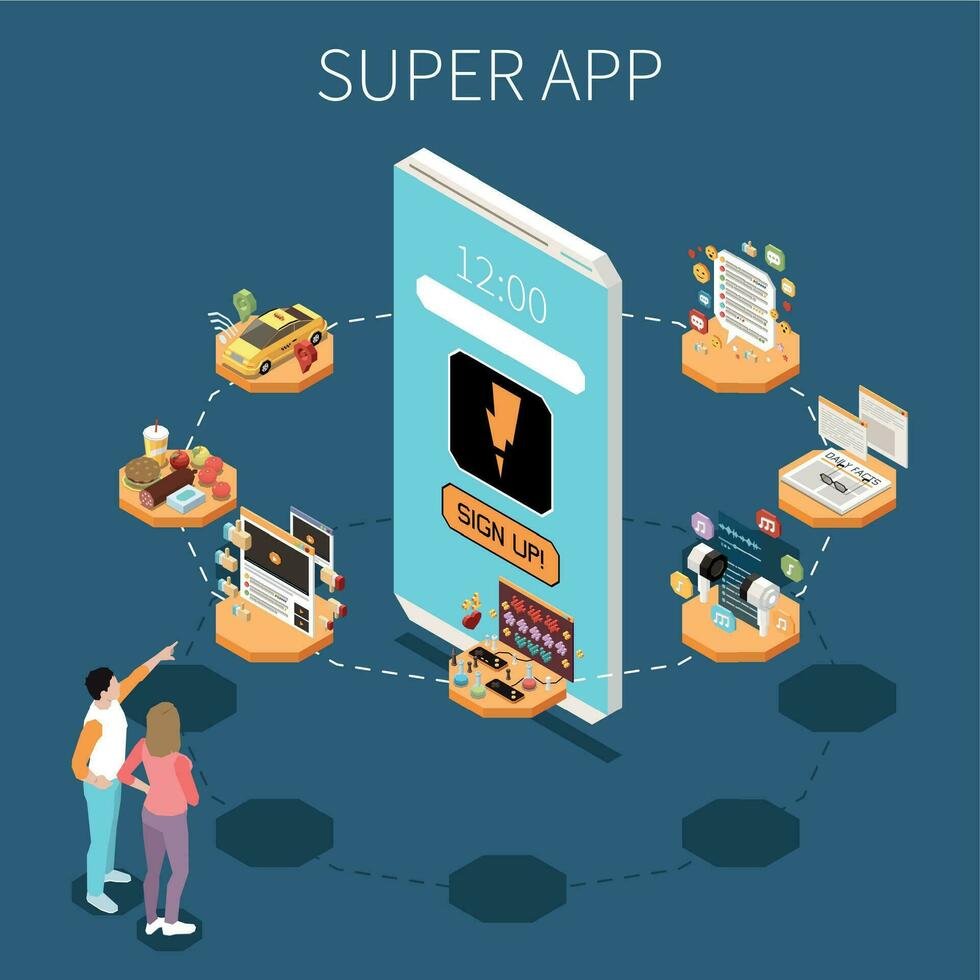
Running several services under one brand sounds like a strong plan. You offer delivery, bookings, payments, and support, and you reach more customers. In practice, many multi-service businesses move slowly. Teams work in silos, customers juggle several apps, and costs climb faster than revenue.
A superapp fixes this by putting every service into one platform, with one login, one wallet, and one customer profile. This article shows how that shift works, where the profit comes from, and how to build one without wasting money.
Why Multi-Service Businesses Slow Down
Most multi-service companies grow by adding one service at a time. A food delivery brand adds grocery delivery. A ride-hailing company adds courier service. A salon chain adds home visits. Each new service often arrives with its own app, its own team, and its own payment system.
This approach creates four common problems.
- Customers face friction: A customer who wants a ride and a meal must install, open, and manage two separate apps. Many give up and use a competitor that offers both in one place.
- Marketing costs rise: You pay to acquire the same customer again for every service. A user who joins for food delivery never sees your other offers, so you spend more to reach them again.
- Data stays scattered: Each app collects its own information. You cannot see that one customer uses three of your services, so you cannot reward them or predict what they want next.
- Operations get heavy: Separate systems mean duplicate support teams, duplicate billing work, and slow decisions. Small errors spread across platforms and take time to fix.
These problems compound. Revenue grows slowly while costs grow quickly, and the business feels busy but not profitable. The best superapp clone development services solve this by merging every service into one app with a shared wallet, one customer profile, and a single admin panel, so businesses cut duplicate costs, understand their customers better, and grow revenue from the same user base.
What a Superapp Does Differently
A superapp is a single mobile platform that hosts many services. Customers open one app and choose what they need: order food, book a ride, pay a bill, schedule a repair, or buy groceries. Everything runs through the same account and the same wallet.
Large Asian platforms made this model famous, but you do not need to be a giant to use it. Regional businesses, local service providers, and startups now build super apps for their own markets. The core idea is simple: keep the customer inside your ecosystem from the first tap to the final payment.
Where the Profit Comes From
A super app improves profit in six clear ways.
1. Lower customer acquisition costs
You pay to win a customer once. After that, every new service you add reaches that customer at almost no extra marketing cost. A push notification or an in-app banner replaces a paid ad campaign. Over time, your cost per customer drops sharply.
2. Higher customer lifetime value
A customer who uses one service might spend a modest amount each month. A customer who uses four services spends far more. Super apps make it easy to move customers from one service to the next, which raises the total value of each account.
3. Smarter cross-selling
When you see everything a customer does, you can make useful offers at the right moment. Someone who books a flight can see hotel deals. Someone who orders groceries can see a discount on a delivery subscription. These offers feel helpful because they match real behavior.
A built-in wallet keeps money inside your ecosystem. Customers load funds, pay for services, and receive cashback in the same place. You reduce transaction fees, speed up checkout, and gain a steady flow of working capital. Many superapps also earn from financial features such as bill payments and small loans.
5. Better data and faster decisions
One platform produces one clear data set. You can see which services grow, which lose money, and which customers are about to leave. Managers stop guessing and start acting on real numbers.
6. Leaner operations
One backend, one support desk, and one billing system replace several. Your team spends less time reconciling reports and more time improving the service. Shared tools also make it cheaper to launch the next service.
A Simple Example
Picture a regional company that runs a taxi service, a parcel courier, and a home cleaning business. Each one has its own app and its own small customer base. Marketing costs are high, and customers rarely use more than one service.
After the company merges everything into one super app, a taxi rider sees a courier option on the home screen. A cleaning customer earns wallet credits that work for rides. Support moves into one team. Within a year, the company sees more repeat orders, lower ad spend, and a clearer view of its best customers. Nothing about the services changed. The platform around them did.
Features Every Business Super App Needs
You do not need fifty features on day one. Focus on the ones that connect your services and keep customers returning.
- Single sign-on: One account for every service.
- Digital wallet: Fast payments, refunds, and cashback.
- Service marketplace: A home screen that lists all services clearly.
- Real-time tracking: Live updates for rides, deliveries, and bookings.
- Loyalty and rewards: Points that work across all services.
- Admin dashboard: One view of orders, revenue, and users.
- Provider and partner tools: Separate panels for drivers, vendors, and service staff.
- Notifications: Targeted messages based on user activity.
- Ratings and reviews: Trust signals that improve service quality.
Start with two or three core services and add more as your user base grows. This keeps the first launch focused and affordable.
Build From Scratch or Use a Ready-Made Solution?
Building a superapp from zero takes a long time and a large budget. You need designers, developers, testers, and security experts, and you wait many months before the first customer logs in. For most entrepreneurs, that delay and cost carry too much risk.
Many founders choose a faster path. They use superapp clone development to launch a proven platform in a fraction of the time. A clone solution gives you the base features, such as user accounts, wallets, and service modules, which you then adapt to your brand, market, and services. You skip the slow groundwork and start testing with real customers sooner.
A ready-made base does not mean a generic result. Good providers let you change the design, add local payment methods, translate the app, and build the exact service mix your market needs. If your business has unusual workflows, you can also invest in custom superapp development services to add features that no template includes. Many companies combine both: they launch fast with a clone base, then customize as they learn what customers want.
How to Choose the Right Development Partner
The partner you pick shapes your speed, cost, and quality. Take your time with this decision, and check these points:
- Proven experience. Ask for live apps, case studies, and client references. A team that has launched multi-service platforms will avoid common mistakes.
- Clear pricing. Get a written breakdown of what the build, launch, and support will cost. Watch for hidden fees.
- Source code ownership. Make sure you own the final product and can move it to another host or team later.
- Security standards. Your app will handle payments and personal data. Confirm that the team follows strong encryption and compliance practices.
- Scalability. The platform should handle ten thousand users as easily as ten.
- After-launch support. Bugs, updates, and new features appear after release. Choose a team that stays available.
If you want a trusted starting point, look for the best superapp clone development services for entrepreneurs, which usually combine fast delivery, flexible customization, and fair pricing. When comparing vendors, a top superapp clone development company will share real project examples, explain its process openly, and offer support long after launch.
Steps to Launch Your Superapp
Follow this simple plan to move from idea to launch.
Step 1: Audit your current services. List every service you run, its revenue, its costs, and its customer overlap. Pick the two or three that fit together best.
Step 2: Define your customer. Decide who you serve and what daily needs your app can solve. A clear audience guides every design choice.
Step 3: Choose your build path. Decide between a clone base, a fully custom build, or a mix of both. Match the choice to your budget and timeline.
Step 4: Plan the user journey. Map how a customer moves from sign-up to first order to repeat use. Remove any step that slows them down.
Step 5: Launch a focused first version. Release the core services, wallet, and support tools. Keep the first version simple.
Step 6: Collect feedback and data. Watch how customers behave, fix friction points, and listen to complaints. Early feedback is cheap and valuable.
Step 7: Add services in stages. Expand when the current services run smoothly. Each new service should reach your existing customers first.
Common Mistakes to Avoid
Many super app projects fail for avoidable reasons. Watch for these:
- Launching too many services at once. Quality drops, and customers feel confused.
- Ignoring service providers. Drivers, vendors, and partners must find the platform easy to use, or they will leave.
- Skipping local needs. Payment habits, languages, and regulations differ by market. Adapt early.
- Weak customer support. One platform means one point of failure. Respond to problems quickly.
- No retention plan. Acquiring users is only half the work. Rewards, offers, and good service keep them.
- Cutting corners on security. A single data breach can destroy trust overnight.
How to Measure Success
Track a few clear numbers after launch:
- Monthly active users: How many people open the app each month.
- Services per user: The average number of services each customer uses. This is the clearest sign your super app works.
- Customer acquisition cost: What you spend to win each new user. It should fall over time.
- Repeat order rate: How often customers come back.
- Wallet usage: The share of payments made through your built-in wallet.
- Revenue per user: Total income divided by active users.
If services per user and revenue per user rise while acquisition cost falls, your platform is doing its job.
Final Thoughts
A slow multi-service business rarely has a demand problem. It has a structure problem. Separate apps, scattered data, and repeated costs hold back growth that the services could produce on their own. A superapp removes those barriers by giving customers one place to go and giving you one clear view of your business.
You do not need a huge budget or a decade of development to begin. Start with a focused set of services, choose a reliable development partner, launch quickly, and improve with real customer feedback. Businesses that connect their services into one platform spend less to grow, earn more from each customer, and build a product that competitors find hard to copy.
 sara.khan