
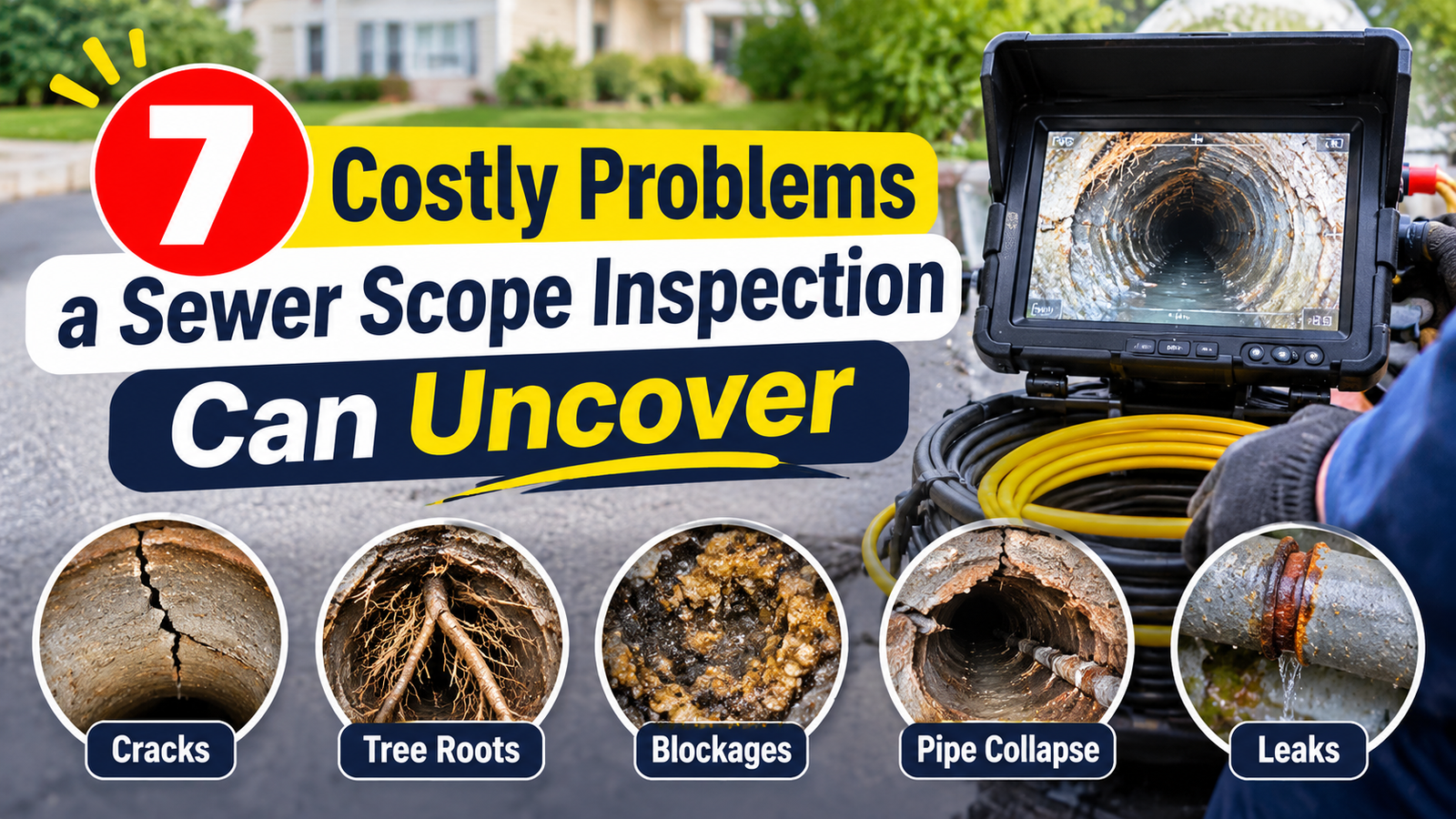
A sewer scope inspection costs a few hundred dollars and can expose problems that cost thousands to fix. Yet it is one of the most skipped add-ons in the home buying process.
A standard home inspection covers the roof, foundation, electrical, plumbing fixtures and more. What it usually does not cover is the main sewer lateral: the buried pipe that carries everything from your house to the city sewer. Because that pipe sits underground, a home can pass every other check while hiding a cracked, root-filled or collapsing line.
For anyone booking home inspections in Los Angeles County, this gap matters more than most places. Much of the county’s housing stock is decades old, many original sewer lines are clay or cast iron, and the region’s soil and seismic activity put extra stress on buried pipe.
What Is a Sewer Scope Inspection?
During a sewer scope inspection , a trained inspector feeds a flexible, waterproof camera through an access point, usually a cleanout, and runs it the length of the sewer lateral. The camera records live video of the pipe’s interior, often with a locator that shows the depth and position of any defect.
The whole process typically takes under an hour, involves no digging, and ends with a video and written report you can hand to a plumber, a seller or your real estate agent.
7 Costly Problems a Sewer Scope Inspection Can Uncover
1. Tree Root Intrusion
Roots are the most common finding in sewer scope reports. They seek out moisture and nutrients, slip into tiny gaps at pipe joints, and keep growing until they choke the line.
Los Angeles County’s mature street trees, such as ficus, sycamore and eucalyptus, are notorious for this. Light intrusion can often be cleared with hydro-jetting, but heavy root masses can crack the pipe and force a sectional repair or full replacement.
Warning signs: recurring clogs, gurgling drains, and backups that return weeks after a snaking.
2. Cracks and Fractures
Cracks let wastewater seep into the surrounding soil and let soil, roots and groundwater into the pipe. Over time a small crack widens and can lead to a full break.
In Southern California, ground movement from earthquakes, expansive clay soils and heavy traffic above the line all contribute. A camera shows exactly where the crack is, so a plumber can often fix just that section instead of replacing the whole run.
3. Bellies and Sags
A belly is a low spot where a section of pipe has sunk, usually because the soil beneath it settled or washed out. Waste and water pool in the dip instead of flowing downhill.
Bellies cause slow drains and repeat clogs, and the standing water speeds up corrosion. Minor sags may only need monitoring, but a deep belly usually means excavating and re-bedding or replacing that section.
4. Offset or Separated Joints
Older sewer lines are made of short pipe segments joined together. When the ground shifts, those joints can slide out of alignment or pull apart.
An offset creates a ledge that catches debris, while a separated joint leaks into the soil and invites roots. Seismic activity makes this especially common in Los Angeles County homes.
5. Deteriorated or Outdated Pipe Material
Pipe material tells you a lot about a home’s risk:
- Clay (vitrified clay): common in pre-1970s homes; durable but brittle, with joints vulnerable to roots
- Cast iron: rusts and scales from the inside, narrowing the pipe and eventually rotting through
- Orangeburg: a tar-paper pipe used mid-century that deforms and collapses with age
- ABS or PVC: modern plastic, generally the most reliable
A sewer scope identifies the material and its condition, which helps you judge whether the line has years left or is near the end of its life.
6. Blockages, Grease and Debris Buildup
Grease, wipes, scale and foreign objects can build up into a partial or total blockage. Sometimes the scope even finds construction debris left from a past remodel.
Many blockages are inexpensive to clear, but finding one before you move in prevents a messy backup into the house, and the cleanup and water-damage bills that come with it.
7. Collapsed Pipes and Improper Connections
The most expensive finding is a partial or full collapse. A collapsed line cannot carry waste at all and typically needs excavation or trenchless replacement.
Scopes also catch improper work: unpermitted DIY repairs, mismatched pipe materials, wrong slopes, or storm drains illegally tied into the sewer. These can bring code issues as well as repair costs.
Recent cost estimates for the Los Angeles area show why these findings matter: Angi puts traditional sewer line replacement at about $4,400 on average, with longer or harder-to-reach runs running well into five figures.
Why Sewer Scopes Matter for Home Inspections in Los Angeles County
A few local factors make sewer scopes especially worthwhile here:
- Older housing stock: many neighborhoods, from Pasadena and Long Beach to the San Fernando Valley, were built before modern plastic pipe was standard.
- Earthquakes and soil movement: even small seismic shifts can crack clay pipe and offset joints.
- Mature landscaping: large trees planted decades ago now have root systems that reach sewer lines.
- Owner responsibility: in most Los Angeles County cities, the homeowner is responsible for the lateral from the house to the public sewer main, so repairs come out of your pocket.
When Should You Get a Sewer Scope Inspection?
- Before buying a home, especially one built before the 1980s, during your contingency period
- Before listing a home, so you can fix issues or disclose them on your terms
- When you notice symptoms such as slow drains, sewage odors, gurgling or soggy patches in the yard
- After major tree growth, an earthquake or a remodel that may have disturbed the line
Is a Sewer Scope Worth the Cost?
In the Los Angeles area, a professional sewer camera inspection typically runs around $175 to $350, according to Angi. Compare that with repair or replacement bills in the thousands, and the math usually favors the scope. A clean report gives you peace of mind; a problem report gives you leverage to negotiate repairs or a price credit before closing.
Frequently Asked Questions
Is a sewer scope part of a standard home inspection? Usually not. Most inspectors offer it as an add-on, so ask for it when you book.
How long does it take? Most sewer scopes take 30 to 60 minutes, depending on access and the length of the line.
What if there is no cleanout? The inspector may access the line through a roof vent or by removing a toilet. Some will recommend installing a cleanout for easier future maintenance.
Can I use the video in negotiations? Yes. The recorded footage and report give sellers and contractors clear evidence of the problem and its location.
The sewer line is one of the most expensive systems in a home to repair, and one of the few you cannot see. Adding a sewer scope to your home inspection in Los Angeles County costs little compared with what it can reveal: roots, cracks, sags, failing pipe and more.
If you are buying, selling or simply maintaining a home in the area, schedule a sewer scope inspection with a qualified local inspector before a small hidden problem turns into a five-figure surprise.
 healthcare software.development company
 kumkum.00
 deepa.sreegi