
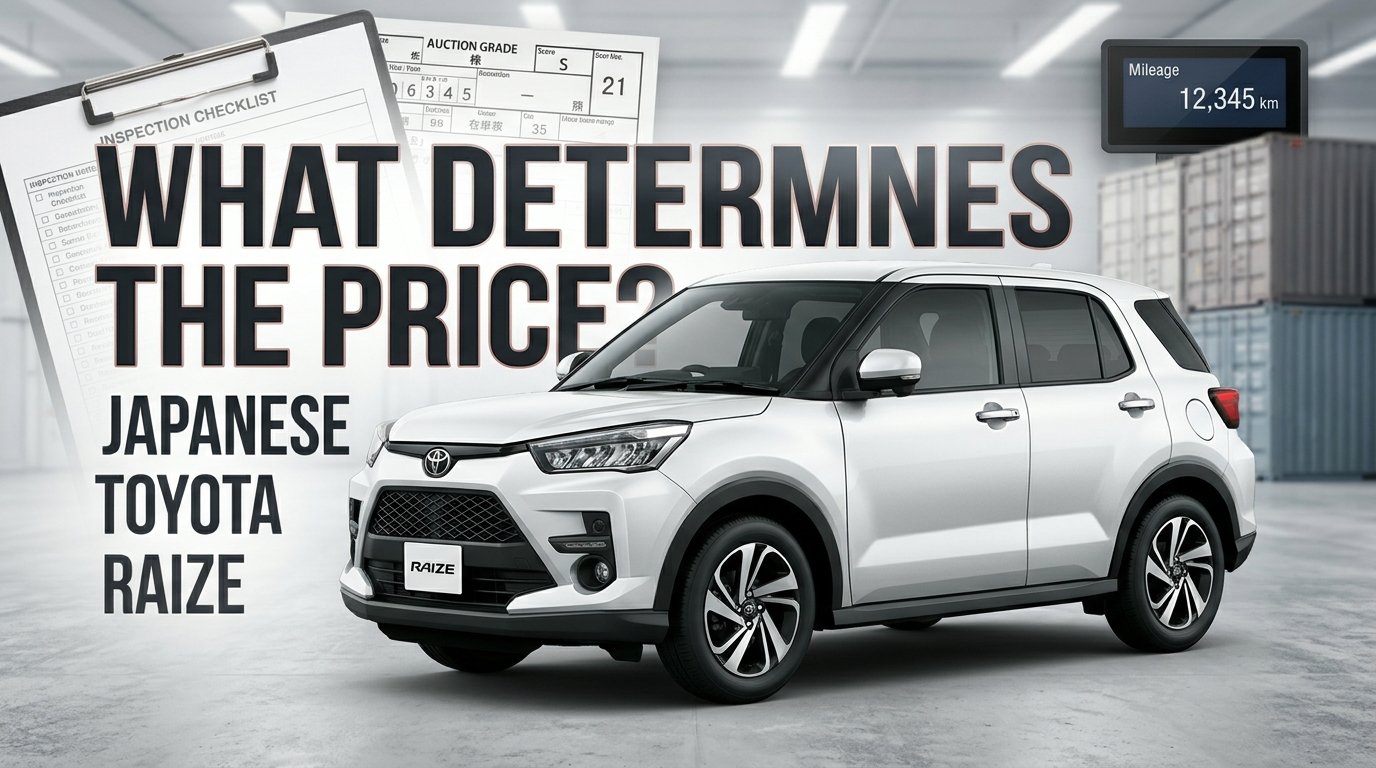
The Toyota Raize has become a popular choice among buyers interested in Japanese imported compact SUVs. Its modern styling, economical engines, practical cabin, and relatively manageable running costs make it an appealing option in international markets, particularly Pakistan. However, the Japanese Toyota Raize price can vary considerably from one vehicle to another, even when both cars share the same model year and variant.
Several factors influence its market value, including auction grade, mileage, vehicle condition, manufacturing year, specifications, and import expenses. Understanding these elements helps buyers assess whether a quoted price is reasonable and avoid paying more than a vehicle is worth.
1. Manufacturing Year and Model Variant
The manufacturing year is one of the first factors influencing the price of a Japanese Toyota Raize. Newer models generally command higher prices because they offer more recent specifications, updated technology, and potentially lower mileage.
The Raize is available in several configurations, including X, G, Z, and hybrid variants in selected model years. Each has different equipment levels and features.
For example:
- X Variant: Generally positioned as an entry-level option with essential equipment.
- G Variant: Offers additional convenience and interior features.
- Z Variant: Provides a more comprehensive equipment package, including upgraded styling and technology.
- Hybrid Variants: Feature electrified powertrains and can attract buyers interested in improved fuel efficiency.
Differences in factory specifications, safety equipment, exterior styling, and interior appointments can create noticeable price variations. Buyers should compare vehicles with similar specifications rather than judging their value by manufacturing year alone.
2. Auction Grade and Inspection Results
The auction grade is another important factor determining the Japanese Toyota Raize price. Japanese vehicle auctions use inspection systems to communicate a vehicle’s overall condition to prospective buyers.
Although grading systems can vary between auction houses, they generally provide an indication of the vehicle’s exterior, interior, and mechanical condition.
Common auction classifications include:
- Grade 5: Usually indicates an exceptionally well-maintained vehicle with minimal signs of use.
- Grade 4.5: Generally represents a vehicle in very good condition.
- Grade 4: Typically indicates a good-quality used vehicle with some minor imperfections.
- Grade 3.5: May involve noticeable cosmetic wear or other imperfections.
- Grade R or RA: Generally identifies vehicles with repair or accident-related histories, although the precise classification depends on the auction house.
A higher auction grade can increase a vehicle’s purchasing price because buyers often associate it with better overall condition.
However, an auction grade should never be considered a complete guarantee. Buyers should examine the auction sheet, inspection comments, repair markings, and available photographs before making a purchasing decision.
3. Mileage and Previous Usage
Mileage provides valuable insight into how extensively a vehicle has been used. A Japanese Toyota Raize with relatively low mileage may command a higher price than a comparable vehicle that has covered considerably more kilometres.
For instance, two 2021 Toyota Raize vehicles might have similar specifications and auction grades, but the one with 25,000 kilometres could attract more interest than another with 75,000 kilometres.
Lower mileage can indicate less accumulated wear on components such as:
- Engine and transmission.
- Suspension and steering components.
- Braking systems.
- Interior seats and upholstery.
- Other frequently used mechanical and electrical components.
Nevertheless, mileage should be evaluated alongside maintenance records and vehicle condition. A low-mileage vehicle that has received inadequate maintenance may be a less attractive purchase than a higher-mileage example with a documented service history.
Buyers should also verify mileage consistency through auction documentation and available inspection records.
4. Overall Vehicle Condition
The physical and mechanical condition of a Japanese Toyota Raize has a direct impact on its value. Even vehicles with identical manufacturing years, variants, and mileage figures can have substantially different prices because of their maintenance histories and previous usage.
Important areas to examine include:
Exterior Condition
Scratches, dents, paint deterioration, replaced panels, and signs of previous repairs can influence resale value. Original factory paint and well-preserved bodywork are generally desirable.
Interior Condition
Seat upholstery, dashboard components, door trims, steering wheels, and electronic controls should be inspected. Excessive interior wear may indicate heavy usage or inadequate maintenance.
Mechanical Condition
The engine, transmission, suspension, brakes, and cooling system should receive particular attention. Any unusual noise, fluid leakage, warning light, or operational problem could result in additional repair expenses.
Accident and Repair History
Previous collisions, structural repairs, and replaced components can affect both safety and market value. A thorough inspection is especially important when considering vehicles carrying repair-related auction classifications.
A vehicle with a documented history and consistent maintenance is often a more dependable proposition than one selected purely because of its attractive price.
5. Engine Type and Fuel Efficiency
The Toyota Raize has been offered with different engine configurations, which can influence its purchasing price and overall ownership costs.
Two commonly encountered petrol engine options include:
- 1.0-litre turbocharged petrol engine.
- 1.2-litre naturally aspirated petrol engine.
Selected Japanese-market versions also feature hybrid technology.
Each configuration offers a different driving experience. The turbocharged engine provides stronger low-speed pulling performance, while the naturally aspirated option offers a simpler powertrain. Hybrid versions appeal to buyers prioritising fuel efficiency, although their initial purchase prices and battery-related considerations may differ.
Engine specifications, transmission type, drivetrain configuration, and equipment levels should all be considered when comparing prices.
The most expensive engine option is not necessarily the best choice for every buyer. Driving requirements, maintenance considerations, fuel consumption, and long-term ownership expenses should guide the decision.
6. Import Expenses, Shipping, and Customs Duties
For international buyers, particularly those purchasing vehicles for Pakistan, import expenses represent a significant part of the final Japanese Toyota Raize price.
The amount paid at a Japanese auction is only one component of the total landed cost. Additional charges accumulate throughout the purchasing, shipping, customs clearance, and registration process.
Common expenses include:
- Japanese auction purchase price.
- Auction house and agent fees.
- Inland transportation within Japan.
- Export documentation and inspection charges.
- International shipping and marine-related expenses.
- Customs duties and applicable taxes.
- Port handling and clearance charges.
- Local transportation and registration expenses.
Import duties and taxes can vary depending on the vehicle’s engine capacity, manufacturing year, applicable import scheme, exchange rate, and government regulations.
Consequently, two buyers importing similar Toyota Raize models may encounter different final costs depending on when they purchase, their shipping arrangements, and the applicable taxation requirements.
It is important to calculate the complete landed cost before committing to a purchase rather than relying exclusively on the Japanese auction price.
7. Japanese Yen Exchange Rate
Currency fluctuations can significantly influence the cost of importing a Japanese Toyota Raize.
Vehicles purchased at Japanese auctions are generally priced in Japanese yen. International buyers, however, often calculate their budgets in Pakistani rupees, British pounds, or another local currency.
When the Japanese yen strengthens against the Pakistani rupee, purchasing the same vehicle can become more expensive for Pakistani importers. Conversely, a weaker yen may create more favourable purchasing conditions.
Exchange rate movements can affect:
- Auction purchase budgets.
- International payment costs.
- Export and shipping expenses.
- Total import calculations.
- Final retail pricing.
For this reason, the quoted Japanese Toyota Raize price should always be assessed using the applicable exchange rate at the time of purchase.
8. Supply, Demand, and Market Popularity
Market demand also plays an important role in determining vehicle prices. The Toyota Raize has attracted attention because it combines compact dimensions with SUV-inspired styling, practical ground clearance, and relatively efficient powertrain options.
Its popularity among urban drivers can increase competition for desirable examples at Japanese auctions.
Demand may be particularly strong for vehicles offering:
- Newer manufacturing years.
- Higher auction grades.
- Lower verified mileage.
- Popular colour combinations.
- Well-equipped Z and G variants.
- Hybrid technology.
- Undamaged bodywork and documented maintenance histories.
When demand increases and auction supply becomes limited, purchasing prices may rise. In contrast, greater availability or weaker demand can create opportunities for buyers to secure more competitive deals.
Local market conditions also matter. Import restrictions, taxation changes, currency movements, and the availability of alternative compact SUVs can influence retail prices.
9. Exterior Colour and Additional Features
Although colour and optional equipment may not influence every transaction equally, they can affect buyer preferences and resale potential.
Popular colours such as white, black, silver, and pearl finishes often attract broader interest. However, the actual effect on price depends on market preferences and vehicle availability.
Additional equipment can also make a difference, including:
- Advanced driver assistance systems.
- Adaptive cruise control.
- Factory-fitted infotainment systems.
- Panoramic or standard sunroofs, where equipped.
- LED lighting.
- Alloy wheels.
- Parking assistance features.
Buyers should confirm whether these features are factory-fitted and operational. A vehicle’s advertised equipment should always match its original specifications and inspection documentation.
10. How to Evaluate the Right Toyota Raize Price
Finding an attractive deal requires more than comparing advertisements. Buyers should assess the vehicle’s complete history, specifications, and expected import expenses before making a decision.
A practical evaluation process includes:
- Compare the same model year: Avoid comparing newer models with older vehicles without adjusting for their specifications and age.
- Check the auction grade: Review the original auction sheet and inspection comments.
- Verify mileage: Confirm that the recorded mileage is consistent with available documentation.
- Inspect vehicle condition: Examine the bodywork, interior, engine, transmission, and accident history.
- Calculate import expenses: Include shipping, duties, taxes, clearance, and registration.
- Compare market prices: Review similar vehicles with matching specifications and condition.
- Consider long-term ownership: Evaluate maintenance requirements, fuel efficiency, and expected resale value.
For buyers seeking a more detailed understanding of market pricing, the Toyota Raize price breakdown provides further information about pricing, specifications, variants, and import-related considerations.
Conclusion
The Japanese Toyota Raize price is influenced by several interconnected factors rather than a single specification or market quotation. Manufacturing year, auction grade, mileage, vehicle condition, engine configuration, and equipment all contribute to a vehicle’s underlying value.
For international buyers, import expenses, exchange rates, customs duties, and local market demand add further complexity to the purchasing decision.
A sensible approach is to evaluate the complete vehicle rather than focusing exclusively on its advertised price. A slightly more expensive Toyota Raize with verified mileage, a favourable auction grade, documented maintenance, and excellent vehicle condition may offer considerably better long-term value than a cheaper alternative with an uncertain history.
By examining these factors carefully, buyers can make more informed purchasing decisions and identify a Japanese Toyota Raize that offers an appropriate balance of quality, reliability, and affordability.
 sara.khan