
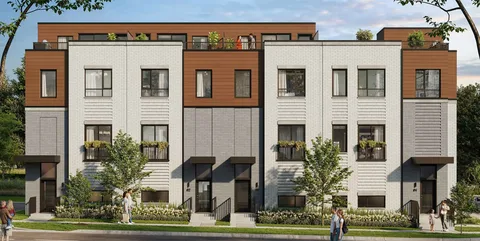
A newly constructed townhouse may appear affordable when buyers first see its advertised price. However, the purchase price rarely tells the complete financial story. Additional expenses can arise during construction, contract signing, financing, and closing.
When comparing new townhomes in Ontario, buyers should look beyond the advertised amount. Development charges, HST, land transfer taxes, legal fees, builder upgrades, and closing adjustments can affect the total budget. Some expenses also continue after possession. Understanding these costs early helps buyers make informed decisions and avoid financial surprises. This article examines the major expenses associated with purchasing a newly built townhouse in Ontario.
Why Is the Advertised Price Different From the Final Purchase Cost
The advertised price usually represents a starting point, not necessarily the amount a buyer must bring to closing. The purchase agreement explains what the builder includes and which charges may be added later.
The final amount can depend on:
- Government taxes and applicable rebates.
- Municipal development charges.
- Builder upgrades and customization.
- Legal and administrative expenses.
- Mortgage and financing costs.
- Closing adjustments and prepaid expenses.
Buyers should separate three financial figures:
- Base purchase price: The advertised or agreed property price.
- Total closing amount: The purchase balance plus applicable taxes, adjustments, and transaction expenses.
- Long-term ownership cost: Recurring expenses after taking possession.
A property may fit the advertised budget but require considerably more cash for closing and ongoing ownership.
What Does a Builder’s Advertised Price Actually Include
A builder’s advertised price may include the lot, standard construction, basic finishes, and specified fixtures. However, each development sets its own inclusions.
Depending on the builder, the advertised package may include:
- Standard kitchen cabinets and countertops.
- Basic flooring and bathroom fixtures.
- Specified electrical installations.
- Standard landscaping and exterior work.
- Parking spaces or garage provisions.
- Selected appliances or air conditioning.
Some developments list these features as optional upgrades. Marketing materials also do not replace the purchase agreement.
Buyers should check the schedules and specifications for flooring, countertops, cabinetry, electrical outlets, heating systems, and exterior work. They should identify exclusions, allowances, and features shown in model homes but not promised in writing.
Which Expenses Are Added Before or During Closing
Some costs arise when buyers select upgrades or amend their agreements. Others appear later as adjustments on the statement of adjustments.
These may include:
- Development-related charges.
- Utility connections and meter installations.
- Prepaid property taxes.
- Condominium expenses.
- Legal and registration fees.
- Other contractual administrative charges.
The builder’s agreement should explain which charges are fixed, capped, estimated, or subject to change. Buyers should ask their real estate lawyer to review unclear clauses before signing.
What Additional Builder Charges Can Increase the Purchase Price
Builder charges vary by development and agreement. One project may include several municipal costs in its advertised price. Another may pass certain expenses to the purchaser at closing.
Buyers should review the purchase agreement rather than assume every new home follows the same pricing structure.
Development Charges and Municipal Levies
Municipalities may impose development charges to help fund infrastructure and services required by population growth.
These charges can relate to:
- Roads and transportation infrastructure.
- Water supply and wastewater systems.
- Public transit facilities.
- Parks and recreational facilities.
- Other municipal infrastructure.
- Applicable education-related levies.
A builder may pass some charges to the purchaser if the agreement permits it.
The contract may establish a fixed amount, introduce a cap, or allow certain increases. Buyers should identify the exact wording and ask whether future municipal changes can affect their closing balance.
Ontario’s land transfer tax rules also matter here. The province’s definition of the value of consideration can include certain liabilities, soft costs, benefits, and upgrade costs. Therefore, the taxable amount may not always match the headline base price.
Utility Connections and Administrative Fees
New homes need connections for services such as water, electricity, and natural gas where available. Builders may include standard installations in the purchase price. However, some agreements list additional charges separately.
Potential expenses include:
- Water and sewer connections.
- Electricity connections.
- Natural gas connections.
- Meter installation.
- Utility activation charges.
- Applicable administrative fees.
Buyers should check whether the builder has already included these expenses. They should also confirm whether a charge represents a one-time connection cost or an ongoing utility deposit.
Builder Upgrades and Optional Features
Design centres often offer upgrades for kitchens, bathrooms, flooring, lighting, and storage.
Common upgrade categories include:
- Premium kitchen cabinets and countertops.
- Hardwood or upgraded flooring.
- Enhanced bathroom fixtures.
- Additional electrical outlets and lighting.
- Appliance packages.
- Custom storage and cabinetry.
- Exterior finishing options.
A hypothetical buyer might choose upgraded cabinets, wider-plank flooring, and additional lighting. Each choice may seem modest individually. Together, they can materially change the budget. Buyers should request written prices and confirm payment deadlines before approving selections.
How Do Taxes Affect the Cost of New Townhomes in Ontario
Tax treatment can change the amount due at purchase and closing. The main considerations include HST, provincial land transfer tax, and Toronto’s municipal land transfer tax. These taxes follow different rules and may involve separate rebates. Buyers should carefully examine the purchase agreement’s tax wording. It should explain whether the price includes HST and how any assumed rebate is handled.
HST and Applicable New Housing Rebates
Ontario’s HST rate is generally 13% on taxable new homes. The agreement may quote a price inclusive of HST after an assumed rebate, or it may allocate the tax separately.
Rebate eligibility depends on several factors:
- The purchase agreement date.
- The buyer’s eligibility.
- The property’s intended use.
- Principal residence requirements.
- Applicable federal and provincial programs.
- Required documentation and deadlines.
The Canada Revenue Agency administers federal GST/HST housing rebates. Ontario also has provincial rebate programs. As of November 2026, temporary Ontario relief may be available for qualifying agreements entered into between April 1, 2026, and March 31, 2027.
Published maximum combined relief can reach $130,000 for eligible homes valued at or below $1 million. Other property values have different relief limits. Construction deadlines and primary-residence requirements also apply.
The Ontario New Home Affordability Payment may be reduced by an eligible federal HST rebate. Therefore, buyers should not automatically add every advertised rebate together. Eligible first-time buyers may also qualify for the federal first-time home buyers’ GST/HST rebate.
The potential federal rebate includes:
- Up to $50,000 for qualifying homes valued at or below $1 million.
- A reduced rebate for qualifying homes valued between $1 million and $1.5 million.
- No federal first-time buyer rebate for homes valued at or above $1.5 million.
The rules include age, residency, primary-residence, previous ownership, and purchase-date requirements. Buyers should verify eligibility before relying on any rebate in their financial calculations.
Ontario Land Transfer Tax
Ontario land transfer tax generally applies when ownership transfers and the deed registers. The tax uses graduated rates based on the value of consideration. The applicable calculation can include more than the advertised base price. Eligible first-time homebuyers may receive a provincial refund of up to $4,000.
Eligibility requirements include:
- Meeting the applicable age requirement.
- Canadian citizenship or permanent residency.
- Using the property as a principal residence.
- Meeting previous home ownership conditions.
A buyer’s previous ownership anywhere in the world may affect eligibility. A spouse’s ownership history can also matter. A lawyer can calculate the amount and claim the refund during registration when the buyer qualifies.
Toronto Municipal Land Transfer Tax
Purchasers of property within Toronto generally pay municipal land transfer tax in addition to Ontario land transfer tax. Buyers outside Toronto do not pay this specific municipal tax, although their municipalities may have other applicable fees. Toronto offers a separate first-time purchaser rebate of up to $4,475 for eligible buyers.
Buyers should consider:
- The property’s purchase value.
- Applicable municipal tax rates.
- First-time purchaser eligibility.
- Residency and occupancy requirements.
- Previous ownership history.
What Closing Costs Should Buyers Budget For
Closing costs include professional fees, financing expenses, registration charges, and adjustments between the buyer and builder. The exact amount depends on the property, lender, municipality, agreement, and buyer circumstances. A buyer should request a preliminary closing-cost estimate well before the possession date.
Real Estate Lawyer and Title Insurance Fees
A real estate lawyer reviews the purchase agreement, checks title, prepares closing documents, and registers the transfer.
Legal expenses may include:
- Professional legal fees.
- Title searches.
- Property registration charges.
- Document preparation.
- Title insurance.
- Other transaction disbursements.
Title insurance can protect against certain title defects, fraud, survey issues, and other covered risks. It does not replace legal advice or a property inspection. Buyers should ask what the policy covers and whether the lender requires a separate policy.
Mortgage and Financing Expenses
Mortgage-related expenses depend on the lender and financing arrangement.
Potential costs include:
- Property appraisal fees.
- Lender administration charges.
- Mortgage default insurance, where applicable.
- Mortgage registration expenses.
- Financing-related legal charges.
Mortgage default insurance may apply when a buyer makes a down payment below 20%, subject to eligibility rules. The premium can often be added to the mortgage, but it still increases borrowing costs. Buyers should include it when comparing financing options.
Closing Adjustments and Property Tax Payments
The statement of adjustments allocates certain expenses between the builder and purchaser. For example, the builder may have prepaid property taxes or common expenses. The buyer may need to reimburse the builder for the period after closing.
Other adjustments can involve:
- Property taxes.
- Utility expenses.
- Prepaid condominium fees.
- Fuel or other applicable charges.
- Outstanding contractual amounts.
Buyers should ask their lawyer to explain each line. They should also confirm whether the property tax amount is estimated or based on an actual municipal bill.
What Expenses Begin After Taking Possession
The financial commitment continues after the keys arrive. Owners must budget for recurring expenses and occasional repairs. These costs depend on the home’s design, location, ownership structure, and household use.
Condominium Fees and Common Element Expenses
Condominium townhouses may require monthly common expense payments.
These fees can cover:
- Shared landscaping.
- Snow removal.
- Private road maintenance.
- Exterior maintenance.
- Common element insurance.
- Reserve fund contributions.
- Condominium management.
Not every townhouse has condominium fees. Freehold owners generally manage their own property maintenance. Some freehold townhouses still belong to a common elements condominium or have shared expenses through a parcel of tied land arrangement. Buyers should review the declaration, budget, and maintenance agreements. The monthly fee alone does not explain every future obligation.
Property Taxes, Home Insurance, and Utilities
Municipal property taxes are recurring costs. The amount depends on the assessed value, local tax rates, and applicable adjustments. MPAC assesses properties for taxation purposes, while municipalities set tax rates and issue bills. Home insurance protects against covered property risks and may be required by a mortgage lender.
Ongoing household expenses generally include:
- Property taxes.
- Home insurance premiums.
- Electricity.
- Water and wastewater charges.
- Heating and cooling.
- Internet and other services.
- Routine maintenance.
Premiums and utility expenses vary with location, coverage, property features, and household usage.
Interim Occupancy Fees for Pre-Construction Condominiums
Interim occupancy applies to certain pre-construction condominium purchases. It occurs when a buyer can occupy a unit before the condominium corporation registers and legal title transfers. During this period, the buyer does not yet own the unit. Instead, the developer may charge an interim occupancy fee. Under Ontario’s Condominium Act, the fee cannot exceed the prescribed total of:
- Interest on the unpaid purchase balance.
- Estimated municipal property taxes.
- Projected common expenses.
This fee is different from a mortgage payment and does not reduce the purchase price. It generally applies only to condominium arrangements with an interim occupancy period. Freehold townhouse purchases do not normally follow this process.
How Can Buyers Calculate the Total Cost Before Signing a Builder Agreement
A realistic budget should separate one-time purchase expenses from recurring ownership costs. Buyers should start with the agreement price and then list every additional amount. They should also identify whether each charge is fixed, estimated, optional, or conditional. When assessing the total cost of new townhomes in Ontario, buyers can use the following framework:
| Expense category | Cost classification |
| Base purchase price | Contractual |
| Upgrades | Optional or contractual |
| Development charges | Agreement-dependent |
| HST | Tax-related |
| Land transfer tax | Government tax |
| Legal and title fees | Closing |
| Mortgage expenses | Financing |
| Condo fees | Recurring |
| Insurance and utilities | Recurring |
A practical budgeting process involves several steps:
- Record the base purchase price from the builder agreement.
- List every additional builder charge and identify contractual limits.
- Calculate applicable HST and land transfer taxes.
- Confirm eligibility for available rebates.
- Obtain legal, title, and mortgage expense estimates.
- Include closing adjustments and prepaid expenses.
- Add recurring ownership costs to the monthly budget.
A hypothetical buyer may face development charges under the agreement and select several paid upgrades. The buyer may also qualify for a tax rebate. Another purchaser may pay Toronto’s municipal land transfer tax or interim occupancy fees. These situations show why one general estimate cannot fit every transaction. Buyers should request a written breakdown from the builder and an independent estimate from their lawyer. They should also confirm rebate eligibility with a qualified tax professional.
Common Budgeting Mistakes When Purchasing New Construction
Several mistakes can create financial pressure during the purchase process.
Treating the advertised price as the final amount
Buyers may overlook charges listed in schedules or closing adjustments. Review every additional-cost clause before signing.
Assuming automatic HST rebate eligibility
Eligibility depends on specific conditions and dates. A buyer may face repayment obligations if the builder credited a rebate incorrectly.
Underestimating builder upgrades
Premium flooring, cabinetry, appliances, and electrical options can increase the purchase amount. Request written prices before selecting upgrades.
Forgetting legal and financing expenses
Legal fees, title insurance, appraisal charges, and mortgage expenses should form part of the initial budget.
Overlooking land transfer taxes
Buyers should calculate provincial land transfer tax and, where applicable, Toronto municipal land transfer tax.
Ignoring recurring ownership expenses
Condominium fees, property taxes, insurance, and utilities continue after closing.
Confusing interim occupancy with final closing
These charges apply at different stages and serve different purposes. A complete budget should account for both when applicable.
Conclusion
Advertised price is only one part of a new construction purchase. Buyers must also consider builder charges, upgrades, HST, land transfer tax, legal fees, financing, and closing adjustments. The actual cost of new townhomes in Ontario depends on the purchase agreement, location, ownership structure, and eligibility for available rebates. Before signing, buyers should review all additional charges, confirm applicable taxes and rebates, obtain a professional closing cost estimate, and discuss the builder agreement with a qualified real estate lawyer. They should also account for recurring expenses, including property taxes, insurance, utilities, and condominium fees. A complete financial assessment provides a clearer understanding of the total commitment and reduces the risk of unexpected expenses.
FAQs
Do new townhomes in Ontario include HST in their advertised prices?
Some builders advertise prices that include HST after an assumed rebate. Others show tax separately or use a price structure defined in the purchase agreement. Buyers should confirm the exact wording, rebate assignment, and consequences if they do not qualify.
How much should buyers budget for closing costs?
There is no single amount for every purchase. Closing costs depend on the price, location, land transfer tax, legal fees, financing, adjustments, and builder charges. Buyers should obtain a written estimate from their lawyer before the closing date.
Do first-time buyers qualify for land transfer tax rebates?
Eligible first-time buyers may receive an Ontario land transfer tax refund of up to $4,000. Toronto also offers a separate municipal rebate of up to $4,475. Both programs have detailed eligibility requirements, so buyers should confirm their status before closing.
Are builder upgrades included in the purchase price?
Only upgrades listed as included in the agreement form part of the agreed package. Optional selections usually add costs. Buyers should obtain written prices and ensure the agreement or amendment records every approved upgrade.
What is the difference between interim occupancy fees and closing costs?
Interim occupancy fees apply to certain pre-construction condominium units before legal title transfers. Final closing costs arise when the purchase completes and ownership registers. The occupancy fee does not reduce the purchase price and is calculated under Ontario’s Condominium Act.
 healey.wisely
 Admin