
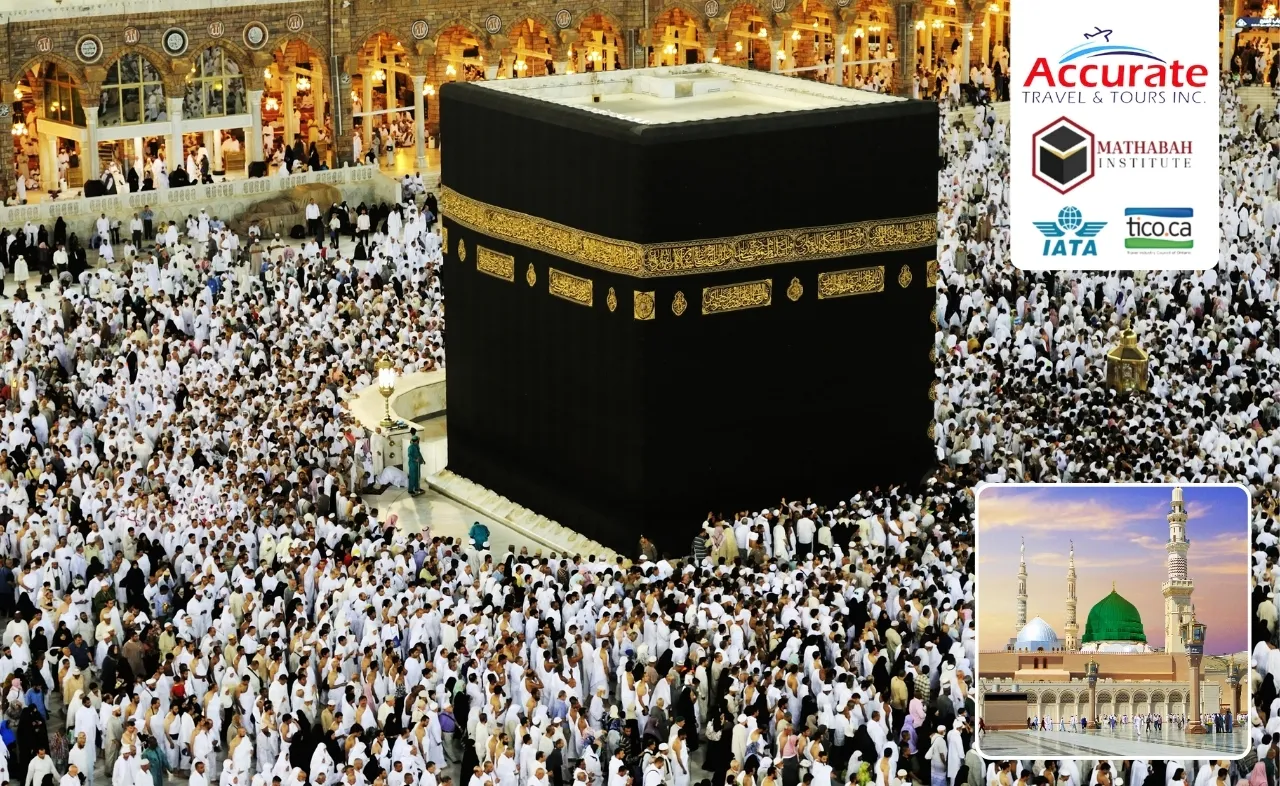
You open three tabs, and each one shows a different price for what looks like the same trip. One includes flights, one doesn’t, and one hides a list of fees in tiny print. If you’re sorting through umrah packages for the first time, that confusion is completely normal. The good news is that most of the price gap comes down to a handful of things you can check yourself. In this guide we’ll cover what a package usually includes, when it makes sense to buy flights on your own, what to verify before you pay, and a quick checklist to keep you on track.
What a Typical Package Covers
Details vary by provider, but most bundles are built from the same blocks:
- Hotels in Makkah and Madinah, usually for a set number of nights
- Ground transport, such as airport transfers and the trip between the two cities
- Visa support, which is sometimes included and sometimes handled separately
- Extras like meals, guided ziyarat, or an Umrah kit
- Flights, which may or may not be part of the price
Saudi Arabia has been moving bookings onto its official Nusuk platform, and requirements around hotels, transport, and registration can change. So ask any provider how your booking is registered and what’s current for your travel dates. Rules shift, and a good provider will explain them plainly.
Flights Included or Separate?
This is the big fork in the road, and neither choice is “right” for everyone.
Bundled flights make life simpler. One price, one point of contact, and group departures often come with coordinated arrival times. It suits first-timers and families who’d rather not juggle bookings.
Separate flights give you control. You choose the airline, the dates, the layovers, and you can use airline points or grab a good fare. The trade-off is that you’re responsible for lining up your arrival with your hotel check-in and transfers.
One thing worth remembering: flight plans can get disrupted by weather, airline changes, or wider regional issues. If you book flights yourself, look at refund and rebooking terms before you pay, not after.
A Quick Example
Say you’re travelling with your parents, and your dad has a lot of airline miles saved up. Buying flights separately lets you use those, which could cut your costs noticeably. But you’ll need to make sure your arrival time matches the transfer and the hotel’s check-in, and that your return date lines up with your last night’s stay. If that sounds like more admin than you want, a bundled option might be worth the extra money.
What to Verify Before You Pay
Whatever you choose, run through this list:
- Is the provider properly registered and willing to show proof?
- What exactly is included? Visa, insurance, meals, and transfers are common “wait, that’s extra” items.
- Hotel distance from the Haram, measured in walking minutes, not just star rating.
- Transport details: shared or private, and between which points.
- Total price in writing, with taxes and service fees spelled out.
- Cancellation and change terms, especially if dates or flights shift.
- Support during the trip: who do you call if something goes wrong?
Mistakes That Cost People Money
- Comparing prices without checking what’s included
- Booking flights first, then finding the hotel dates don’t match
- Assuming “visa included” means the same thing everywhere
- Waiting until peak season and settling for what’s left
- Skipping travel insurance because it seemed optional
Where to Start
If you’ve already got flights sorted, or you simply want control over your travel dates, look at Umrah packages without flights and compare them line by line with the bundled options. A land-based plan is often easier to price fairly because you can see exactly what you’re paying for on the ground. Reading how a provider like accuratetravels.com explains its inclusions is a handy way to know what questions to ask elsewhere too. Take your time, write down every answer, and confirm the current rules before you commit.
FAQs
Is it cheaper to book without flights?
The package itself usually costs less, but your total depends on what you pay for the flights separately.
Do I need to book hotels in advance?
Yes, in most cases, especially for busy seasons. Hotels are a core part of how bookings are registered.
Can first-timers book flights on their own?
Yes, but it helps to have someone guide you through timing, transfers, and check-in details.
When should I start planning?
Several months ahead is sensible, and earlier for peak periods when prices and availability tighten.
What documents should I keep handy?
Your passport, visa confirmation, hotel and transport confirmations, and your flight details.
 lokesh.kumar
 Boxo Packaging
 mona.sharma