
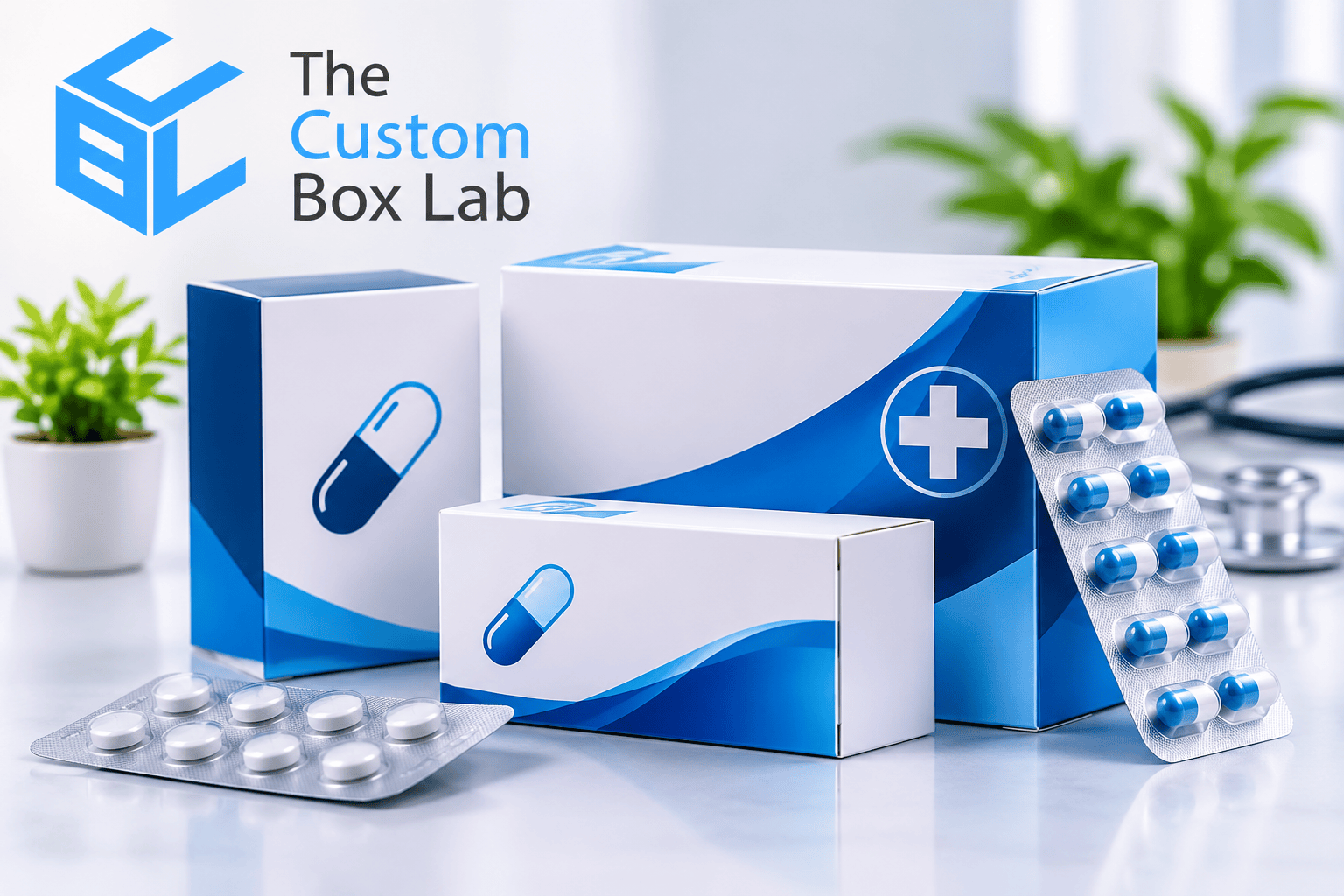
Custom pharmaceutical packaging keeps medicine safe by fitting the product exactly, blocking heat, light and moisture, and carrying the labels patients rely on. The right carton also protects the product in shipping and shows that a brand takes safety seriously. This guide covers materials, box formats, tamper evidence, labeling and ordering, so you can choose packaging that stores medicine properly.
What Makes Pharmaceutical Packaging Safe for Medicine Storage?
Safe packaging controls the outside factors that wear medicine down before its expiry date: heat, oxygen, moisture, light and physical damage. A carton cannot fix a product that is stored badly, but a well-built one gives it the best chance of staying stable.
Here is what a good pharmaceutical carton should do:
- Hold the product firmly so it cannot shift, crush or break
- Resist moisture and dirt during warehousing and delivery
- Leave clear space for dosage, warnings and storage instructions
- Show whether someone has opened it before the patient
Storage conditions still come from the product’s approved labeling. For reference, the U.S. Pharmacopeia defines controlled room temperature as 68°F to 77°F, and that is the range many medicines are labeled for. Your packaging should support whatever your label says.
Which Materials Work Best for Custom Pharmaceutical Boxes?
Pharmaceutical boxes are usually made from SBS card stock, corrugated board, kraft or rigid card stock, and the right one depends on the product’s barrier needs, weight and shipping route. The Custom Box Lab produces pharma packaging in these core materials.
| Material | Best For | Key Properties |
|---|---|---|
| Cardboard (SBS card stock) | Folding cartons, medical boxes with inserts | Smooth print surface, fine text, crisp die-cutting |
| Corrugated | Outer shipping cartons, bulk medicine packs | Cushioning, stacking strength, light weight |
| Kraft | Vial and bottle cartons, sustainable packaging | Biodegradable, natural barrier, recyclable |
| Card stock | Dosage cards, inserts, small cartons | Rigid feel, precise folding, clean adhesion |
How Do You Match Material to Product Sensitivity?
Light-sensitive compounds, humidity-sensitive powders and oxygen-reactive gels each need a different approach. Kraft and coated card stock offer different trade-offs, so it helps to share your product’s storage needs before choosing. The Custom Box Lab reviews this case by case at the mockup stage, before anything goes to press.
What Products Can You Pack in Custom Pharmaceutical Boxes?
Almost any medical or health product can be packed in a custom carton, as long as the structure is built around it. Different formats fail in different ways, which is why a stock box rarely fits well.
Formats you can secure include:
- Blister packs and strip packs
- Bottles and glass jars
- Tubes and ointments
- Vials, ampoules and syringes
- Patches, gels and facemasks
The pharma range at The Custom Box Lab includes capsule boxes, custom pill boxes, custom pill bottles, medicine boxes, medical boxes with inserts, vial boxes, pharmaceutical patch boxes, pharma gel packaging boxes, scar gel boxes, toothpaste boxes, facemask boxes and herbal product packaging.
Why Do Inserts Matter for Vials and Syringes?
A glass vial that knocks against a carton wall is a vial that can crack. Custom inserts hold ampoules, vials and syringes in place so they arrive intact. A blister pack, on the other hand, needs a carton that keeps its shape after being opened more than once. Choosing the inner structure first, then the artwork, saves a lot of trouble later.
Which Box Structures Protect Medicine Best?
The best structure is the one that protects the product, opens easily and still leaves room for the required text. These are the common options:
| Structure | Typical Use |
|---|---|
| Tuck end box | Everyday medicine and supplement cartons |
| Auto-bottom tuck | Heavier items such as bottles |
| Flip-top lid | Products opened and closed repeatedly |
| Bottle neck-lock carton | Secure support for bottles |
| Wallet or sleeve slide | Cards, patches and small flat items |
Each one can be built for tamper evidence, easy dispensing and enough labeling space. Custom sizes and shapes are available, so a patch box or gel box can match the exact dimensions of the product.
How Do Tamper Evidence and Labeling Protect Patients?
Tamper-evident features and clear labels protect patients first and the brand second. Tamper seals and specialty closures show if a pack has been opened. Counterfeit-deterrent elements make fake medicine harder to slip into the supply chain.
Your packaging should leave room for four kinds of labeling:
- Prescription and dispensing labels: patient details added by the pharmacist
- Warning and auxiliary stickers: short alerts such as “Keep Refrigerated” or “Take with Food”
- Clinical and laboratory labels: small tags for ampoules, syringes and collection tubes
- Over-the-counter labels: active ingredients, directions and safety information
What Do US Regulations Expect?
Federal rules shape pharmaceutical packaging. The FDA sets labeling requirements for drugs and expects tamper-evident packaging on most over-the-counter products. The Consumer Product Safety Commission enforces child-resistant packaging rules under the Poison Prevention Packaging Act for many household medicines. Requirements vary by product type, so confirm what applies to yours with your regulatory team before artwork is finalized.
What Printing and Finishes Suit Medicine Packaging?
Printing quality decides whether small dosage text, warnings and batch details stay readable. Three methods are common, and each suits a different job.
- Offset printing: sharp detail and accurate color, ideal for prescription cartons with small print
- Digital printing: quick content changes without plate waste, useful for short runs and market-specific versions
- Flexographic printing: works with inline varnish or lamination, suited to higher-volume runs
Available finishes include gloss, matte, embossing, debossing, soft-touch and holographic foiling. Matte and soft-touch give a calm, clinical look. Holographic foiling also helps deter counterfeiting, which matters for high-value medicines. Keep decorative finishes away from dosage and lot information so nothing gets in the way of reading.
How Long Does Custom Pharmaceutical Packaging Take?
Production runs from about 7 days to 55 days, depending on which speed tier you choose.
| Tier | Turnaround |
|---|---|
| Express | 7 to 10 days |
| Standard | 15 to 20 days |
| Cost Saver | 45 to 55 days |
Choose Express for a launch or urgent restock, Standard for planned reorders, and Cost Saver when budget matters more than speed. Artwork approval is where most delays start, so send final files early.
What Does the Ordering Process Look Like?
- Share your product type, dimensions, quantity and any compliance needs.
- Choose the material, structure and finish.
- Review the free 3D digital mockup before manufacturing.
- Confirm the order and work with your assigned account manager.
- Approve the final proof, then production begins.
Confirmed orders include free design support, which helps teams without an in-house packaging designer.
How Much Does Custom Pharmaceutical Packaging Cost?
There is no flat price, because cost depends on box size, material, print method, finish, quantity and turnaround speed. Bulk orders lower the cost per unit as volume rises, which is why wholesale runs suit established brands.
Hidden costs are a common complaint with packaging suppliers, so ask about them before approving a quote. The Custom Box Lab does not charge die or plate fees, and free shipping is listed on its pharma boxes page. The simplest way to get an exact figure is to send your specs and request a quote.
What Should You Look for in a Pharmaceutical Packaging Supplier?
A reliable supplier shows its process, answers technical questions and gives you a mockup before production. Check for these signs:
- A mockup and approval stage before anything is printed
- A named account manager instead of a general inbox
- Material advice based on your product, not just the cheapest option
- Clear pricing with no surprise fees
- Support for both small runs and wholesale volumes
The Custom Box Lab works with pharmaceutical manufacturers, supplement and nutraceutical brands, biotech and clinical labs, and medical supply companies. It serves buyers nationwide, with an account manager assigned to every order wherever the business is located, whether in New York, Texas or California.
Frequently Asked Questions
What is custom pharmaceutical packaging?
It is packaging designed around a specific medicine or health product, with the right size, structure, material and labeling space. It protects the product, supports clear information and helps patients trust what they receive.
What materials are used for pharmaceutical boxes?
Most are made from SBS card stock, corrugated board, kraft or rigid card stock. The choice depends on barrier needs, product weight and shipping conditions.
How much do custom pharmaceutical boxes cost?
Price depends on size, material, print method, finish, quantity and speed. Larger runs lower the cost per box, so requesting a quote with your exact specs gives the most accurate figure.
Can pharmaceutical boxes include tamper-evident features?
Yes. Tamper-evident seals, holographic foiling and specialty closures can be added during the structural design stage.
How do I order custom pharmaceutical packaging?
Send your product details, size and quantity, then review the free 3D mockup. Once you confirm, an account manager guides you through proof approval and production.
How long does production take?
Express orders take 7 to 10 days, Standard orders take 15 to 20 days and Cost Saver orders take 45 to 55 days.
What is the minimum order quantity?
Minimums depend on the box style and print method. Your account manager can confirm the figure for your project when you request a quote.
Is shipping free, and are there die or plate fees?
Free shipping is listed on the pharma boxes page, and there are no die or plate charges. Always confirm shipping terms in your final quote.
Conclusion
Safe medicine storage starts with packaging that fits the product, resists the elements and gives patients clear, trustworthy information. Choose the material and structure around your product’s needs, check regulatory requirements early, and approve a mockup before a full run.
 johnes.neil