
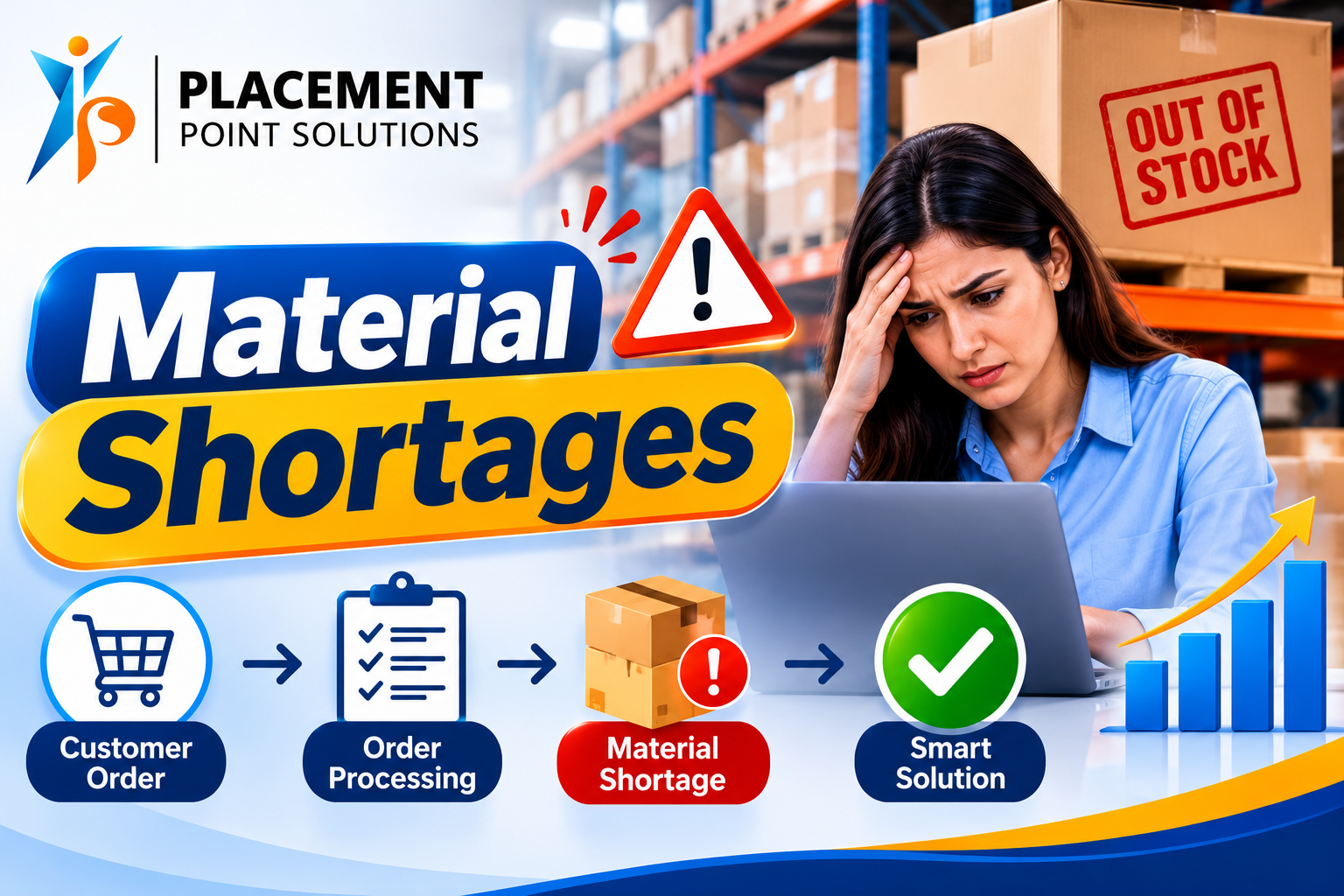
Material shortages are common challenges in manufacturing and supply chain operations. When a customer places an order, businesses must check whether the required materials are available to meet the requested delivery date. If sufficient stock is not available, it can affect production schedules, order fulfilment, and customer satisfaction. Managing these situations effectively is important for maintaining smooth business operations.
SAP helps organizations manage material availability by connecting sales, purchasing, inventory management, and production planning activities. Through SAP Sales and Distribution (SD) and Materials Management (MM), businesses can identify material shortages, check stock availability, and plan the necessary actions to fulfil customer requirements. Understanding these processes is useful for individuals interested in developing ERP knowledge through a SAP Course in Chennai and exploring opportunities in SAP functional consulting.
What Are Material Shortages in Customer Order Processing?
A material shortage occurs when a company does not have enough stock to fulfil a customer’s order. This situation may happen because of high customer demand, delayed supplier deliveries, inaccurate inventory records, or unexpected production requirements.
For example, a customer places an order for 200 units of a finished product, but the company has only 120 units available in its inventory. The remaining 80 units create a material shortage. The business must identify the shortage and decide whether to arrange additional procurement, adjust production schedules, or deliver the available quantity first.
SAP provides different functions to help businesses identify and manage these shortages efficiently.
How SAP Checks Material Availability
Material availability checking is an important activity during customer order processing. When a sales order is created, SAP can perform an availability check to determine whether the required quantity can be delivered on the requested date.
The system considers several factors, including:
- Current stock availability.
- Existing sales order requirements.
- Planned goods receipts.
- Purchase order schedules.
- Production orders.
- Material availability dates.
Based on this information, SAP provides confirmation details about the quantity that can be delivered and the expected delivery date. This helps sales teams communicate realistic delivery commitments to customers.
Common Reasons for Material Shortages
Businesses may experience material shortages for several reasons.
1. High Customer Demand
When many consumers submit orders for the same product, there may not be enough stock to meet all of their needs. This may lead to unanticipated shortages.
2. Supplier Delivery Delays
Suppliers may sometimes fail to deliver materials on the scheduled date. Transportation problems, production delays, and supply chain disruptions can affect material availability.
3. Incorrect Inventory Records
Differences between actual warehouse stock and system inventory can create problems during order processing. Regular stock monitoring helps reduce these issues.
4. Production Planning Issues
If production schedules are not properly aligned with customer demand, businesses may experience shortages of finished products or raw materials.
5. Poor Demand Forecasting
Inaccurate demand forecasting can result in insufficient stock levels. Businesses need to analyse historical sales information and expected customer demand to plan inventory requirements.
Ways to Handle Material Shortages in SAP
SAP provides several approaches to manage material shortages and improve order fulfilment.
1. Perform Availability Checks
The first step is to check the available quantity of the required material. SAP helps identify whether sufficient stock exists to fulfil the customer order. Sales teams can comprehend the guaranteed delivery amount by using this information.
2. Arrange Additional Procurement
If materials are unavailable, the purchasing department can arrange additional stock from suppliers. Purchase requisitions and purchase orders help businesses manage procurement requirements and track expected deliveries.
Learning procurement activities, purchasing processes, and inventory management through SAP MM Training in Chennai helps learners understand how businesses manage material requirements and handle stock shortages in real-time business scenarios.
3. Coordinate with Production Planning
When finished products are unavailable, the production department can review manufacturing schedules and plan additional production. SAP Production Planning (PP) helps businesses manage production requirements based on material availability and demand.
4. Check Alternative Materials
In certain business situations, alternative materials may be available to fulfil customer requirements. Businesses can evaluate suitable alternatives based on product specifications, quality requirements, and company policies.
5. Reschedule Customer Deliveries
If the required materials cannot be arranged immediately, businesses may need to adjust delivery dates. Communicating realistic delivery schedules helps maintain customer expectations and avoid unnecessary delays.
6. Monitor Backorders
Backorder processing helps businesses review customer requirements when previously confirmed quantities cannot be fulfilled. Organizations can reassess material availability and update order confirmations according to their business rules.
Role of SAP SD, MM, and PP in Material Shortage Management
Different SAP modules work together to manage material shortages.
SAP SD (Sales and Distribution): Handles customer orders, availability checks, delivery schedules, and order confirmations.
SAP MM (Materials Management): Supports purchasing, inventory management, goods receipts, and supplier-related activities.
SAP PP (Production Planning): Helps manage production requirements, material planning, and manufacturing schedules.
When these modules work together, businesses can coordinate customer demand with procurement and production activities. This integration improves visibility across departments and supports better order fulfilment.
Benefits of Managing Material Shortages Effectively
Effective material shortage management provides several business benefits:
- Reduces customer order delays.
- Improves inventory planning and control.
- Supports better coordination between departments.
- Helps maintain realistic delivery commitments.
- Improves supplier and procurement management.
- Supports efficient production scheduling.
- Increases customer satisfaction.
- Reduces unnecessary operational costs.
By using SAP functions effectively, organizations can identify shortages earlier and take appropriate actions to manage customer requirements.
Conclusion
Handling material shortages during customer order processing is essential for maintaining smooth business operations and meeting customer expectations. By using SAP availability checks, procurement planning, production coordination, and backorder processing, businesses can identify material shortages and take suitable actions to fulfil customer orders.
Understanding SAP SD processes through SAP SD Training in Chennai helps learners develop practical knowledge of sales orders, material availability checks, delivery schedules, and customer order management. Combining this knowledge with SAP MM and PP concepts can help aspiring consultants strengthen their technical skills and prepare for career opportunities in SAP functional consulting.
 sumeet.chopra
 charles.richard
 alex.carey