
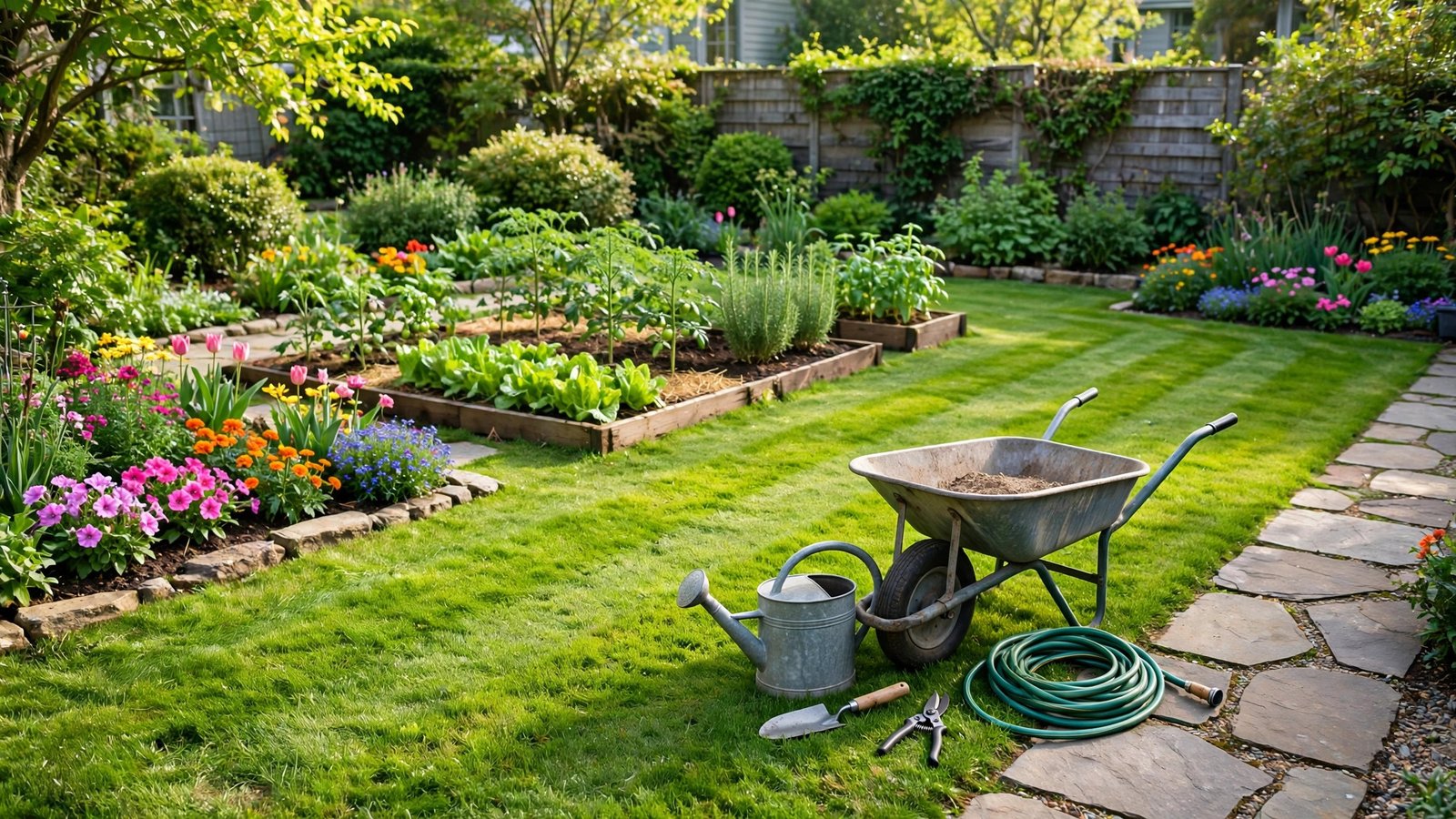
A healthy yard does not happen by accident. It comes from a few good habits, the right tools, and a little attention at the right time of year. You do not need a professional crew or a big budget. Most homeowners can keep a lawn green and a garden productive with a simple routine that takes a couple of hours a week in the growing season.
The trick is to work with your yard, not against it. Grass, soil, and plants all follow the seasons, so timing matters more than effort. In this guide, we walk through the essentials: soil, tools, mowing, watering, and a seasonal checklist you can actually follow. Whether you are starting from a patchy lawn or just want your garden beds to look their best, the steps below will help. A well-stocked Lawn and Garden department is a good place to gather the basics in one trip, so you are not running to the store every weekend.
Start With the Soil
Everything above ground depends on what is below it. Before you buy seed, fertilizer, or plants, check your soil. Grab a handful of moist soil and squeeze it. If it holds together loosely and crumbles when poked, you are in good shape. If it stays in a hard ball, it is heavy clay; if it falls apart instantly, it is sandy and will dry out fast.
A simple soil test kit, available at most hardware stores, tells you the pH and nutrient levels in minutes. Most lawns and vegetables prefer a pH between 6.0 and 7.0. If your soil is too acidic, garden lime helps; if it is alkaline, sulfur or compost can bring it down. Compost is the safest fix for almost any soil problem. Spread a thin layer, about a quarter inch, over the lawn in spring or fall, and mix a few inches into garden beds before planting. It feeds the soil slowly, holds moisture, and encourages earthworms that do the aerating for you.
The Core Tools Every Yard Needs
You do not need a shed full of gadgets. A small set of reliable tools covers nearly every job. Start with a mower that suits your yard size: a push mower for small lawns, a self-propelled model for larger or sloped ones. Add a sturdy rake, a spade, a hand trowel, pruning shears, and a watering can or hose with an adjustable nozzle.
Buy tools you can sharpen and repair rather than replace. Stainless or forged steel heads last longer, and wooden or fiberglass handles absorb shock better than cheap plastic. Clean your tools after each use — a quick wipe and a drop of oil on the blades stops rust and keeps cuts clean, which helps plants heal faster. Stores like NYLA Worldwide carry the full range, from mowers to hand tools, so you can compare quality side by side before you buy.
Mowing and Watering Done Right
Mowing is the single most frequent job, and small mistakes here show up fast. Never cut more than one-third of the grass height at once. Cutting too short, called scalping, stresses the roots and invites weeds. Keep the blade sharp; a dull blade tears the grass and leaves brown tips. In the heat of summer, raise the mowing height a notch — longer grass shades the soil and holds moisture.
Water deeply and rarely rather than a little every day. A good soak of about an inch of water once or twice a week pushes roots down, making the lawn tougher in dry spells. The best time to water is early morning, so the grass dries before nightfall and fungal problems stay away. A rain gauge, or a simple tuna can set on the lawn, tells you when you have applied enough.
Seasonal Upkeep Checklist
- Spring: rake up debris, aerate compacted areas, overseed thin patches, and start mowing as growth picks up.
- Summer: water early in the morning, mow high, mulch garden beds to hold moisture, and deadhead flowers to keep them blooming.
- Fall: feed the lawn, plant bulbs, clear fallen leaves, and drain hoses before the first freeze.
- Winter: store tools clean and oiled, sharpen mower blades, and plan next year’s beds while the garden rests.
Run through this list once per season and most problems get caught before they grow.
Common Mistakes to Avoid
The most common mistake is over-fertilizing. More is not better — excess fertilizer burns grass, pollutes runoff, and feeds weeds. Follow the label rate and feed at most twice a year, in spring and fall. Another mistake is planting without checking sunlight. A plant labeled full sun needs at least six hours of direct light, and no amount of water will save it in deep shade. Finally, do not ignore weeds when they are small. Ten minutes of pulling a week beats a weekend of digging later.
A good yard is built on routine, not effort in bursts. Soil first, sharp tools, sensible mowing and watering, and a quick seasonal check are all it takes. Start with one improvement this weekend — test your soil or sharpen your mower blade — and build from there. Your lawn and garden will repay the attention many times over. More practical home and garden guides like this one appear regularly on ExactReads.
 tommy.kin
 faff.davidson-8231
 bill.chaudhary