
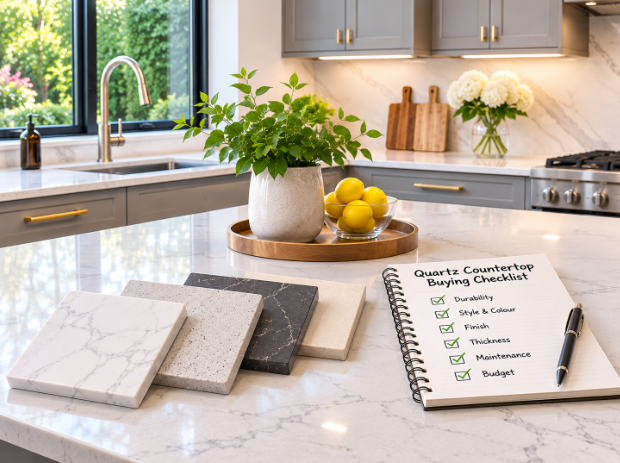
A kitchen worktop must handle food preparation, spills, and regular cleaning while complementing the room’s overall design. Choosing the right material affects both its appearance and everyday practicality. Quartz countertops for kitchens are a popular option because engineered quartz offers a wide range of colours and patterns, along with a non-porous surface that is relatively easy to maintain. However, appearance is only one factor to consider. Understanding the material’s durability, heat resistance, maintenance requirements, and installation process can help you select a worktop that suits your kitchen and household needs.
Understand What Quartz Worktops Are Made From
Quartz worktops are engineered surfaces made by combining natural quartz particles with resins and, in some products, pigments or other minerals. This process creates a broad selection of colours, patterns and finishes. Unlike natural stone, which can vary noticeably from slab to slab, engineered quartz generally offers greater control over its appearance.
Options include plain shades, subtle grains, shimmer effects and marble-inspired veining. Larger samples show more of the pattern and how it may look across a full worktop.
Consider Durability and Everyday Use
Kitchen surfaces are exposed to chopping, cookware, food preparation and frequent cleaning. Quartz is valued for its hardness, impact resistance, and resistance to everyday scratches, although it is not completely scratch-proof. Use chopping boards rather than cutting directly on the surface, and avoid dragging heavy or sharp objects across it.
Its non-porous structure means quartz does not readily absorb liquids, helping it resist many common stains. However, spills should still be wiped up promptly, particularly strongly coloured substances such as coffee, wine or oils. Follow the care guidance for the specific brand to protect the finish.
When comparing quartz countertops for kitchens, consider how the surface will be used by everyone in the household. A busy kitchen may benefit from a practical finish and a colour that suits everyday activity, rather than a choice based on appearance alone.
Choose a Colour and Pattern That Suit the Room
Worktop colour can influence how spacious, bright or balanced a kitchen feels. White and pale grey surfaces can create a light appearance, while darker shades may add contrast against light cabinetry. Veined designs bring the look of natural marble into the room, whereas plain finishes often suit simpler, contemporary schemes.
Think about the other fixed elements in the kitchen before deciding. Cabinet colours, flooring, wall finishes and natural light all affect how a worktop appears. Request samples and view them in the room at different times of day to see how the colour responds to daylight and artificial lighting.
Plan Measurements and Installation Carefully
Accurate measurements ensure worktops fit properly around walls, cabinets, sinks, hobs, and other fixtures. Professional templating records dimensions and cut-out positions before fabrication, while also identifying joints, edges, and areas requiring additional support.
Since quartz is heavy, cutting and installation require suitable equipment and experience. Discuss the layout, edge profile, upstands, and splashbacks before fabrication begins. Also, confirm whether the quotation covers templating, fabrication, delivery, and installation. For quartz countertops for kitchens, careful planning helps achieve a precise fit and a finished surface that works with the room’s layout.
Keep the Surface Clean and Well Maintained
Routine care is generally simple. For everyday cleaning, use a soft cloth with warm water and a mild household detergent, then wipe the surface dry. Avoid abrasive pads and harsh chemicals unless the manufacturer confirms they are suitable. Different quartz brands can have their own care requirements, so check the product guidance.
Use heat protection when placing hot pans or cookware on the worktop. Although quartz has some heat resistance, sudden or prolonged exposure to high temperatures can damage the resin. Trivets and heat mats provide a sensible precaution.
Final Thoughts
Compare samples, maintenance instructions, installation requirements and overall cost before settling on a design. Solid quartz worktops can provide a durable, coordinated surface when the material and finish suit the household’s needs. Taking time to plan these details helps you choose a worktop that looks right and performs well in everyday use.
 tech.softtss