
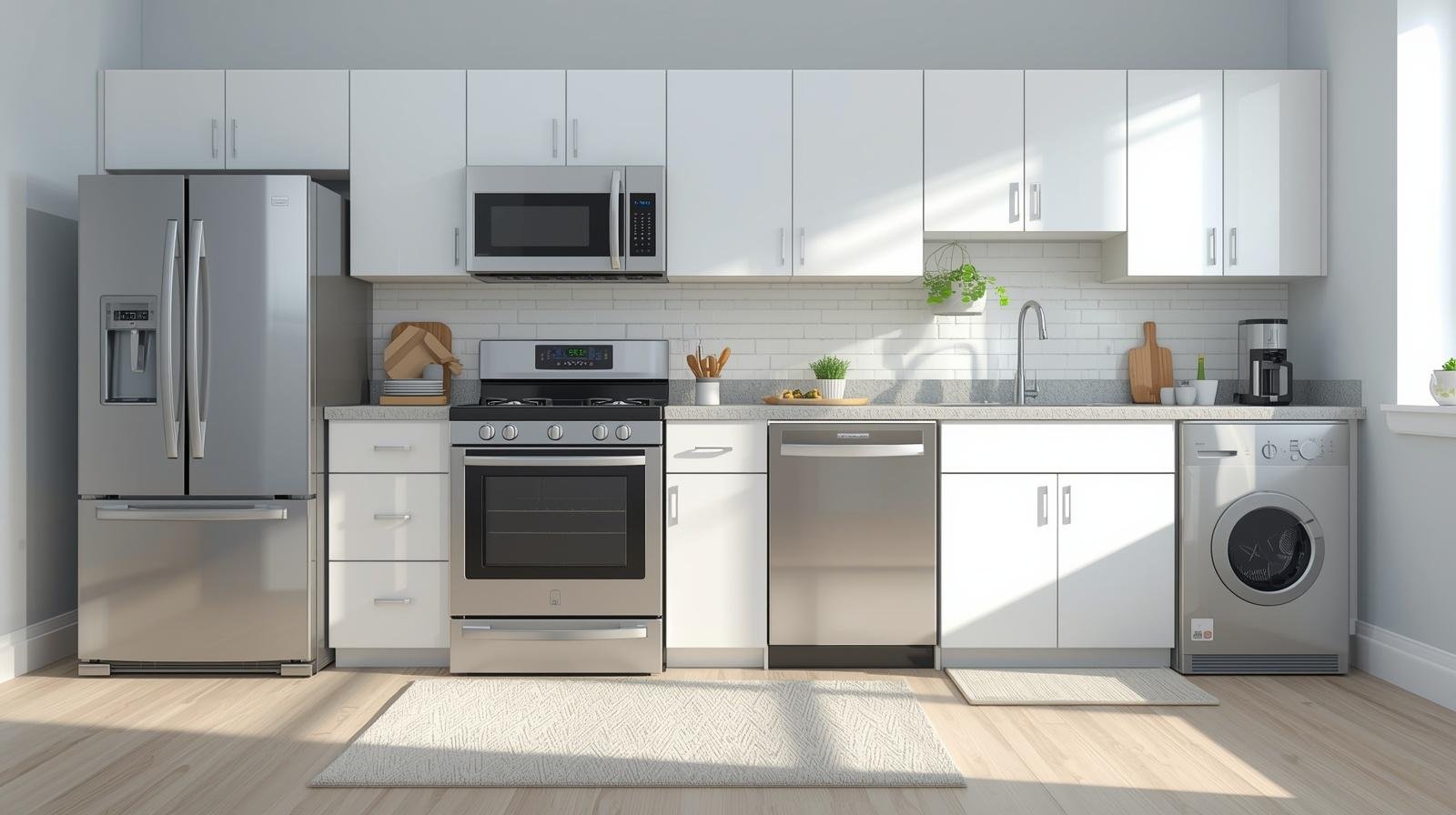
Home appliances account for approximately 13% of total household energy consumption, according to the U.S. Energy Information Administration. With Energy Star certified appliances available across every major category in 2026, upgrading aging equipment is one of the most straightforward paths to lower energy bills, improved performance, and reduced environmental impact. This comprehensive guide to the best Energy Star appliances of 2026 covers top-rated products in every major category, real-world energy savings, buying strategies, and how to maximize available rebates and tax credits.
What Does Energy Star Certification Mean in 2026?

The Energy Star program, run by the U.S. Environmental Protection Agency, certifies products that meet strict energy efficiency guidelines that go beyond the federal minimum standards. In 2026, Energy Star requirements have continued to tighten, meaning certified products deliver meaningful energy savings compared to standard models.
Energy Star certified appliances use 10 to 50% less energy than conventional models, depending on the product category. Refrigerators meeting Energy Star Most Efficient designation — the program’s highest tier — use up to 40% less energy than required by current federal standards. Energy Star dishwashers use an average of 3.5 gallons of water per cycle compared to older models using 10 or more gallons.
When shopping, look for both the standard Energy Star logo and the Energy Star Most Efficient designation, which identifies the top performers in each category. These products offer the best long-term savings and often qualify for the highest rebate tiers from utility programs and state energy offices.
Best Energy Star Refrigerators 2026
The refrigerator runs 24 hours a day, 365 days a year — making it one of the most important appliance purchases for energy efficiency. Modern Energy Star refrigerators are dramatically more efficient than models from just 10 to 15 years ago.
Top-Freezer Models: The most energy-efficient refrigerator configuration. The LG LRTLS2403S and similar top-freezer models use as little as 380 to 420 kWh per year — roughly $50 in annual electricity at national average rates.
French Door Models: The most popular configuration in 2026. The Samsung Bespoke French Door series and LG InstaView models earn Energy Star Most Efficient designation while offering advanced features including door-in-door access and smart connectivity. Annual energy use runs 500 to 650 kWh.
Side-by-Side Models: Typically less efficient than French door or top-freezer designs but popular for their convenience. Look for models under 600 kWh per year for strong Energy Star performance.
When comparing refrigerators, check the EnergyGuide yellow label for annual kWh consumption and estimated operating cost. A refrigerator that uses 450 kWh versus 700 kWh per year saves approximately $25 to $30 annually — and over a 15-year appliance life, that compounds to $375 to $450 in direct savings.

Best Energy Star Washers and Dryers 2026
Laundry appliances represent a significant opportunity for energy and water savings. The best Energy Star washers and dryers of 2026 combine excellent cleaning and drying performance with dramatically reduced resource consumption.
Energy Star Front-Load Washers: Front-load washers are significantly more efficient than top-load agitator models, using 40 to 60% less water and 30 to 50% less energy. The LG WM6998HBA and Electrolux ELFW7637AT consistently rank among the highest-rated for both efficiency and performance. Annual water savings per household switching from an old top-loader can exceed 6,000 gallons.
Energy Star HE Top-Load Washers: For those who prefer top-load convenience, high-efficiency top-load washers without agitators offer good efficiency. The GE GTW840CSNWS and Maytag MVW7232HW are strong performers with Energy Star certification.
Heat Pump Dryers: The biggest appliance efficiency breakthrough of recent years. Heat pump dryers use 28 to 50% less energy than conventional electric dryers by recycling hot air rather than exhausting it. The LG DLHC1455V, Electrolux ELFE7637AT, and Samsung DV25BB6900H are top performers. They also require no exterior exhaust duct, simplifying installation in apartments and condos.
Washing clothes in cold water — enabled by modern detergents and high-efficiency washers — further reduces energy use, as heating water accounts for 90% of a conventional washer’s energy consumption.
Best Energy Star Dishwashers and Water Heaters 2026
Dishwashers and water heaters represent two more categories with excellent Energy Star upgrade opportunities.
Energy Star Dishwashers: Modern Energy Star dishwashers are remarkably efficient, using as little as 2.0 to 3.5 gallons per cycle versus 6+ gallons for older models. The Bosch 500 Series, Miele G7000 Series, and LG QuadWash Pro earn top marks for efficiency and cleaning performance. Energy Star dishwashers also use less energy per cycle — typically 1.0 to 1.2 kWh — versus 1.5 to 2.0 kWh for older units.
Heat Pump Water Heaters: Perhaps the single highest-impact appliance upgrade available in 2026. Heat pump water heaters use 60 to 70% less electricity than conventional electric resistance water heaters. The Rheem ProTerra, AO Smith Voltex, and Bradford White AeroTherm series are top performers. Annual savings versus conventional electric water heaters run $300 to $500.
The federal tax credit covers 30% of heat pump water heater installation costs up to $2,000 annually under the Energy Efficient Home Improvement Credit — making this one of the most financially attractive appliance upgrades available today.

Energy Star Appliance Rebates and Incentives in 2026
Federal, state, and utility incentives make Energy Star appliance upgrades significantly more affordable in 2026. Taking full advantage of available programs can dramatically reduce your net costs.
The Home Electrification and Appliance Rebates (HEAR) program, part of the Inflation Reduction Act, provides point-of-sale rebates of up to $840 for Energy Star electric appliances including clothes washers, dryers, and cooking appliances. Income-qualifying households can receive even higher rebates. Program availability varies by state — check with your state energy office for current HEAR program status in your area.
Utility company appliance rebate programs are available from most major electric utilities and often provide $50 to $200 rebates for Energy Star certified refrigerators, dishwashers, washers, and dryers. Some programs offer additional incentives for recycling old inefficient appliances.
When purchasing, always check the appliance manufacturer’s rebate portal, your utility’s rebate program, and your state energy office for stacked savings opportunities. Many retailers also offer manufacturer rebates alongside utility rebates, allowing homeowners to combine multiple discounts.
Building an Energy-Efficient Home Appliance Strategy
The most strategic approach to Energy Star appliance upgrades is to replace the highest-energy-consuming appliances first and prioritize products with the highest efficiency differentials versus your current equipment.
If you have an electric resistance water heater more than 8 years old, replacing it with a heat pump water heater should be your first priority — the savings are largest and the tax credit strongest. If your refrigerator is more than 10 years old, it is likely consuming 700 to 1,000+ kWh per year versus 400 to 500 kWh for a new Energy Star model.
Track your appliance ages and energy consumption. Many modern smart meters and home energy monitors can identify which appliances are consuming the most electricity, helping you prioritize replacements strategically rather than reactively.
Finally, remember that the most energy-efficient appliance is one you use correctly. Running full loads in dishwashers and washers, keeping refrigerator coils clean, and using dryer moisture sensors to avoid over-drying all maximize the efficiency of even the best Energy Star certified products.

Energy Star appliances in 2026 represent a compelling opportunity to reduce household energy costs, improve home performance, and lower your carbon footprint simultaneously. Focus on the highest-impact categories — water heating, laundry, and refrigeration — take full advantage of federal tax credits and utility rebates, and let EnergyGuide labels guide your final comparison. The savings compound over the life of each appliance, making today’s investment pay dividends for a decade or more.
 Published