
Introduction
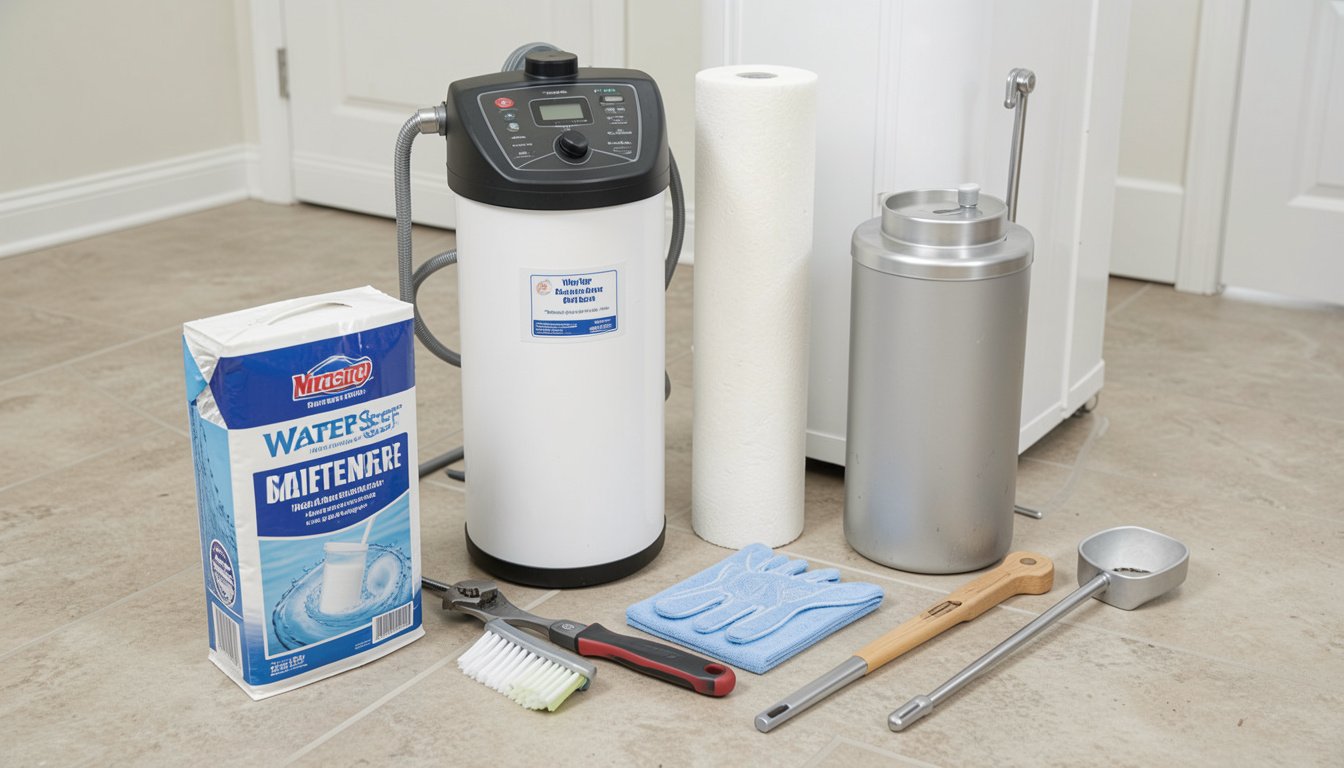
A water softener works quietly in the background, but like any mechanical system, it needs regular attention to keep delivering soft, mineral-free water. Many homeowners assume maintenance requires a professional every time, but with the right water softener maintenance tools on hand, most routine tasks can be handled safely and affordably at home.
This guide covers the essential tools for water softener maintenance, how to use them, and when a task calls for something more specialized.
Why the Right Tools Make Water Softener Maintenance Easier
Water softeners rely on a resin bed, a brine tank, and a control valve working together to remove hardness minerals from your water supply. Over time, salt bridges form, resin beds foul, and mineral deposits build up in valves and hoses. Having the correct tools on hand means you can catch these issues early, clean components properly, and avoid the added cost of emergency service calls.
A basic home maintenance kit typically pays for itself within the first year or two of ownership, since it helps you avoid preventable repair calls.
Essential Hand Tools for Basic Water Softener Upkeep
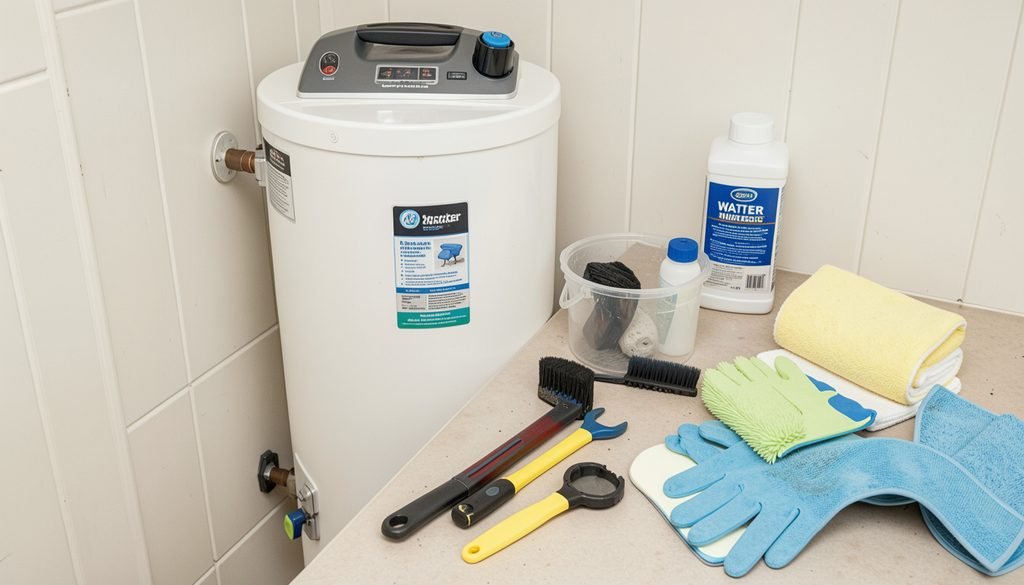
Every homeowner with a water softener should keep a small set of hand tools nearby. An adjustable wrench helps with tightening or loosening fittings without damaging them, while a bypass valve key allows quick shutoff during cleaning or repairs.
A long-handled brush or salt tank stirring stick breaks up salt bridges and mushing at the bottom of the brine tank. A shop vacuum with a hose attachment is invaluable for removing old brine and sludge during a full tank cleaning.
Water Softener Maintenance Tool Checklist
| Tool | Primary Use | Recommended Frequency |
| Adjustable wrench | Tightening fittings and connections | As needed |
| Salt tank stirring stick | Breaking up salt bridges | Monthly check |
| Shop vacuum | Removing sludge during tank cleaning | Every 6-12 months |
| Water hardness test kit | Confirming softener performance | Monthly |
| Bypass valve key | Shutting off softener for service | As needed |
Testing and Cleaning Tools for Resin and Brine Tanks
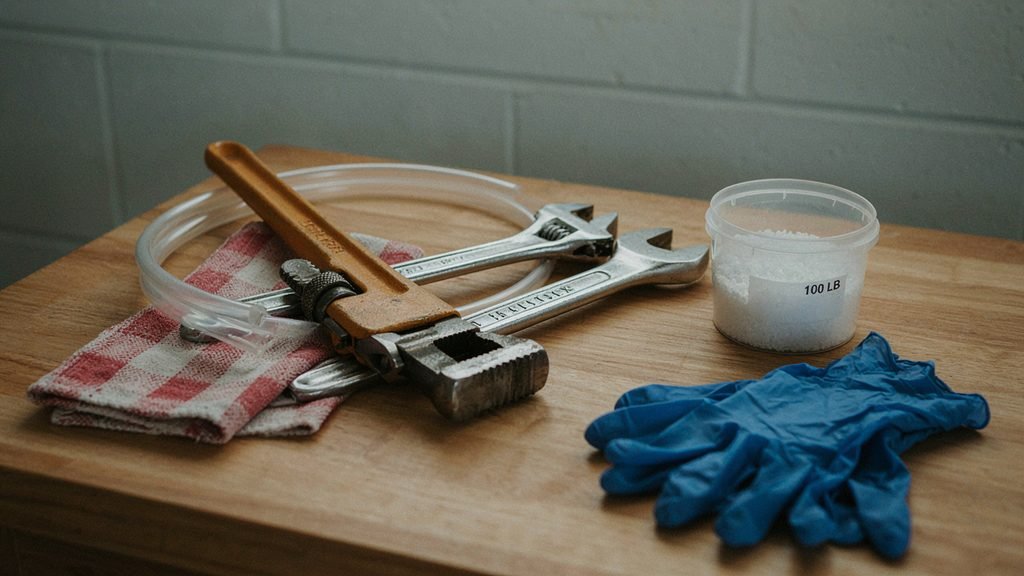
Beyond hand tools, a few testing and cleaning products round out a complete maintenance kit. A water hardness test kit lets you confirm the softener is actually reducing mineral content, which is the simplest way to catch resin bed failure early.
Resin bed cleaner, used once or twice a year, removes iron and manganese buildup that reduces softening capacity. Choosing the right type of salt also matters, since pellet or block salt varieties behave differently inside the brine tank.
Comparing Salt and Cleaning Products
| Product Type | Best For | Notes |
| Solar salt (pellet) | General use, most systems | Dissolves easily, lower purity than evaporated salt |
| Evaporated salt | Homes with iron in water supply | Highest purity, reduces bridging |
| Potassium chloride | Sodium-restricted households | More expensive, gentler on plants and septic systems |
| Resin bed cleaner | Systems with iron or sulfur buildup | Use per manufacturer schedule, typically 1-2x per year |
Tools for Diagnosing Water Softener Problems
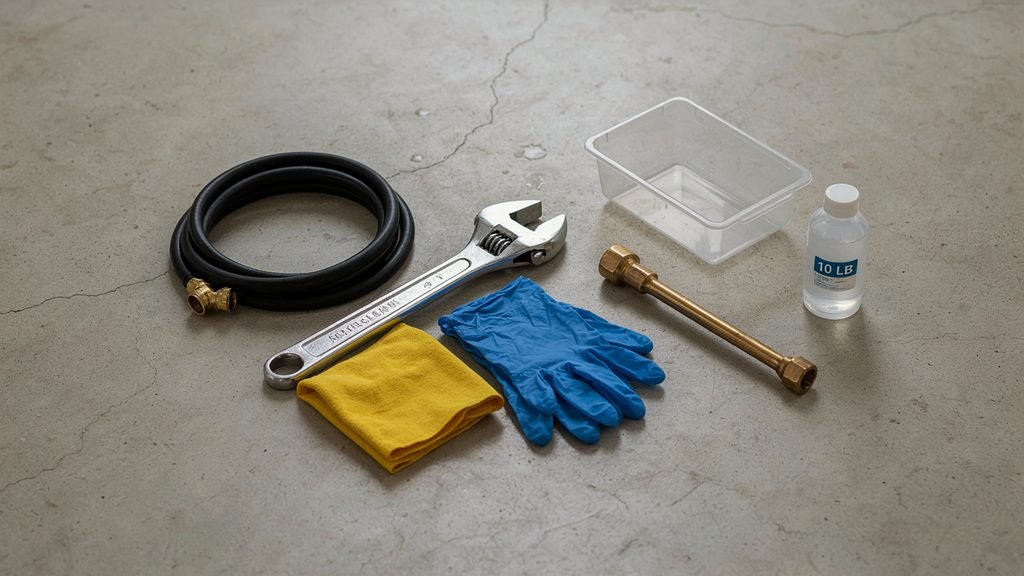
When something seems off, a few diagnostic tools help pinpoint the cause before calling a technician. A multimeter can test whether the control valve’s timer or motor is receiving power correctly. A flashlight with a narrow beam helps inspect the brine tank and resin tank interior for salt bridges, mushing, or discoloration.
Keeping the owner’s manual, or a digital copy, on hand is equally important, since many control valve error codes point directly to the underlying problem.
Tips for Choosing and Using Maintenance Tools
- Buy a dedicated stirring stick rather than improvising with random rods, which can scratch tank walls
- Store salt in a dry area to prevent early bridging
- Test water hardness at the same time each month for consistent tracking
- Keep a small toolkit near the softener rather than in a distant garage or shed
- Replace resin cleaner and test strips before they expire for accurate readings
- Label your bypass valve position clearly so anyone in the household can shut it off in an emergency
Frequently Asked Questions
1. How often should I clean my water softener’s brine tank?
Most manufacturers recommend a full brine tank cleaning every six to twelve months, depending on water quality and usage.
2. What is a salt bridge and why does it matter?
A salt bridge is a hardened crust that forms above the water level in the brine tank, preventing salt from dissolving properly and stopping the regeneration process.
3. Can I test my water hardness without professional equipment?
Yes, inexpensive test strips or drop-based hardness test kits give a reliable reading you can use to monitor softener performance at home.
4. Do I need resin cleaner if my water doesn’t have iron?
If your water source is low in iron, manganese, or sulfur, resin cleaner may only be needed occasionally rather than on a strict schedule.
5. What tools do I need to shut off my water softener for repairs?
A bypass valve key is usually all that is required, allowing water to bypass the softener while you perform maintenance safely.
6. How do I know if my water softener needs professional service instead of DIY maintenance?
If hardness test results stay high after cleaning and refilling salt, or the control valve displays persistent error codes, it is time to call a professional.
Conclusion
Maintaining a water softener doesn’t require an extensive workshop, just a handful of purpose-built tools used consistently. With an adjustable wrench, stirring stick, test kit, and the right salt on hand, most homeowners can keep their system running efficiently between professional service visits. Investing in these water softener maintenance tools now helps you catch small issues before they turn into costly repairs, keeping your water soft and your system reliable for years to come.