
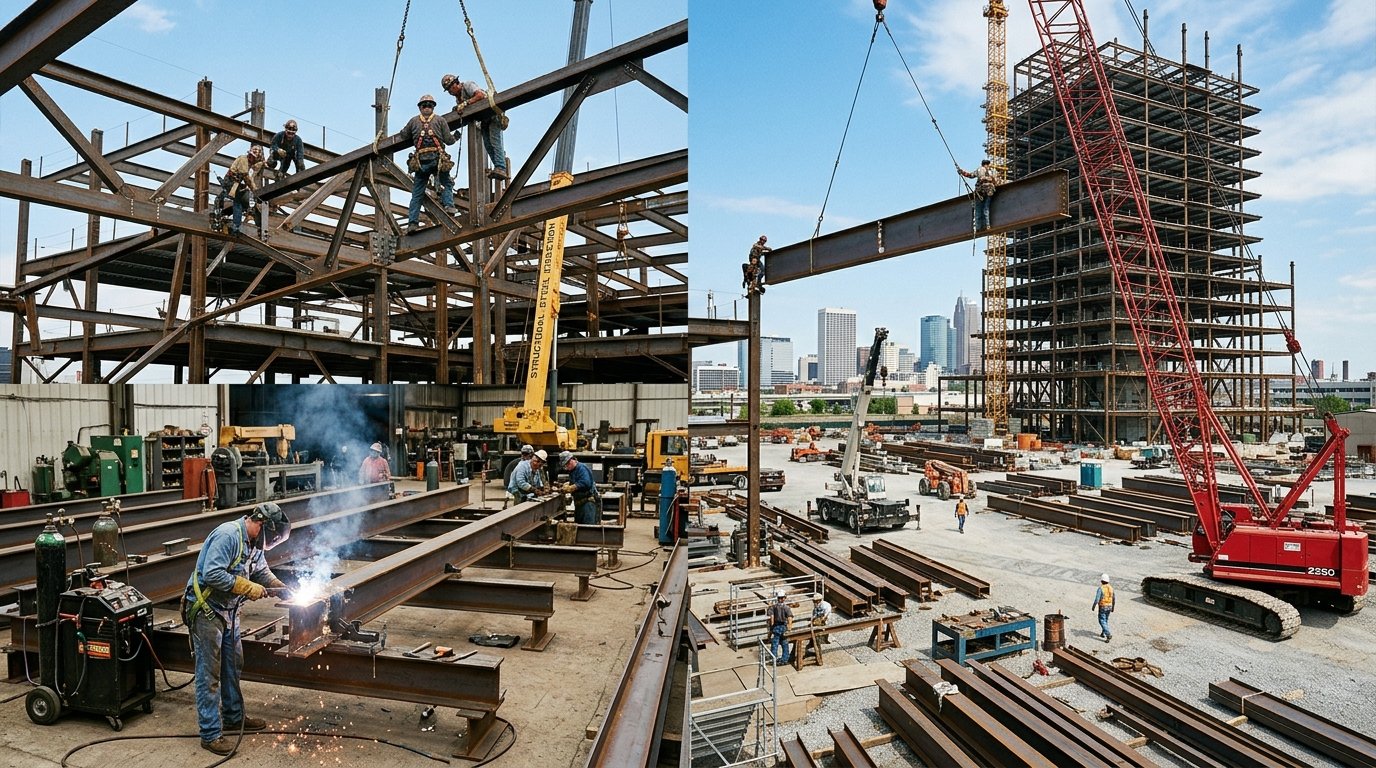
Structural steel is the material of choice for large-scale industrial complexes, commercial high-rises, and modern infrastructure. Known for its high strength-to-weight ratio and durability, steel allows engineers to design expansive, open-concept structures that are both resilient and cost-effective.
Understanding Structural Steel Fabrication
Fabrication is the process of converting raw steel into custom-engineered components according to detailed architectural blueprints. This phase occurs in a controlled workshop environment to ensure high accuracy and strict quality control.
Key stages of steel fabrication include:
- Cutting & Drilling: Utilizing high-precision CNC plasma cutters and drills to shape steel plates and beams.
- Bending & Welding: Shaping steel profiles and permanently joining sections through certified welding practices.
- Surface Coating & Protection: Applying anti-corrosive primers, galvanization, or fire-resistant coatings to extend the steel’s lifespan.
The On-Site Erection Process
Once fabricated, the individual steel components are transported to the construction site for erection. Structural steel erection involves assembling these prefabricated parts into a complete load-bearing framework.
Essential steps in the erection process include:
- Site Preparation & Rigging: Setting up cranes and heavy lifting equipment with strict safety protocols.
- Alignment & Fitting: Positioning beams, columns, and trusses precisely over foundation anchor bolts.
- Bolting & Field Welding: Securing all structural connections using high-strength structural bolts or site welds.
Key Benefits of Steel Fabrication & Erection
Using prefabricated structural steel offers major advantages over traditional cast-in-place materials.
Main advantages include:
- Rapid Construction: Off-site fabrication minimizes site delays and speeds up overall project timelines.
- Exceptional Strength & Flexibility: Supports wide spans without intermediate columns, allowing flexible architectural layouts.
- Sustainability: Steel is 100% recyclable, making it an eco-friendly choice for sustainable building projects.
Combining precise workshop fabrication with safe, efficient site erection creates robust steel frameworks engineered to endure extreme load conditions.