
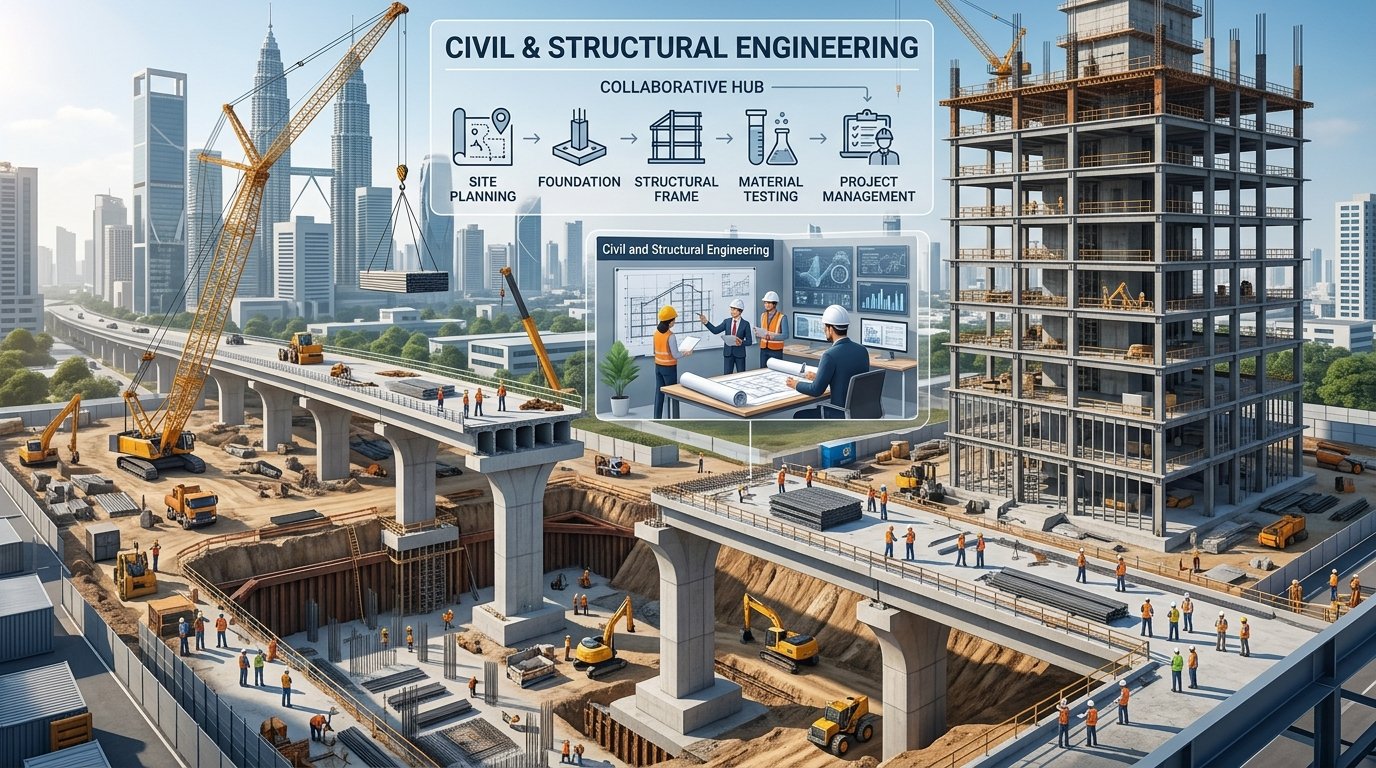
Civil and structural engineering form the backbone of the modern built environment. From urban skyscrapers and residential developments to highway networks and water management systems, these disciplines ensure that public and private infrastructure is safe, functional, and built to endure over time.
Understanding Civil Engineering vs. Structural Engineering
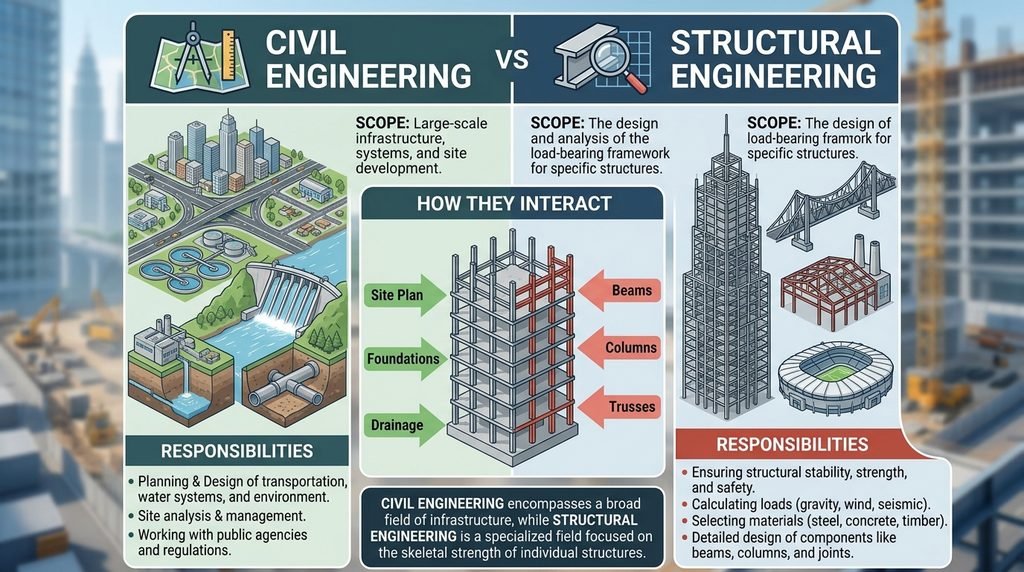
Understanding Civil Engineering vs. Structural Engineering” soucre Gemini ai
While closely related and often working in tandem, civil and structural engineering focus on different aspects of a project:
- Civil Engineering: Focuses on the broader design, planning, and maintenance of the environment. This includes site preparation, earthworks, water supply networks, drainage, and transportation infrastructure like roads and bridges.
- Structural Engineering: A specialized branch of civil engineering that focuses specifically on the physical framework of structures. Structural engineers calculate load forces, material stress, and environmental factors to ensure buildings, towers, and bridges remain stable and safe under all conditions.
Key Pillars of a Construction Project
A complete civil construction lifecycle relies on several interconnected phases, each requiring technical precision and strict adherence to safety standards:
- Site Preparation & Groundwork: Earthworks, excavation, and site grading establish a firm, level base to support structural foundations and manage drainage.
- Foundations & Concrete Works: Utilizing high-precision formwork and reinforced concrete pouring creates the primary load-bearing foundation for walls, columns, and slabs.
- Framework Fabrication & Erection: Assembling prefabricated structural steel or reinforced concrete frames provides the skeletal strength needed for heavy-duty commercial and high-rise applications.
- Roads & Supporting Infrastructure: Developing surrounding road networks, utility conduits, and stormwater systems connects the structure to the broader community.
Future Trends in Civil and Structural Engineering
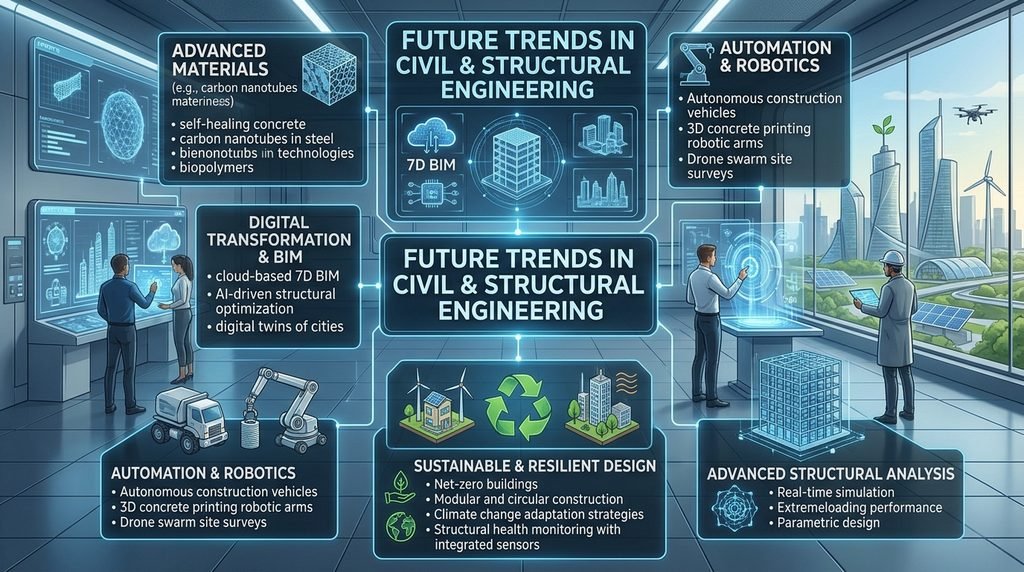
Future Trends in Civil and Structural Engineering source Gemini ai
As the construction industry evolves, civil and structural engineering are incorporating modern technology and sustainable practices:
- Building Information Modeling (BIM): 3D digital design tools that improve collaboration between civil engineers, architects, and contractors before physical construction starts.
- Sustainable Building Materials: Using low-carbon concrete, recycled steel, and eco-friendly paving techniques to minimize environmental impact.
- Resilient Infrastructure Design: Engineering roads, bridges, and buildings to withstand extreme weather, floods, and seismic events.
By combining thorough civil planning with precise structural engineering, modern construction projects deliver safe, sustainable, and long-lasting developments for future generations.