
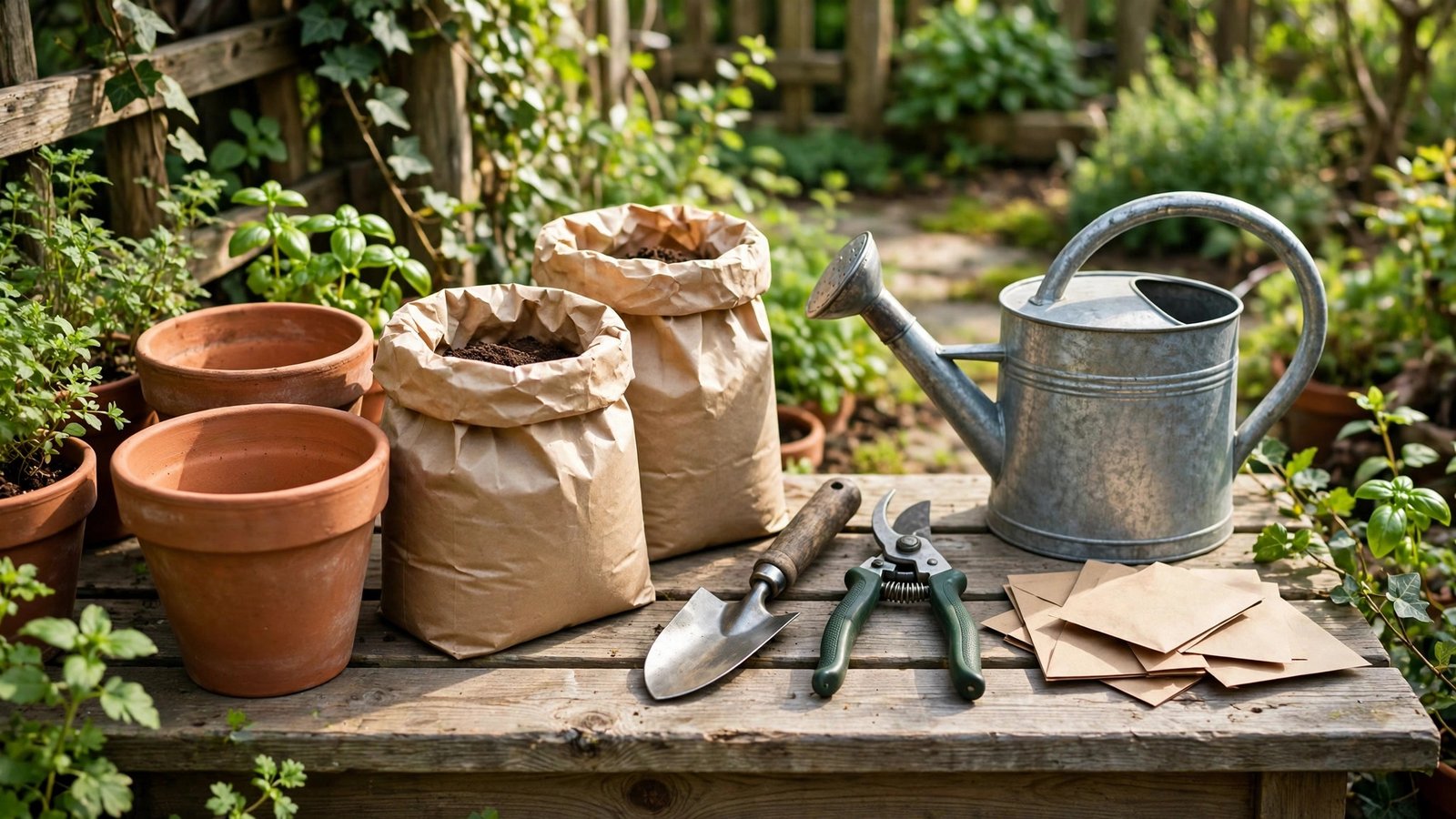
Every garden has a moment each season when it quietly asks for a reset. The soil is tired, the tools are dull, a pot or two is cracked, and the watering can has gone missing again. A short stock-up trip with a checklist in hand turns that reset into an afternoon’s work instead of a month of small frustrations. Here is what every home garden needs for the season: soil and seeds, tools and watering, pots and protection.
Start With the Soil
Everything in a garden starts below the surface. Before you buy a single seed, check your soil: grab a handful and squeeze. Soil that holds its shape but crumbles when poked is in good shape; soil that stays in a hard lump needs compost, and soil that falls apart instantly needs organic matter to hold moisture.
Compost is the single most useful thing you can add. Mix it into beds before planting, top-dress around established plants, and use it to revive tired potting mix. For containers, use proper potting mix rather than garden soil — it drains better and will not compact into a brick by midsummer. Finish with two to three inches of bark or straw mulch to hold moisture in and weeds down.
Seeds and Plants Worth Stocking
Buy seeds for the season ahead, not the season you wish you had. Check the back of each packet for sowing dates and days to harvest, and pick varieties suited to your climate rather than the prettiest picture. A short list beats a drawer of half-used packets: two or three vegetables you actually eat, a couple of herbs, and one or two flowers that bring in pollinators.
Sow a little at a time. A fresh row every two or three weeks keeps herbs and salads coming all season instead of arriving in one glut. Keep packets cool and dry, and label every row — by June, every seedling looks the same.
The Tools That Do the Heavy Lifting
Good tools save your back and your plants. Five well-chosen tools cover nearly everything: a hand trowel for planting, a hand fork for weeding, sharp bypass pruners for clean cuts, sturdy gloves, and a kneeling pad.
Before the season starts, clean every blade, sharpen the pruners, and wipe metal parts with a lightly oiled cloth so they do not rust. A dull pruner crushes stems instead of cutting them, leaving wounds that invite disease. A well-stocked range of Garden Supplies covers all of this in one place, so you can replace worn-out pieces and fill the gaps in a single trip.
Watering Done Right
Most garden failures are watering failures. Too little and plants wilt; too much and roots rot. Water deeply and less often, so moisture reaches the roots instead of just wetting the surface. Early morning is best — water soaks in before the sun is strong, and leaves dry out during the day, which keeps fungal problems down.
A watering can with a rose head suits seedlings and pots, delivering a gentle shower instead of a jet that washes soil away. For beds, a soaker hose or drip line puts water at the base of plants and wastes far less than a sprinkler. Check with your finger first: if the top inch is dry, water; if it is still damp, wait a day.
Pots, Planters, and Growing Space
Containers let you garden anywhere — a balcony, a patio, a sunny windowsill. Every pot needs a drainage hole, because standing water is the fastest way to kill a plant. Terracotta looks lovely and breathes well but dries out fast in hot weather; plastic and glazed ceramic hold moisture longer. Pick pots a size bigger than you think you need — cramped roots mean stunted plants.
Group pots together to create a pocket of humidity, and raise them slightly on feet or bricks so water drains freely. For food in containers, go large: a tomato or pepper needs room for a deep root run, and a big pot dries out far more slowly than a small one.
The Seasonal Checklist
Run through this list once at the start of the season:
- Compost and potting mix for beds and containers
- Mulch for beds and pots
- Seeds for the season, plus plant labels
- Hand trowel, hand fork, sharp pruners
- Gloves and a kneeling pad
- Watering can with a rose head; hose or soaker for beds
- Pots with drainage holes, plus saucers
- Liquid feed for containers, which lose nutrients fast
Most of this fits into a single trip to Seashore Ace, and ticking it off in one go beats five separate trips for things you forgot.
A Small Effort Now, a Better Garden All Season
A garden rewards preparation. An hour on soil, a sharp pair of pruners, and a watering routine that reaches the roots will pay you back every day of the season. Stock up once, properly, and the season mostly takes care of itself — leaving you free to enjoy watching things grow. This checklist was put together by ExactReads to help home gardeners start the season ready.
 armand.montero