
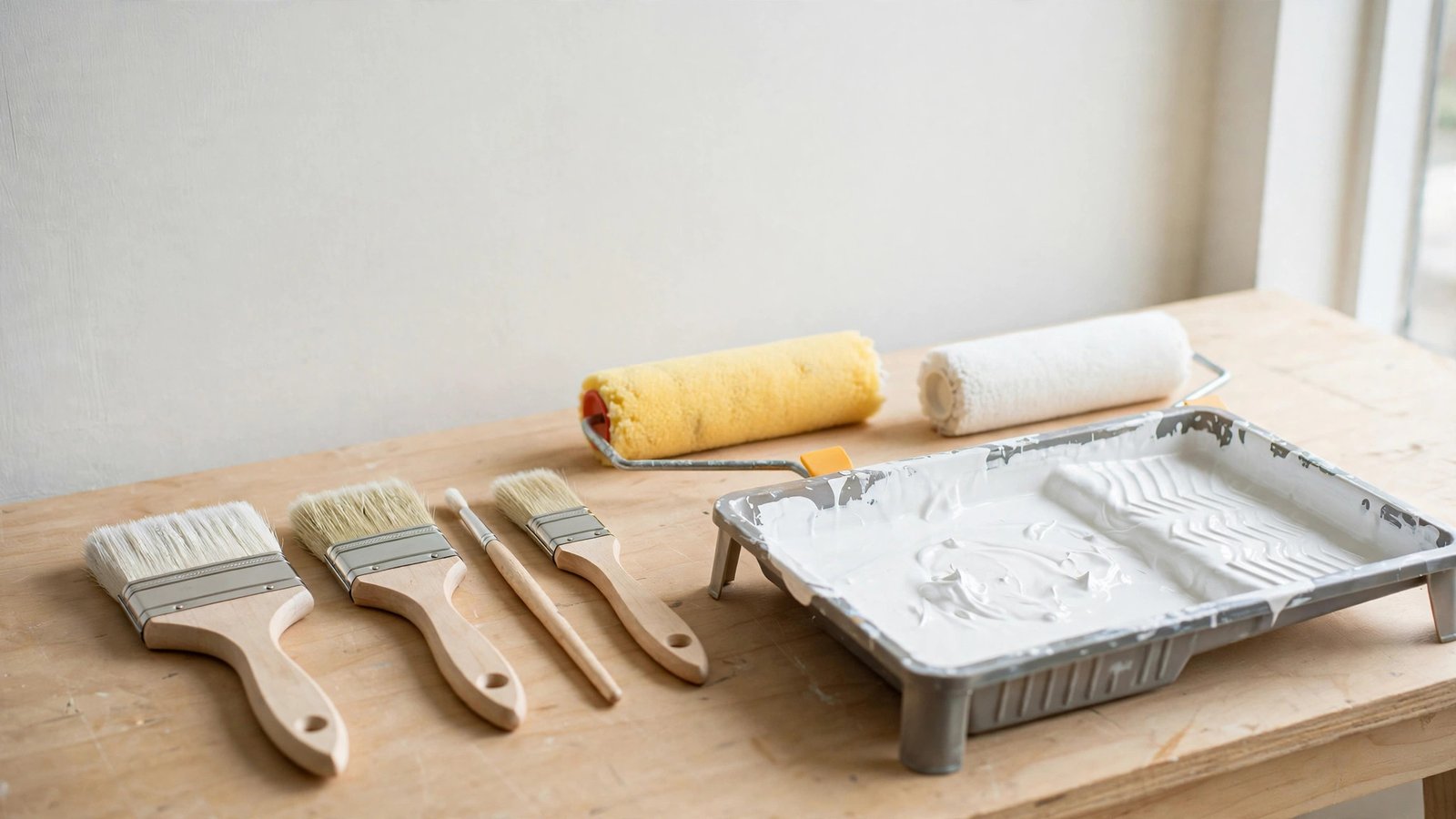
A great paint job is decided long before the first coat goes on the wall. The paint matters, but the tool in your hand matters just as much. A cheap brush sheds bristles into a wet finish, and a roller with the wrong nap leaves a bumpy orange-peel texture — both far harder to fix after the paint dries than to prevent. A few minutes choosing the right brushes and rollers is the simplest way to make a room look professionally painted.
Brush or Roller? Start With the Job
Brushes and rollers do different work, and most rooms need both. Rollers cover large, flat areas fast and lay down an even film of paint. Brushes handle the detail work: cutting in along ceilings and trim, painting corners, and covering narrow surfaces a roller cannot reach. Use a roller for the broad walls and a brush for the edges, then blend the two where they meet while the paint is still wet. That combination is what gives a wall its clean, uniform look.
Choosing the Right Brush
The first decision is bristle type. Natural bristles, usually hog hair, hold oil-based paint well and give a smooth finish with enamels and varnishes. Synthetic bristles, made from nylon or polyester, are the right choice for water-based latex paint because they keep their shape and do not absorb water and go limp. Using a natural-bristle brush with latex paint is one of the most common reasons a finish turns streaky.
Size matters too. A 2-inch angled sash brush is the workhorse for cutting in and painting trim, while a 3-inch flat brush covers doors and wide boards faster. Small 1-inch brushes are only for tight spots and touch-ups. A good brush should feel balanced, its bristles should spring back when bent, and it should carry enough paint that you are not reloading every few inches. If you are restocking your kit, the Brushes And Rollers department at Norberg Paints is a practical place to compare sizes and bristle types side by side before you buy.
Choosing the Right Roller
Rollers are defined by their nap, the thickness of the cover material. A short nap of 1/4 inch suits smooth surfaces like new drywall and freshly sanded doors, laying down a thin, even coat. A medium nap of 3/8 inch is the all-rounder for most interior walls with a light texture. A long nap of 1/2 inch or more is needed for rough surfaces such as textured plaster, brick, or stucco, because the thicker fibres reach into the low spots a short nap would skip over. Picking the wrong nap is the fastest way to an uneven finish, so match the nap to your wall, not to habit.
Roller width is the second choice. A standard 9-inch roller covers walls quickly and is the right default for most rooms. A 4-inch mini roller suits narrow spaces, behind radiators, and furniture. Buy a sturdy frame as well: one that flexes or wobbles makes the roller skip and leave ridges. And keep spare covers on hand. A cover used for two coats is usually past its best, and a fresh cover is cheaper than a third coat.
Which Tool for Which Job
| Job | Best tool |
|---|---|
| Large flat walls | 9-inch roller, 3/8-inch nap |
| Smooth doors and cabinets | Short-nap roller or 3-inch flat brush |
| Cutting in at ceilings and trim | 2-inch angled sash brush |
| Textured or rough walls | Roller with 1/2-inch nap or longer |
| Corners and narrow gaps | Angled brush or 4-inch mini roller |
| Oil-based paint and varnish | Natural-bristle brush |
| Water-based latex paint | Synthetic-bristle brush |
Small Habits That Make the Finish Look Professional
Good tools only help if they are used well. Load a brush by dipping it about a third of the way into the paint, then tap it lightly against the inside of the can rather than scraping it on the rim. With a roller, roll it through the tray until the cover is evenly coated, then roll off the excess on the tray’s ridged slope. Work in sections and always keep a wet edge, blending each new section into the previous one before it dries, so you never see a hard line where one pass ended and the next began. Apply two thin coats instead of one thick one; thick coats sag, drip, and take far longer to dry. Between coats, wrap a brush or roller tightly in plastic wrap so it stays usable, and at the end of the day wash latex tools in warm soapy water and oil-based tools in the correct solvent, then let them dry flat so the fibres keep their shape.
The Bottom Line
A professional-looking paint finish is not a mystery. Match the brush bristle to your paint type, match the roller nap to your wall texture, use the roller for the open areas and the brush for the edges, and let two thin coats do the work of one thick one. Do that, and the difference between your walls and a hired painter’s will be hard to spot. As the team at ExactReads often reminds readers, the right tool used the right way beats an expensive product used the wrong way.
 armand.montero