
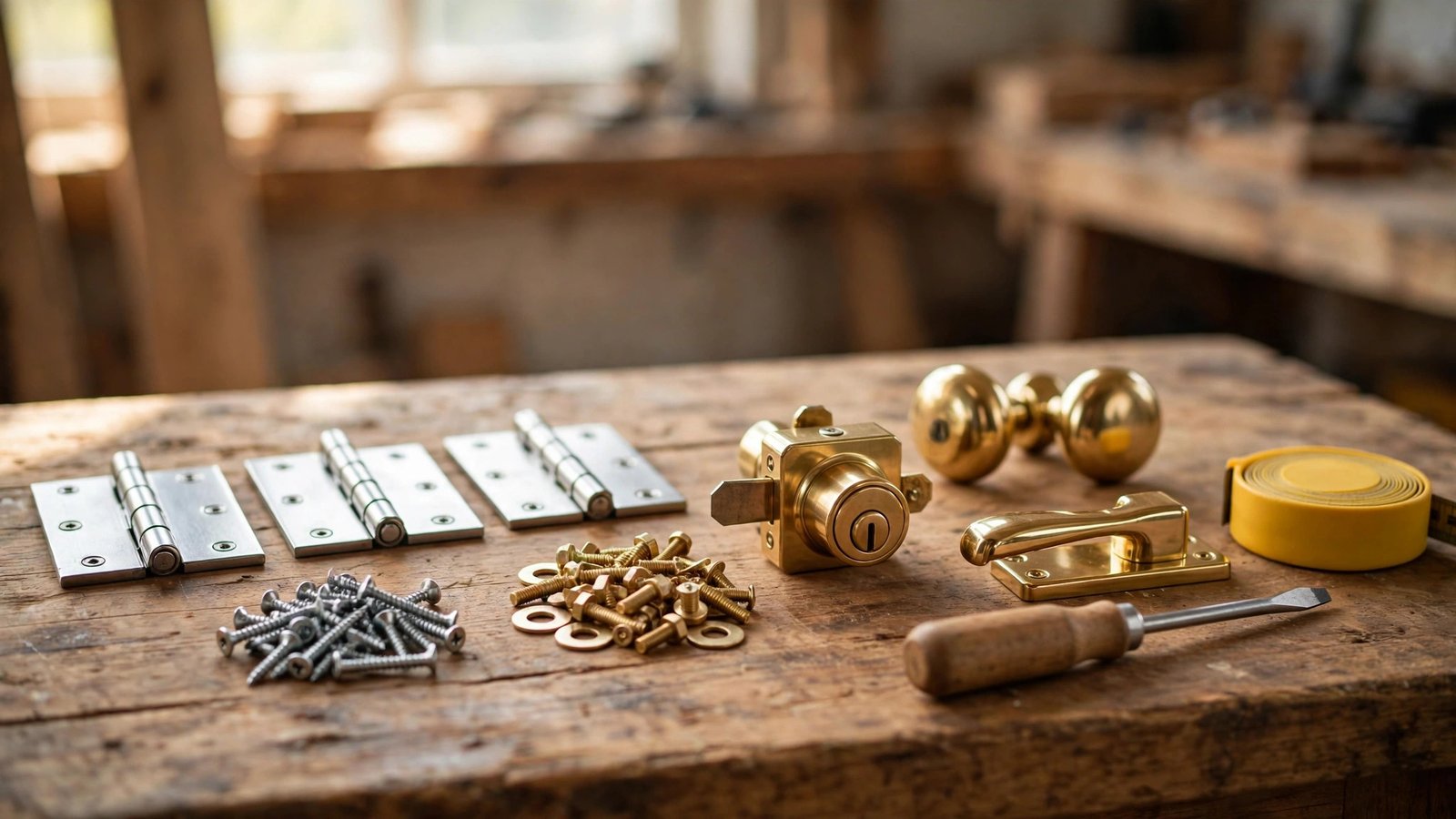
Walk into a hardware store and you will see shelves of hinges, locks, screws, and brackets that all look roughly the same. Pick the wrong ones, though, and you will feel it every day: a door that sags after six months, a drawer that never closes properly, or a lock that sticks on a cold morning. Builders hardware is the small stuff that holds a home together — and it is worth choosing carefully.
Hinges: Small, Cheap, and Easy to Get Wrong
A door is only as good as its hinges. For interior doors, standard butt hinges in solid steel or brass do the job well. For heavy exterior or solid-core doors, step up to ball-bearing hinges — they carry the weight without wearing out and keep the door swinging smoothly for years.
Check two things before you buy: the weight rating and the finish. A hinge rated for 40 kg on a 60 kg door will fail, slowly and annoyingly. Stainless steel suits kitchens and bathrooms, where steam and splashes are constant.
Locks and Latches: Security Starts Here
Locks are the one place where cutting corners genuinely costs you. A cheap lock on a front door is a false economy. Look for a solid deadbolt with a hardened steel bolt that extends at least 25 mm into the frame — that is what actually resists a forced entry.
For interior doors, a simple privacy latch is enough for bedrooms and bathrooms, but pay attention to the mechanism. A latch that clicks cleanly and releases smoothly is a sign of decent machining.
If you are upgrading, consider keyed-alike sets so one key opens the front door, back door, and garage. And if you are fitting locks yourself, take the old lock with you — matching the backset and hole spacing saves a lot of guesswork.
Fasteners: The Hidden Backbone
Screws, nails, bolts, and anchors do the invisible work of holding everything together. The most common mistake is using the wrong fastener for the job — drywall screws in a deck, for example, will rust and snap.
- Wood screws for timber joints. Brass or stainless steel if the work will be seen.
- Deck screws for outdoor timber — coated to resist weather and corrosion.
- Masonry anchors for brick and concrete walls. Never trust a regular screw in brick.
- Machine bolts for metal-to-metal or heavy structural connections.
Buy fasteners by the box, not by the handful. A box of good screws costs little more than a few loose ones, and you will use them constantly.
Handles, Knobs, and Pulls
Handles and knobs get touched dozens of times a day, so quality is something you feel. A solid brass or stainless steel pull has weight to it; a hollow, lightweight one feels cheap and loosens quickly.
Match your handles to the style of the room, but do not overthink it. A simple, well-made pull in a brushed finish suits almost any kitchen or bathroom. Check that the screw spacing matches your existing holes — the standard is 96 mm or 128 mm for cabinet pulls — and measure before you buy. Lever handles beat round knobs for children and older family members.
Builders Hardware Checklist: Before You Head to the Store
- Door hinges — three per standard door, two per cabinet door
- Deadbolts and latches — one per exterior door, privacy latches for bedrooms and bathrooms
- Screws and fasteners — wood screws, deck screws, masonry anchors in the sizes you need
- Cabinet handles and pulls — measured screw spacing, matching finish
- Door stops and draft excluders — cheap, and they protect walls and save energy
- Brackets and corner braces — for shelves, furniture repairs, and joinery
- Threadlocker — keeps screws in handles and hinges from working loose
Measure twice, buy once.
Quality Is Easy to Spot
You do not need to be an expert to tell good hardware from bad. Pick it up: good hardware has weight and smooth edges. Move the parts: a hinge should swing without grinding, a lock should turn without catching, a latch should click cleanly. If a piece feels rough, light, or rattly, put it back.
Buying from a specialist supplier also helps. A focused Builders Hardware department carries the right range in the right grades, which matters when you need a specific hinge size or a lock that actually fits your door. That is the difference between a store that sells hardware and one that understands it. Town & Country Hardware is one such specialist, with a builders hardware range built around real project needs rather than a generic shelf.
Closing: Small Parts, Big Difference
Builders hardware is easy to overlook because it is small, cheap, and unglamorous. But it is also the part of a home you touch every single day. A door that closes with a satisfying click, a drawer that glides shut, a lock that turns smoothly — these are the quiet signs of a job done well. Spend a little time choosing the right hinges, locks, and fasteners, and your project will feel solid for years. As the team at ExactReads often reminds readers, the details you cannot see are usually the ones that matter most.
 armand.montero