
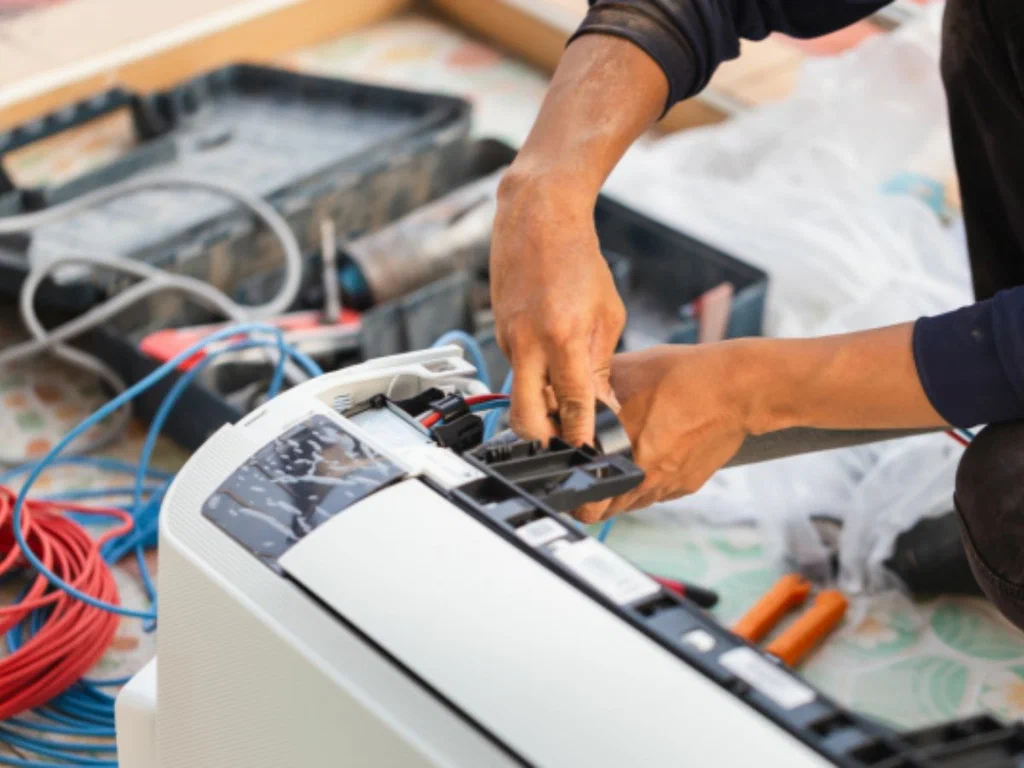
An aging air conditioner can become a financial concern for New Jersey homeowners, especially when it starts breaking down during the hottest months of the year. You may wonder whether another repair will solve the problem or whether investing in a new cooling system makes more sense. The right decision depends on several factors, including the unit’s age, repair history, energy efficiency, and overall condition.
Before making a decision, it is important to compare the cost of air conditioning repair in New Jersey with the long-term benefits of installing a replacement system. A repair may be the more affordable option when the problem is minor, but repeated breakdowns can make replacement worth considering.
1. Consider the Age of Your Air Conditioning System
The age of an air conditioner is one of the first things to consider when deciding between repair and replacement. Most central air conditioning systems have an expected service life of roughly 15 to 20 years, although actual lifespan depends on installation quality, maintenance, usage, and operating conditions.
A relatively new system with a minor issue may be worth repairing. For example, a faulty thermostat, clogged condensate drain, or certain electrical component problems may be resolved without replacing the entire unit.
However, an older system may experience more frequent mechanical problems as its components wear out. Even when individual repairs are possible, the cost of keeping the equipment operational can gradually increase.
Age alone should not determine the decision. A well-maintained older system may still perform adequately, while a neglected younger unit may already have significant problems. A professional inspection can help establish its actual condition.
2. Compare the Cost of Repair With Replacement
Repair costs vary depending on the part involved, the severity of the problem, equipment accessibility, and the labor required.
A minor repair may cost considerably less than installing a new air conditioner. However, major component failures can make repairs more expensive, particularly when the equipment is older or replacement parts are difficult to obtain.
When comparing repair and replacement, consider the following:
- The estimated cost of the current repair.
- The age and condition of the equipment.
- The likelihood of additional repairs.
- The availability and cost of replacement parts.
- The expected operating efficiency of a new system.
- The installation work required for replacement.
For example, repairing a relatively new system with a single failed component may be sensible. On the other hand, spending a significant amount on an older unit that has experienced several breakdowns may not provide good long-term value.
Ask the technician to explain both options where appropriate. This makes it easier to compare the immediate repair expense with the potential benefits of a new system.
3. Watch for Frequent Air Conditioner Breakdowns
An air conditioner that needs repairs repeatedly may be approaching the point where replacement deserves serious consideration.
One breakdown does not necessarily mean the equipment has reached the end of its useful life. However, recurring problems can indicate that multiple components are wearing out or that an underlying issue has not been properly addressed.
For example, a homeowner may first experience weak airflow, followed by cooling problems and then an electrical component failure. Although each issue may be repairable, the combined expense can become difficult to justify.
Keep a record of previous repairs, including the dates, problems identified, and work completed. This information can help you understand whether the system is experiencing isolated faults or a pattern of declining reliability.
If the air conditioner frequently stops working during periods of high outdoor temperatures, replacement may provide greater reliability than continuing to invest in an aging system.
4. Evaluate Your Current Energy Efficiency
Older air conditioners may consume more electricity than newer, properly sized systems. Improvements in cooling technology and efficiency standards mean that modern equipment can offer better performance than many older models.
However, replacing an air conditioner does not automatically guarantee lower energy bills. Actual savings depend on the new system’s efficiency, installation quality, operating habits, and the home’s insulation.
If your electricity bills have increased without a clear change in usage, it may be worth having the air conditioner inspected. Dirty coils, restricted airflow, refrigerant problems, and aging components can all affect performance.
A technician can evaluate the equipment and determine whether the increased energy consumption is related to a repairable problem or declining system efficiency.
When comparing replacement options, review the Seasonal Energy Efficiency Ratio 2 (SEER2) rating. A higher rating generally indicates greater cooling efficiency under standardized testing conditions. However, the system must also be properly sized and installed to deliver its expected performance.
5. Understand Which AC Problems Can Be Repaired
Some air conditioning problems are relatively straightforward to fix. If the equipment is otherwise in good condition, repairing these issues may be more economical than replacing the entire system.
Common repairable problems include:
Thermostat issues: Incorrect settings, battery problems, or faulty thermostats can prevent an air conditioner from operating properly.
Clogged condensate drains: A blocked drain can cause water to collect around the indoor unit and may trigger a safety switch.
Electrical component failures: Certain capacitors, contactors, or wiring problems can interrupt system operation and may be repairable by a qualified technician.
Dirty filters and coils: Restricted airflow and dirty components can reduce cooling performance. Proper cleaning or filter replacement may resolve some problems.
Fan problems: A faulty fan motor or related component may prevent the system from moving air or releasing heat effectively.
Not every problem is suitable for a simple repair. Refrigerant leaks, damaged compressors, and major heat-transfer component failures may require more extensive work.
The important step is to identify the actual cause rather than repeatedly treating the symptoms.
6. Know When Replacement Becomes the Better Option
There are situations where replacing an older air conditioner may be more practical than continuing to repair it.
A system that is near the end of its expected service life and has experienced multiple major failures may no longer be a good candidate for repeated repairs. Replacement may also make sense when the equipment uses outdated technology, performs poorly, or cannot maintain comfortable indoor temperatures.
Another important consideration is refrigerant type. Older systems may use R-22 refrigerant, which has been phased out of new production and import in the United States. Servicing equipment that relies on older refrigerants can become more difficult and expensive as supplies become limited.
Replacement may also be worth considering if the existing system is incorrectly sized for the property or has a history of poor cooling performance.
When reviewing replacement options, compare equipment capacity, efficiency, warranty terms, installation requirements, and compatibility with the existing ductwork.
7. Consider the Cost of Installing a New AC System
Replacing an air conditioner involves more than purchasing new equipment. The total project cost may include equipment, labor, removal of the old unit, electrical work, refrigerant-line adjustments, drainage modifications, and other installation requirements.
The final amount depends on the property’s size, system type, equipment capacity, installation complexity, and any necessary upgrades.
For example, replacing an existing central AC unit with a compatible model may require less work than installing a completely different system. If the existing ductwork is damaged or incorrectly sized, additional modifications may be necessary.
When requesting an estimate, ask the contractor to explain what the quoted price includes. Make sure the proposal identifies the equipment model, installation work, warranty coverage, and any additional charges that may apply.
A detailed estimate helps you compare different options without focusing only on the initial equipment price.
8. Make Sure the New AC Unit Is Properly Sized
Choosing the correct system size is essential when replacing an old air conditioner. Some homeowners assume that a larger unit will cool their property more effectively, but this is not always true.
An oversized air conditioner may cool rooms too quickly without running long enough to remove sufficient humidity. This can create uncomfortable indoor conditions and cause frequent starting and stopping.
An undersized system may struggle to maintain the desired temperature during hot weather, particularly when outdoor temperatures remain high for extended periods.
Professional contractors use a cooling-load calculation, commonly called Manual J, to estimate the property’s cooling requirements. This assessment considers factors such as square footage, insulation, windows, ceiling height, air leakage, and local climate.
Proper sizing helps the replacement system provide more consistent cooling and operate according to its design.
9. Consider Indoor Comfort and Air Quality
An air conditioner does more than lower indoor temperatures. It also plays a role in managing humidity and circulating air throughout the property.
An aging or poorly maintained system may struggle to maintain consistent temperatures. Some rooms may feel cooler than others, while certain areas remain warm even when the AC runs continuously.
Before replacing the equipment, consider whether the problem is caused by the air conditioner itself or by other factors such as duct leaks, blocked vents, poor insulation, or inadequate airflow.
A new system may improve comfort, but it cannot automatically correct every problem in the home’s cooling distribution.
Discuss these concerns with the contractor before installation. Addressing ductwork, airflow, and insulation issues may be just as important as selecting the right equipment.
10. Compare Repair and Replacement With a Long-Term View
The cheapest immediate option is not always the most economical decision over several years.
A repair may restore an older air conditioner for another cooling season, but it is important to consider the possibility of additional breakdowns. A replacement requires a larger initial investment, but a properly selected and installed system may offer improved reliability and efficiency.
When evaluating AC installation company NJ options, ask about the equipment’s efficiency, installation process, expected maintenance requirements, and warranty conditions. A professional assessment can help you determine whether replacement offers meaningful benefits over repairing your current unit.
Consider the total expected ownership cost rather than looking only at the purchase price. This includes installation, maintenance, electricity consumption, and potential repair expenses.
Avoid assuming that a new unit will immediately pay for itself through energy savings. Actual savings depend on the difference between the old and new systems and how the equipment is used.
11. Questions to Ask Before Making Your Decision
Before approving a major repair or replacement project, make sure you understand the condition of your existing system.
Useful questions include:
- What exactly caused the air conditioner to stop working?
- Can the problem be repaired safely and reliably?
- Are other major components showing signs of wear?
- How much has the system cost to repair in recent years?
- Is the equipment still operating at a reasonable efficiency level?
- Would replacement require changes to the ductwork or electrical system?
- What warranty coverage is included with the proposed equipment?
A clear explanation from the technician can help you compare the available options and avoid unnecessary expenses.
Conclusion
Deciding whether to repair or replace an old air conditioner requires more than comparing two prices. The system’s age, repair history, energy efficiency, cooling performance, and installation requirements all influence the decision.
Repairing a newer unit with a manageable problem may be the most practical choice. However, an older system with repeated breakdowns, major component failures, or declining performance may justify replacement.
A professional evaluation can help you understand the condition of your equipment and compare the long-term costs of both options. By considering the full picture, New Jersey homeowners can make a more informed decision and prepare for dependable cooling during the next summer season.
 matt.grayson