
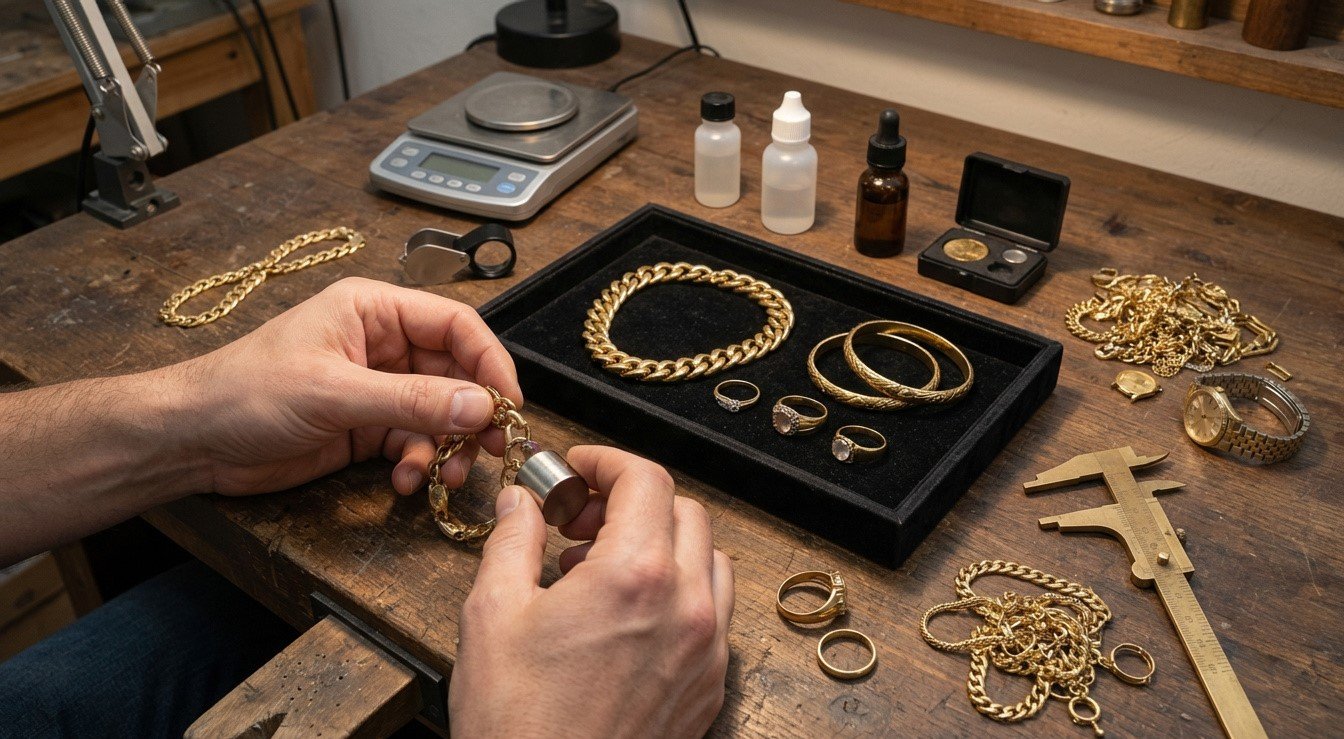
When preparing to sell gold jewelry, understanding its materials and construction can help you make a more informed decision. Some jewelry pieces contain magnetic or non-magnetic components, including clasps, decorative accents, springs, and mixed-metal parts. Knowing how these components affect an item’s evaluation can help sellers understand what buyers consider when making an offer. Little Rock Gold & Silver Buyer helps sellers explore their options when looking for cash for gold Little Rock services and deciding where to sell their unwanted gold jewelry.
Table of Contents
- Understanding Magnetic and Non-Magnetic Jewelry Components
- Why Some Gold Jewelry Contains Magnetic Parts
- Does Magnetism Affect Gold Value?
- What to Check Before Selling
- How Gold Buyers Evaluate Jewelry
- FAQs
- Conclusion
1. Understanding Magnetic and Non-Magnetic Jewelry Components
Gold itself is not magnetic under ordinary conditions. However, gold jewelry may contain other materials that respond to magnets. Some pieces have mixed-metal construction, while others use different metals for clasps, hinges, internal supports, or decorative features.
A magnetic reaction from one small component does not automatically mean the entire jewelry piece is fake. Similarly, a non-magnetic reaction alone does not confirm that an item is genuine gold.
2. Why Some Gold Jewelry Contains Magnetic Parts
Jewelry manufacturers sometimes use different metals to create durable or functional components. These materials may be found in:
- Clasps and locking mechanisms
- Spring-loaded parts
- Jewelry backs and closures
- Decorative accents
- Internal structural components
These additions may serve a practical purpose, but their metal composition can differ from the gold used in the main body of the jewelry.
3. Does Magnetism Affect Gold Value?
Magnetism can help identify material differences, but it is not a direct measure of gold purity or value. A magnetic component may be only a small part of an otherwise gold jewelry piece.
The value generally depends on factors such as:
- Gold purity or karat
- Gold weight
- Current market prices
- Whether the item contains other metals
- Design, craftsmanship, or collectible appeal
Buyers may consider the gold content separately from non-gold components when evaluating an item.
4. What to Check Before Selling
Before selling your jewelry, take time to inspect its markings, construction, and overall condition. Look for karat stamps such as 10K, 14K, or 18K, but remember that stamps alone are not definitive proof of gold content.
Keep different jewelry pieces organized, and make note of anything unusual about their construction. If you’re unsure whether a component is gold, let a professional buyer evaluate it rather than relying only on a magnet test.
5. How Gold Buyers Evaluate Jewelry
A professional gold buyer may examine the jewelry’s markings, test its metal composition, weigh relevant components, and consider the current gold market price. If a piece contains mixed materials, the buyer may distinguish between gold and non-gold portions when determining its value.
Ask how the evaluation is performed and how purity, weight, and pricing are considered. A clear explanation makes it easier to understand an offer and compare your selling options.
FAQs
Can real gold jewelry contain magnetic components?
Yes. Genuine gold jewelry may include magnetic parts made from other metals, particularly in functional components like clasps or springs.
Does a magnet test prove that jewelry is fake?
No. Magnet tests are limited and cannot reliably determine the authenticity or purity of an entire jewelry piece.
Should I remove magnetic parts before selling my jewelry?
No, you generally don’t need to remove components yourself. Let the buyer evaluate the jewelry in its existing condition.
Does mixed-metal jewelry still have resale value?
Yes. It may still have value based on its gold content, design, condition, and other relevant characteristics.
Conclusion
Understanding magnetic and non-magnetic components can help you avoid misconceptions when selling gold jewelry. A magnetic reaction does not necessarily mean your jewelry is fake, and non-magnetic materials do not automatically prove gold purity. Knowing how mixed components, weight, karat, and market prices influence evaluation can help you make better selling decisions. Little Rock Gold & Silver Buyer offers a local option for exploring cash for gold Little Rock services and learning how your jewelry may be evaluated. If you are considering selling, visit Little Rock Gold and Silver Buyer to discuss your gold jewelry and understand your selling options.
CTA
Have gold jewelry with unusual metal components? Take the time to understand its composition and potential value before selling. Contact Little Rock Gold & Silver Buyer to explore your options and learn more about the gold-selling process in Little Rock, Arkansas.
 alexis.morgan
 travor.mills