
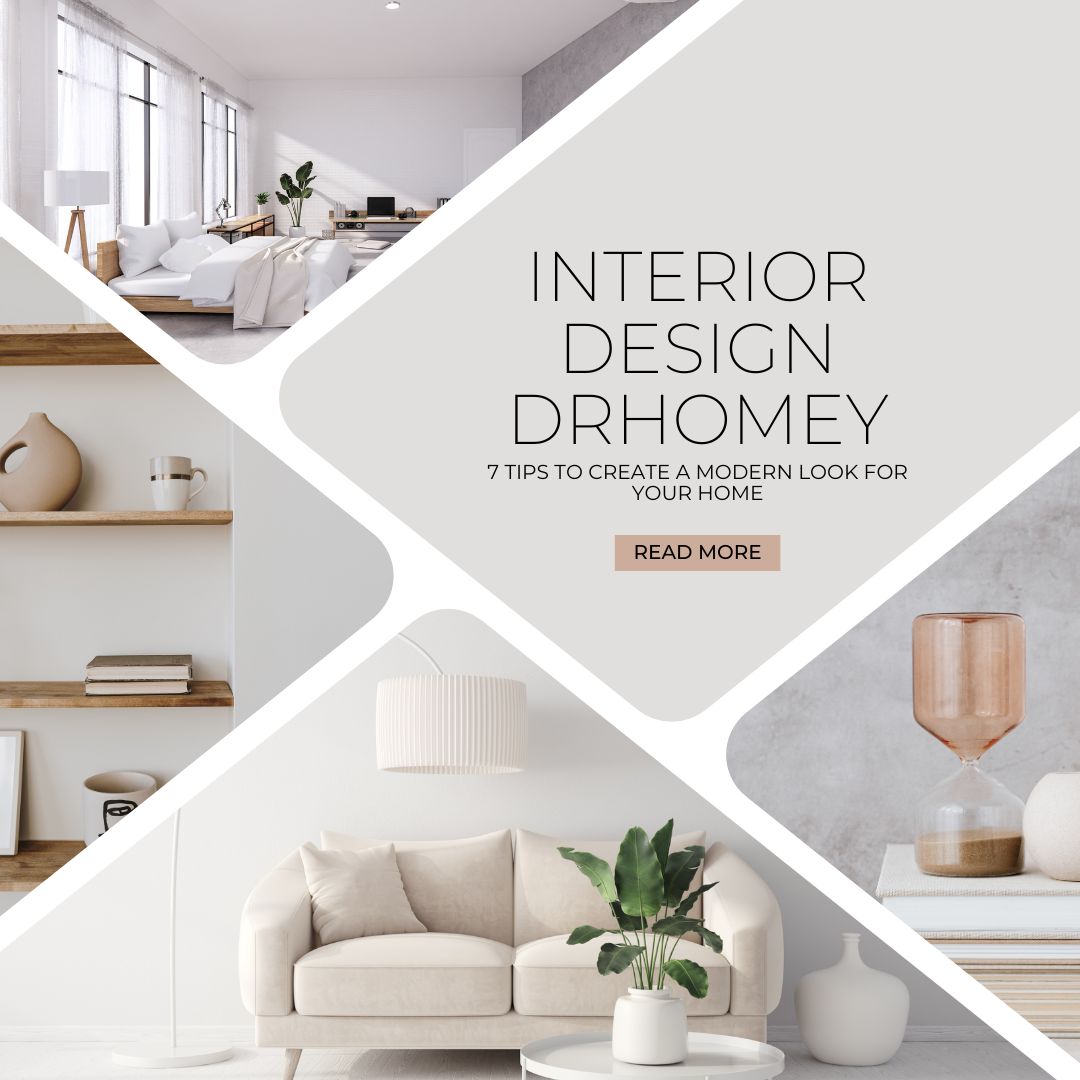
Your home is the most personal space in your world. It is where you rest, where you connect with the people you love, where you recover from the demands of daily life, and where you express who you are. Interior design is the discipline that turns a building into a home — transforming four walls and a ceiling into a space that genuinely reflects you, serves your life, and makes you feel something meaningful every time you walk through the door.
At DrHomey, we believe that great interior design is not reserved for people with large budgets or architectural expertise. It is available to anyone who understands its core principles and applies them with consistency and intention. This comprehensive guide covers everything you need to know about interior design — from the foundational principles that inform every great room, to practical, room-by-room styling advice that you can begin applying today.
Whether you are furnishing a new home from scratch, refreshing a single room on a modest budget, or simply trying to understand why some spaces feel wonderful and others do not, this guide gives you the knowledge, the framework, and the confidence to design better. Welcome to interior design, DrHomey style.

Part One: The Foundation
What Interior Design Actually Means — and Why It Matters
Interior design is often confused with interior decoration. The distinction matters. Decoration is the process of making a space look attractive — choosing colours, buying furniture, hanging pictures. Interior design is a deeper discipline that considers how a space functions, how it feels, how people move through it, and how every element within it relates to every other element.
A skilled interior designer asks questions that a decorator might not: Does this room serve the way the people in it actually live? Does the furniture arrangement encourage conversation or discourage it? Does the lighting support the activities that happen here at different times of day? Does this space feel cohesive, or does it feel like a collection of things that ended up in the same room by accident?
When interior design is done well, the result is a room that feels effortless. Nothing seems forced or misplaced. Every choice appears natural, even inevitable. That feeling of effortlessness is the product of enormous intentionality — of decisions made with care, knowledge, and a clear understanding of what the space is for and who it serves.
DrHomey Insight: Research in environmental psychology consistently shows that thoughtfully designed living spaces reduce cortisol levels, improve sleep quality, increase productivity, and strengthen relationships. The spaces we inhabit shape us far more profoundly than most people realise.
The Seven Principles of Interior Design: DrHomey’s Core Framework
Every discipline has a set of foundational principles — the rules that, once understood, make everything else fall into place. Interior design has seven. These principles are not rigid rules that must never be broken. They are frameworks for thinking. Understanding them gives you the freedom to make informed decisions rather than guessing, and to break rules deliberately rather than unknowingly.
1. Balance
Balance in interior design refers to the visual weight of elements in a room and how that weight is distributed across the space. A room that is visually balanced feels stable and comfortable. A room that is unbalanced feels unsettled, as if something is wrong but you cannot quite identify what. There are three types of balance: symmetrical balance, which places identical or near-identical elements on either side of a central axis and creates a formal, classic feeling; asymmetrical balance, which uses different elements of equivalent visual weight to create a more dynamic, contemporary feeling; and radial balance, which arranges elements around a central point, like chairs around a circular dining table.
2. Rhythm
Rhythm in interior design is the repetition and variation of elements — colour, shape, pattern, texture, or material — that creates a sense of movement and visual flow through a space. When a particular shade of blue appears in the cushions, is echoed in a piece of artwork, and reappears in a ceramic vase on the shelf, the eye follows a path through the room. This guided journey is rhythm. Without rhythm, a room feels random and disjointed. With it, even a simple space feels considered and complete.
3. Emphasis
Every great room has a focal point — one dominant element that draws the eye first and anchors the entire composition. This is the principle of emphasis. In a living room, the focal point might be a fireplace, a large window with a view, or a statement sofa. In a bedroom, it is almost always the headboard wall. In a dining room, it is often the light fitting above the table. The focal point gives a room a clear hierarchy — a place for the eye to begin its journey through the space — and all other design decisions radiate out from it.
4. Proportion and Scale
Proportion refers to the relationship between the sizes of different elements within a space. Scale refers to the size of those elements relative to the room itself. A grand chandelier in a low-ceilinged room feels oppressive. A tiny dining table in a large open-plan kitchen looks lost and mean. Getting proportion and scale right is one of the most technically challenging aspects of interior design — and one of the most immediately apparent when it goes wrong. The golden rule is to always measure your space precisely and plan furniture sizes on paper or in a planning application before you purchase anything.
5. Harmony
Harmony is the quality of a room where all elements feel as though they belong together — where nothing jars, nothing clashes, and nothing seems out of place. Achieving harmony does not mean making everything the same. It means making choices that share a common thread: a consistent colour palette, a unifying material, a coherent stylistic era, or a shared emotional tone. Harmony is the difference between a curated room and a cluttered one, even when both contain a similar number of objects.
6. Detail
In interior design, detail is everything that operates at close range — the quality of a join, the texture of a fabric, the finish on a piece of hardware, the weight of a cushion cover, the grain of a timber floor. Great rooms reward close inspection. They reveal more the longer you look. Detail is what separates a room that photographs well from a room that feels extraordinary to inhabit. It is also, significantly, what tells an observer how much care and thought has gone into a space.
7. Functionality
The most beautiful room in the world fails as interior design if it does not work for the people living in it. Functionality means that a kitchen is efficient to cook in, that a bedroom supports restful sleep, that a home office enables focused work, and that a family living room serves the very different needs of all its occupants — children doing homework, adults relaxing, guests being entertained — without sacrificing the qualities that make it a pleasant place to be. Functionality is not the enemy of beauty. In the best interior design, they are inseparable.
DrHomey Tip: Before beginning any room redesign, write down three things you want the room to do for you and three things you want it to feel like. These six words become your design brief — the filter through which every subsequent decision passes.

Part Two: Colour, Light & Texture
Colour: The Most Powerful Tool in Interior Design
Colour affects us more profoundly than most people appreciate. It influences our mood, changes the apparent size and temperature of a room, affects how rested or energised we feel, and shapes the emotional character of a space more than any other single design element. Understanding how colour works — and how to use it deliberately — is the most transformative skill you can develop as a home designer.
The colour wheel organises colours into families: warm (reds, oranges, yellows), cool (blues, greens, purples), and neutral (whites, greys, beiges, browns). Warm colours advance — they make walls feel closer and rooms feel more intimate and energetic. Cool colours recede — they make walls feel further away and rooms feel more spacious and calm. This is why a deep red dining room feels cosy and convivial, while a pale blue bedroom feels restful and expansive.
The DrHomey colour approach is built around the 60-30-10 rule, which is the single most reliable framework for creating a balanced, professional-looking colour scheme in any room. Sixty percent of the room’s colour comes from the dominant tone — typically the walls and any large upholstered pieces — which creates the room’s overall mood and character. Thirty percent comes from the secondary colour — curtains, a large rug, secondary seating, bedlinen — which adds depth and interest. Ten percent comes from accent colours — cushions, small accessories, candles, artwork, plants — which provide energy, personality, and the moments of surprise that make a room feel alive.
Colour Psychology Quick Guide: Blues and greens: calm, restful, spacious (ideal for bedrooms, bathrooms). Yellows and oranges: warm, energetic, sociable (ideal for kitchens, breakfast rooms). Whites and neutrals: clean, flexible, timeless. Deep jewel tones: dramatic, intimate, luxurious (dining rooms, home offices). Earthy tones: grounded, natural, calming (living rooms, studies).
Lighting: The Element That Changes Everything
Of all the elements in interior design, lighting is the most consistently underestimated. Most homes rely on a single central ceiling light in each room — and this is one of the primary reasons so many interiors feel flat, institutional, and uninviting, particularly in the evening. Transforming how a room feels through lighting does not require expensive electrical work or structural changes. It requires understanding the three-layer lighting system and applying it thoughtfully.
Ambient lighting is the room’s base level of illumination — the light that allows you to see and move safely. It comes from ceiling fixtures, recessed downlights, or pendant lights, and it should be controllable via a dimmer so that its intensity can be reduced in the evenings. Task lighting is focused light for specific activities: reading lamps, desk lights, under-cabinet kitchen lighting, and bathroom mirror lights. It eliminates shadows where detailed work is performed and keeps eyes comfortable during focused tasks. Accent lighting is the layer that creates atmosphere, depth, and drama — table lamps on side tables and consoles, floor lamps in corners, LED strip lights behind shelving or beneath floating cabinets, picture lights above artwork, and candles. Accent lighting is what makes a room look warm and inviting from the street at dusk, and what makes every evening at home feel more like an event.
Natural light deserves equal attention. The orientation of a room — the direction its windows face — fundamentally determines the quality of its natural light throughout the day, and this should inform every colour and material choice. East-facing rooms receive warm, golden morning light and are cool by afternoon. West-facing rooms are cool in the morning and flooded with warm amber light in the evening. South-facing rooms receive consistent, bright light all day. North-facing rooms receive cool, diffused, even light that never becomes direct. Each orientation suits different colour palettes and different functions.
DrHomey Tip: Replace every standard light switch in your main living spaces with a dimmer. This single change — which costs around $20–$40 per switch to install — has more impact on the atmosphere and livability of your home than almost any piece of furniture you could buy.
Texture: The Dimension That Makes Rooms Feel Real
Texture is the quality that engages us physically as well as visually. A room without textural variation looks flat in photographs and feels sterile in person. A room with richly layered textures — the smoothness of painted plaster against rough linen cushions, the warmth of timber against the coolness of marble, the softness of a wool rug against the hardness of a concrete floor — feels alive, complex, and genuinely luxurious, regardless of how much was spent on the individual pieces.
The DrHomey approach to texture layering involves working across three categories simultaneously. Hard textures — stone, glass, ceramic, polished metal, and lacquered surfaces — reflect light and create sophistication and precision. Soft textures — linen, cotton, velvet, wool, leather, and knitted fabrics — absorb light and generate warmth, comfort, and intimacy. Natural textures — raw timber, woven rattan, jute, terracotta, and living plants — connect the interior to the natural world and provide the organic quality that makes a space feel genuinely inhabitable rather than staged.
A useful exercise is to count the distinct textures currently present in a room you find unsatisfying. If the number is fewer than five, the room almost certainly feels flat. Adding a jute rug, a linen throw, a terracotta plant pot, a ceramic candle holder, and a timber tray to an existing room — at a total cost of perhaps $60–$100 — can transform the room’s atmosphere entirely. The cost is minimal. The impact is significant.
Part 3: Room by Room
The Living Room: Where Comfort and Beauty Meet
The living room is the social heart of most homes and the space where interior design has the greatest opportunity to make a meaningful difference. It needs to work for multiple activities — conversation, relaxation, entertainment, reading — and serve multiple occupants with different needs and preferences. Getting it right requires balancing beauty with genuine comfort, and visual interest with the kind of calm that allows tired people to genuinely decompress.
- Anchor the room with a correctly sized rug: The most common living room mistake is a rug that is too small. In a standard living room, all key seating pieces should have at least their front two legs on the rug. Minimum recommended size is 200 x 290cm. A rug that is too small makes the furniture look unanchored and the room feel unresolved.
- Float your sofa away from the wall: Pushing all furniture against the walls creates a formal, uncomfortable arrangement that makes rooms feel smaller. Moving the sofa 30–50cm away from the wall immediately creates a more considered, intimate arrangement.
- Invest in the quality of your lighting: A living room lit only by a single overhead light feels harsh and institutional after dark. A minimum of three light sources — two table or floor lamps and one overhead ambient fixture on a dimmer — creates the layered, warm atmosphere that makes a room feel like a destination rather than a transit space.
- Choose a clear focal point: Arrange all seating to address one dominant feature — a fireplace, a television wall, a large window, or a significant piece of artwork. Rooms without a clear focal point feel directionless.
- Edit your accessories: Remove at least a third of what is currently on your surfaces and shelves. Arrange what remains in curated groups of three or five, varying the heights of objects within each group. Space between groups is as important as the objects themselves.
The Bedroom: Designing for Rest, Calm, and Personal Sanctuary
The bedroom has one primary function above all others: to support restorative sleep. Every interior design decision in a bedroom should be evaluated against this criterion first. Stimulating colours, harsh lighting, visual clutter, and intrusive technology all compromise the bedroom’s fundamental purpose. The DrHomey approach to bedroom design begins with ruthless simplicity and builds warmth, comfort, and beauty on top of that foundation.
- Make the headboard wall your focal point: The wall behind the bed is the bedroom’s natural anchor. Give it emphasis through a carefully chosen paint colour, a panel of wallpaper, a large piece of calm artwork, or an upholstered headboard that extends significantly up the wall. This creates immediate visual coherence.
- Choose a cool, calm colour palette: Soft blues, sage greens, warm whites, gentle greys, and earthy taupes all support the relaxed, restful atmosphere that a bedroom needs. Reserve bolder colours for cushions and accessories where they add personality without dominating the room’s mood.
- Layer your bedlinen: A beautifully layered bed — fitted sheet, flat sheet, duvet or quilt, a folded throw, and three to five carefully arranged pillows in complementary sizes — transforms the bedroom’s visual quality more than any piece of furniture. Natural fabrics like linen and cotton feel better and photograph better than synthetic alternatives.
- Eliminate or conceal technology: Televisions in bedrooms disrupt sleep. Where they cannot be avoided, a television cabinet with closing doors or a curtain concealment allows the screen to disappear when not in use. Charge phones outside the bedroom or in a closed drawer.
- Control light completely: Blackout curtains or a blackout lining behind decorative curtains is one of the most significant sleep quality improvements available. Pair with dimmable bedside lamps that allow you to wind down gradually rather than switching from bright overhead light to complete darkness.
The Kitchen: Function First, Beauty Always
The kitchen is the most complex room in the house from a design perspective because its functional requirements are so specific and so non-negotiable. A kitchen that looks beautiful but works badly is a failure. The DrHomey approach to kitchen design begins with an analysis of the work triangle — the relationship between the sink, the stove, and the refrigerator — and builds outward from that functional core.
- Maximise storage intelligently: Deep drawers rather than floor-level cabinet doors allow full access to contents without crouching. Pull-out pantry units beside the fridge make use of narrow spaces. Corner carousels eliminate the dead space in corner cabinets. Wall-mounted magnetic knife strips and hanging pot rails free up valuable drawer and counter space.
- Invest in your worktop material: The worktop is the most used surface in the kitchen and the one that has the greatest visual impact. Quality stone — quartz or granite — is durable, beautiful, and adds significant value. Engineered quartz requires almost no maintenance and is particularly suitable for busy family kitchens.
- Light the worktop, not just the room: Under-cabinet LED strip lighting eliminates shadows on the primary work surface and transforms both the kitchen’s functionality and its evening atmosphere. This is one of the best-value upgrades available in any kitchen.
- Consider your splashback carefully: The splashback behind the hob and along the worktop is one of the kitchen’s strongest design statements. Large-format tiles, a continuous run of mirror, a slab of marble or stone, or a bold pattern all have the potential to define the kitchen’s entire visual character.

Part Four: The DrHomey Design Checklist
12 Interior Design Mistakes DrHomey Sees Most Often — and How to Fix Them
In working with homeowners across dozens of different room types and design challenges, the DrHomey team sees the same mistakes appearing repeatedly. Here they are — with their solutions.
| No: | Mistake | The DrHomey Fix |
| 1 | Rug too small | Always size up. Front legs of all key furniture on the rug minimum. |
| 2 | All furniture against the walls | Float sofas and chairs 30–50cm in from walls. |
| 3 | One central ceiling light only | Add 2–3 lamps; install dimmers throughout. |
| 4 | Curtains hung at window level | Hang 10–15cm below the ceiling, extend 25cm beyond each side of the window. |
| 5 | Too many small accessories | Edit to 50% of current quantity; group in odd numbers. |
| 6 | No defined focal point | Choose one dominant feature; arrange the room around it. |
| 7 | Matching furniture sets | Mix pieces from different sources — rooms look more curated and personal. |
| 8 | Wrong scale furniture | Always measure; check dimensions before purchase. |
| 9 | Ignoring the ceiling | Paint it, add a cornice, hang a statement light — the ceiling is the fifth wall. |
| 10 | No texture variation | Count textures; add soft, hard, and natural elements until you reach five or more. |
| 11 | Poor mirror placement | Place large mirrors to reflect light sources or attractive views, not blank walls. |
| 12 | Neglecting hallways | The entrance sets the tone for the whole home. Give it a considered colour, a good light, and one quality piece. |

Frequently Asked Questions
Your Interior Design Questions — Answered by DrHomey
Q: What is DrHomey’s interior design philosophy?
A: DrHomey’s design philosophy centres on the belief that great interior design must serve both beauty and function simultaneously. We believe that every person deserves a home that feels genuinely right — not just visually polished, but emotionally resonant and practically excellent. Our approach combines rigorous attention to the classical principles of design with a deep respect for personal preference, lifestyle, and budget. We do not believe in single universal ‘looks’ — we believe in helping each person find and express their own authentic aesthetic with skill and confidence.
Q: How do I start improving my interior design skills if I am a complete beginner?
A: Start by studying spaces you love. Save images from Instagram, Pinterest, and design magazines, and after collecting 50 or more that genuinely excite you, look for the common threads — colours, materials, proportions, levels of simplicity or complexity, stylistic periods. These patterns reveal your authentic taste. Then pick one room in your home and apply just two changes: improve the lighting by adding one lamp, and edit your surfaces by removing half of what is on them. These two changes alone will transform the room and show you what a difference small, intentional decisions make.
Q: What is the most important thing to get right in a room?
A: If forced to choose one element, it would be lighting — specifically, the transition from a single overhead light to a layered lighting scheme with at least three sources, controlled by dimmers. More than any other single change, this transforms how a room feels from the moment you walk in and throughout the different parts of the day. It costs less than most pieces of furniture, requires no structural changes, and has an immediate and dramatic impact on atmosphere.
Q: Can I achieve good interior design on a limited budget?
A: Absolutely. Some of the most impactful interior design changes are either free or very inexpensive. Re-arranging your furniture costs nothing and can transform a room completely. Editing and decluttering your accessories costs nothing and almost always improves a space immediately. Adding a single large piece of artwork, a quality rug, or a statement lamp can anchor a room for $50–$150. Repainting one wall can change the entire character of a room for the cost of a tin of paint. Great design is fundamentally about decisions, not expenditure.
Q: How do I find my personal interior design style?
A: Your personal style is not something you choose from a menu — it is something you discover by paying attention to your own responses. Collect images of spaces that make you feel something positive, whether you can articulate why or not. After gathering 50 or more images, look for patterns: are they predominantly light or dark? Minimal or layered? Modern or traditional? Natural or urban? Do they feature certain colours repeatedly? These observations will define your style far more accurately than any quiz or magazine feature, because they reflect your genuine, unprompted responses rather than your aspirational self-image.
Closing Thoughts from DrHomey
Design Your Home with Intention — and It Will Take Care of You
Interior design is not a project you complete and cross off a list. It is an ongoing conversation between you and the space you inhabit — a conversation that deepens as you learn more, as your life changes, and as your understanding of what you need from a home evolves. The principles in this guide are not a prescription for a particular look. They are tools for thinking more clearly and more intentionally about space.
Use them to understand why some rooms feel wonderful and to diagnose why others do not. Use them to make more confident decisions and to spend your money where it genuinely counts. Use them to create spaces that serve your real life rather than a life you think you should be living. And use them as the foundation for your own creative exploration — because the principles of good design are not ceilings. They are launchpads.
At DrHomey, we believe that every home — at every budget, in every neighbourhood, at every stage of life — deserves to be designed with care, knowledge, and genuine love. The home you live in shapes you, more than you may fully appreciate. Design it as though it matters. Because it does.
Design with intention. Live with purpose. — DrHomey