
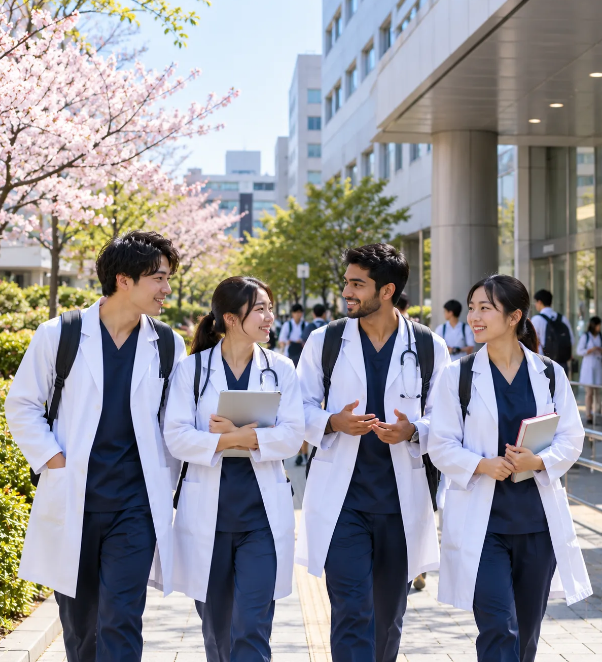
Japan has earned international recognition for its advanced medical facilities, precision-based healthcare practices, and technology-driven approach to patient care. For students, medical professionals, researchers, and academic institutions, understanding how these systems operate can provide valuable knowledge beyond traditional classroom learning. A Japan Healthcare Technology Tour get an opportunity to explore the country’s evolving medical landscape, observe modern healthcare infrastructure, and understand how innovation supports better treatment outcomes. Edutour offers educational travel opportunities that help participants gain international exposure through structured learning experiences. By exploring Japan’s healthcare environment, visitors can connect medical education with practical observations and develop a broader understanding of global healthcare standards.
Why Japan Is an Important Destination for Healthcare Education
Japan has developed a healthcare environment where medical research, advanced equipment, digital solutions, and patient-focused services work together. Its ageing population has also encouraged hospitals, research institutions, and technology companies to explore new ways of delivering medical assistance.
For international students and healthcare professionals, Japan provides an interesting setting to understand how medical knowledge is applied in real-world situations.
Some important areas that make Japan valuable for healthcare education include:
- Advanced diagnostic and imaging technologies.
- Robotic assistance in selected surgical procedures.
- Digital patient record management.
- Medical research and biotechnology development.
- Rehabilitation equipment and assistive technologies.
- Healthcare solutions designed for an ageing population.
These areas offer useful learning opportunities for anyone interested in the relationship between medicine, engineering, and technological development.
What to Expect During a Japan Healthcare Technology Tour
A well-planned educational visit should offer more than sightseeing around medical institutions. It should introduce participants to different healthcare environments and explain how technology contributes to medical services.
A Japan Healthcare Technology Tour can include several learning-focused activities depending on institutional permissions, participant interests, and the available programme schedule.
1. Hospital Visits and Healthcare Infrastructure
Hospitals are important places to understand how modern medical services are organised. Educational visits may introduce participants to hospital infrastructure, patient management systems, diagnostic departments, and specialised medical facilities.
Observing different departments helps students understand how doctors, nurses, technicians, and administrative teams coordinate their responsibilities.
These interactions can also provide a practical perspective on hospital operations, resource management, and the importance of maintaining efficient medical services.
2. Medical Robotics and Surgical Innovation
Robotics has become an important area of development in modern healthcare. Japan has a strong technological background, making it an interesting destination for learning about robotics, automation, and their potential medical applications.
Participants can explore topics such as:
- Robot-assisted surgical systems.
- Precision-based medical equipment.
- Rehabilitation robotics.
- Automated laboratory technologies.
- Assistive devices for patients with mobility limitations.
Such exposure helps students understand how engineering concepts can contribute to medical procedures and patient support.
3. Digital Healthcare and Artificial Intelligence
Healthcare technology is changing how medical information is collected, analysed, and used. Japan’s digital innovation environment provides opportunities to study the growing role of information technology in healthcare.
Educational discussions may cover electronic medical records, AI-supported diagnostic research, remote healthcare services, and digital monitoring solutions.
It is equally important to understand the limitations of these technologies. Data privacy, clinical accuracy, cybersecurity, and medical decision-making remain essential considerations when introducing digital systems into healthcare environments.
Understanding Japan’s Approach to Elderly Care and Rehabilitation
Japan’s ageing population has created a strong need for specialised elderly care services and rehabilitation solutions. This makes the country particularly relevant for students interested in geriatric medicine, physiotherapy, nursing, and healthcare management.
Several areas deserve attention during an educational programme.
Assistive healthcare equipment: Participants can learn about mobility aids, patient-support devices, and equipment designed to improve everyday independence.
Rehabilitation technology: Modern rehabilitation solutions can help patients work towards improved mobility and physical functioning after illness or injury.
Care-support robotics: Certain robotic systems are being developed to assist caregivers with patient handling, mobility support, and daily care activities.
Age-friendly healthcare environments: Hospital layouts, assistive infrastructure, and patient-support arrangements demonstrate how healthcare facilities can respond to changing population needs.
These observations can help participants understand that healthcare innovation is not limited to complex surgical equipment. Sometimes, practical improvements in daily patient care make an equally important difference.
Research Institutions and Medical Technology Exposure
Japan’s medical research ecosystem includes universities, specialised laboratories, research organisations, and technology companies. Each contributes differently to the development of healthcare solutions.
For students pursuing medical, biotechnology, biomedical engineering, pharmacy, or life science education, academic and research-oriented visits can be particularly useful.
Depending on programme availability, participants may explore:
- Biomedical research and laboratory practices.
- Pharmaceutical research and development.
- Medical device engineering.
- Biotechnology applications.
- Healthcare-related material science.
- Clinical research methodologies.
Interactions with academic representatives and researchers can also introduce participants to different career pathways. They may gain a better understanding of how scientific research progresses from an initial concept to a practical healthcare application.
How Students Benefit from International Healthcare Exposure
Classroom education builds the foundation, but international exposure introduces students to different working environments, research approaches, and professional expectations.
A structured educational tour can support learning in several ways.
- Practical understanding: Students connect theoretical medical concepts with real healthcare applications.
- Global awareness: Exposure to another country’s healthcare system broadens their understanding of international practices.
- Research interest: Observing advanced technologies may encourage students to explore specialised academic subjects.
- Professional interaction: Discussions with educators and industry representatives can provide useful career perspectives.
- Cultural understanding: Participants learn how social needs, public policies, and cultural expectations influence healthcare delivery.
For universities, such programmes can also add an international dimension to academic activities and encourage interdisciplinary learning.
Planning an Educational Healthcare Tour in Japan
A successful educational visit requires careful preparation. The itinerary should match the academic background of participants rather than simply covering as many locations as possible.
Before finalising a programme, institutions should consider:
- Learning objectives: Decide whether the focus is medical technology, hospital management, biotechnology, elderly care, or biomedical research.
- Participant profiles: Consider whether the group includes medical students, engineering students, researchers, or healthcare professionals.
- Institutional coordination: Arrange visits through appropriate hospitals, universities, laboratories, or research organisations.
- Expert interactions: Include discussions, presentations, and academic sessions wherever possible.
- Cultural preparation: Introduce participants to Japanese professional etiquette, communication practices, and local customs.
- Travel arrangements: Plan accommodation, transportation, meals, and scheduling according to group requirements.
It is worth remembering that hospital access and clinical observation are subject to institutional approval, patient privacy regulations, and safety requirements. A realistic itinerary should clearly distinguish between confirmed visits and proposed learning activities.
Final Thoughts
Japan offers an interesting combination of medical research, healthcare technology, digital innovation, and patient-support solutions. Exploring these areas can help students and professionals develop a more practical understanding of how modern healthcare systems function. A Japan Healthcare Technology Tour is therefore a valuable academic opportunity for institutions looking to introduce international learning into their programmes. With its focus on educational travel and exposure-based learning, Edutour can help institutions explore suitable programme possibilities and build meaningful international experiences around healthcare education.
Frequently Asked Questions (FAQs)
1. What is a Japan Healthcare Technology Tour?
It is an educational programme focused on exploring Japan’s healthcare infrastructure, medical technologies, research facilities, digital healthcare systems, and modern patient-care solutions.
2. Who can participate in a Japan Healthcare Technology Tour?
Medical students, nursing students, biomedical engineering students, biotechnology learners, researchers, healthcare professionals, and university groups may find these programmes relevant.
3. What technologies can students explore in Japan?
Depending on the itinerary, participants may learn about medical robotics, diagnostic equipment, AI-supported healthcare research, rehabilitation devices, digital medical records, and assistive technologies.
4. Can universities organise customised healthcare study tours in Japan?
Yes. Universities can explore programmes based on their academic objectives, group size, subject interests, and available institutional visits. The final itinerary depends on coordination and confirmation from the participating institutions.
5. How does an educational tour benefit medical students?
It introduces students to international healthcare practices, emerging medical technologies, research environments, and professional perspectives that can complement their academic studies.
 wavetell.business
 jsa.wasim
 lili.otis