
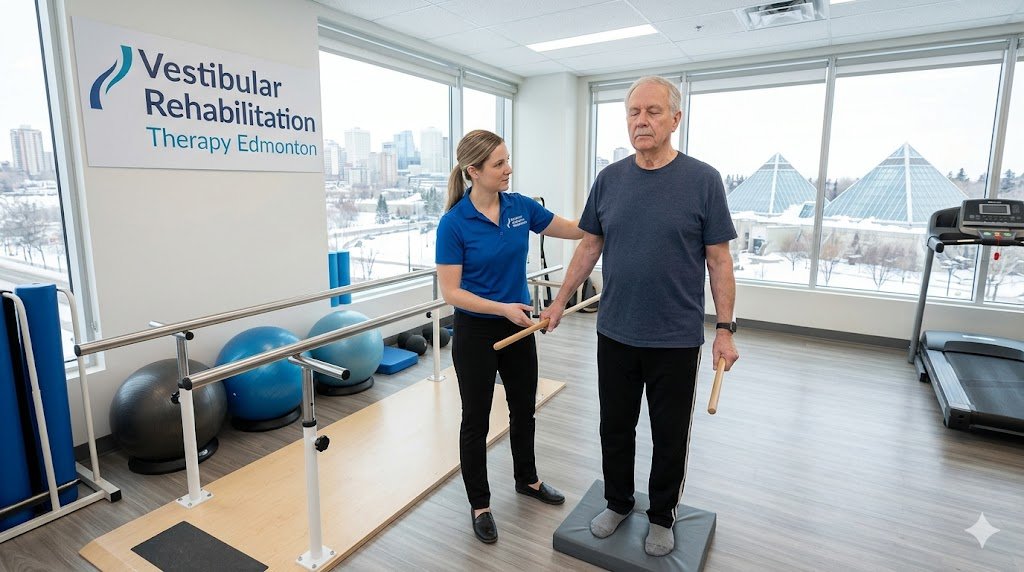
Feeling unsteady when walking may make you feel as if you are losing your balance, swaying from side to side, or having difficulty walking in a straight line.
Some people feel unsteady when turning their head, getting up from a chair, walking on uneven ground, or moving around in busy places.
This problem may happen because of changes in the inner ear, weak leg muscles, nerve problems, vision changes, or certain health conditions.
Vestibular Physiotherapy Edmonton helps people who feel dizzy, unsteady, or off balance during daily activities. Problems with the inner ear or vestibular system can cause symptoms such as vertigo, nausea, and difficulty walking or focusing. At Next Step Physiotherapy, we work with individuals who want to regain balance and move with more confidence. Our physiotherapists assess your symptoms and guide you through exercises that help improve stability and reduce dizziness in everyday life.
What Are the Common Causes of Feeling Unsteady When Walking?
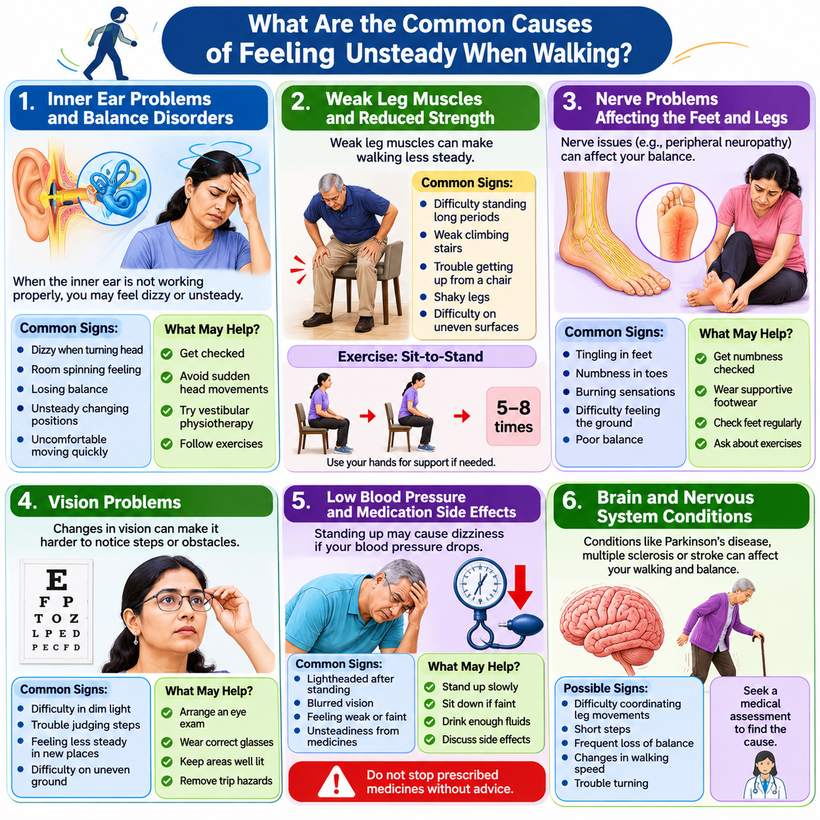
1. Inner Ear Problems and Balance Disorders
The inner ear plays an important role in helping you maintain balance. It sends information to your brain about your head position and movement.
When the inner ear is not working properly, you may feel dizzy or unsteady while walking.
One common condition is Benign Paroxysmal Positional Vertigo (BPPV). It may cause a spinning feeling when you turn your head, lie down, or get out of bed.
Common signs include:
- Feeling dizzy when turning your head.
- Feeling as if the room is spinning.
- Losing balance while walking.
- Feeling unsteady when changing positions.
- Feeling uncomfortable when moving quickly.
What may help?
- Get your balance and dizziness checked.
- Avoid sudden head movements if they trigger symptoms.
- Ask a physiotherapist whether vestibular rehabilitation is suitable.
- Follow specific exercises recommended after an assessment.
Vestibular physiotherapy may help people with certain inner ear and balance problems.
2. Weak Leg Muscles and Reduced Strength
Your leg muscles help you stand, walk, climb stairs, and maintain balance.
When these muscles become weak, you may find it harder to walk steadily. This may happen with ageing, reduced physical activity, long periods of rest, or after an injury.
Common signs include:
- Difficulty standing for long periods.
- Feeling weak while climbing stairs.
- Trouble getting up from a chair.
- Shaky legs while walking.
- Difficulty walking on uneven surfaces.
What may help?
Simple strength exercises may help improve leg strength.
Exercise 1: Sit-to-Stand
Steps:
- Sit on a stable chair.
- Keep your feet flat on the floor.
- Lean slightly forward.
- Slowly stand up.
- Sit down in a controlled way.
Suggested repetitions: 5–8 times.
Use your hands for support if needed.
3. Nerve Problems Affecting the Feet and Legs
Nerves in your feet help your brain understand where your legs are and how they are moving.
If these nerves are affected, you may have difficulty feeling the ground beneath your feet. This can make walking less steady.
Peripheral neuropathy is one condition that may affect these nerves. It may be linked to diabetes and other health conditions.
Common signs include:
- Tingling in the feet.
- Numbness in the toes.
- Burning sensations in the feet.
- Difficulty feeling the ground.
- Poor balance, especially in low light.
What may help?
- Get numbness or tingling checked by a healthcare professional.
- Wear comfortable and supportive footwear.
- Check your feet regularly if you have reduced sensation.
- Ask about exercises suited to your strength and balance.
4. Vision Problems
Your eyes help you understand your surroundings and judge distances while walking.
When your vision changes, it may become harder to notice steps, uneven floors, or objects in your path.
Common signs include:
- Difficulty walking in dim light.
- Trouble judging steps and distances.
- Feeling less steady in unfamiliar places.
- Difficulty walking on uneven ground.
What may help?
- Arrange an eye examination.
- Wear the correct glasses if prescribed.
- Keep walking areas well lit.
- Remove loose rugs and other trip hazards at home.
5. Low Blood Pressure and Medication Side Effects
Some people feel dizzy or unsteady when they stand up after sitting or lying down.
This may happen when blood pressure drops after changing positions. It is known as postural hypotension.
Certain medicines may also cause dizziness or affect balance.
Common signs include:
- Feeling lightheaded after standing up.
- Blurred vision.
- Feeling weak or faint.
- Unsteadiness after taking certain medicines.
What may help?
- Stand up slowly.
- Sit down if you feel faint.
- Drink enough fluids, unless your doctor has advised you to limit them.
- Discuss possible medication side effects with your doctor.
Do not stop prescribed medicines without medical advice.
6. Brain and Nervous System Conditions
Some conditions affecting the brain and nervous system may change the way you walk and maintain balance.
Examples include Parkinson’s disease, multiple sclerosis, and stroke.
Possible signs include:
- Difficulty coordinating leg movements.
- Short or shuffling steps.
- Frequent loss of balance.
- Changes in walking speed.
- Difficulty turning while walking.
These symptoms need medical assessment to identify the cause.
What Exercises May Help Improve Walking Balance?
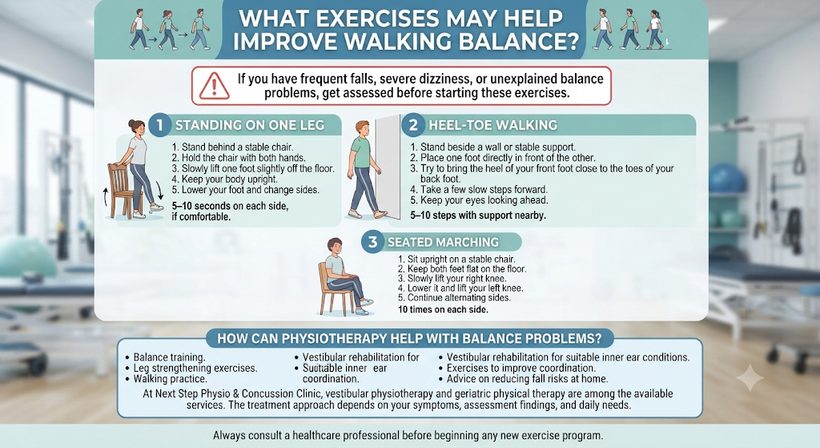
Balance exercises may help improve leg strength, body control, and confidence while walking. However, the right exercises depend on the reason you feel unsteady.
If you have frequent falls, severe dizziness, or unexplained balance problems, get assessed before starting these exercises.
1. Standing on One Leg
Steps:
- Stand behind a stable chair.
- Hold the chair with both hands.
- Slowly lift one foot slightly off the floor.
- Keep your body upright.
- Lower your foot and change sides.
Suggested practice: 5–10 seconds on each side, if comfortable.
2. Heel-to-Toe Walking
Steps:
- Stand beside a wall or stable support.
- Place one foot directly in front of the other.
- Try to bring the heel of your front foot close to the toes of your back foot.
- Take a few slow steps forward.
- Keep your eyes looking ahead.
Suggested practice: 5–10 steps with support nearby.
3. Seated Marching
Steps:
- Sit upright on a stable chair.
- Keep both feet flat on the floor.
- Slowly lift your right knee.
- Lower it and lift your left knee.
- Continue alternating sides.
Suggested repetitions: 10 times on each side.
Exercise safety: Keep a stable support nearby and have someone assist if needed. Stop if you feel dizzy, faint, or more unsteady.
How Can Physiotherapy Help With Balance Problems?
A physiotherapist may assess your walking pattern, leg strength, balance, and ability to change positions.
Based on the findings, your treatment plan may include:
- Balance training.
- Leg strengthening exercises.
- Walking practice.
- Vestibular rehabilitation for suitable inner ear conditions.
- Exercises to improve coordination.
- Advice on reducing fall risks at home.
At Next Step Physio & Concussion Clinic, vestibular physiotherapy and geriatric physical therapy are among the available services.
The treatment approach depends on your symptoms, assessment findings, and daily needs.
Frequently Asked Questions About Feeling Unsteady When Walking
1. Why do I feel unsteady when walking but not when sitting?
Walking requires your eyes, inner ear, muscles, and nerves to work together. If one of these systems is not working properly, you may feel unsteady while walking but feel normal when sitting.
2. Can inner ear problems cause difficulty walking?
Yes. Inner ear problems may affect your balance and cause dizziness, spinning sensations, or difficulty walking in a straight line.
3. What exercises help with balance problems?
Sit-to-stand, supported standing balance, heel-to-toe walking, and seated marching may help improve balance and leg strength. The right exercises depend on the cause of your symptoms.
4. When should I see a physiotherapist for balance problems?
Consider an assessment if you frequently lose your balance, feel unsteady while walking, have difficulty turning, or experience repeated falls. Sudden balance problems with possible stroke symptoms require emergency medical care first.
Review

Jaiganesh Ravindra Babu Registered Physiotherapist at Next Step Physio & Concussion Clinic

Jaiganesh graduated from Tamil Nadu Dr. MGR Medical University in 2002 with a Bachelor’s degree in Physiotherapy. His training included acute care, neurology, general orthopedics, and sports medicine.
He has worked with patients of different ages, including athletes, and has experience with various treatment techniques. He has also helped educate young physiotherapy graduates.
Book an Appointment
Feeling unsteady when walking may affect your confidence and make everyday activities difficult.
At Next Step Physio & Concussion Clinic, Edmonton, physiotherapy services include vestibular physiotherapy, balance training, and geriatric physical therapy.
An assessment may help identify the reason for your balance problems and guide your treatment plan.
 sammer.abbas
 wavetell.business