
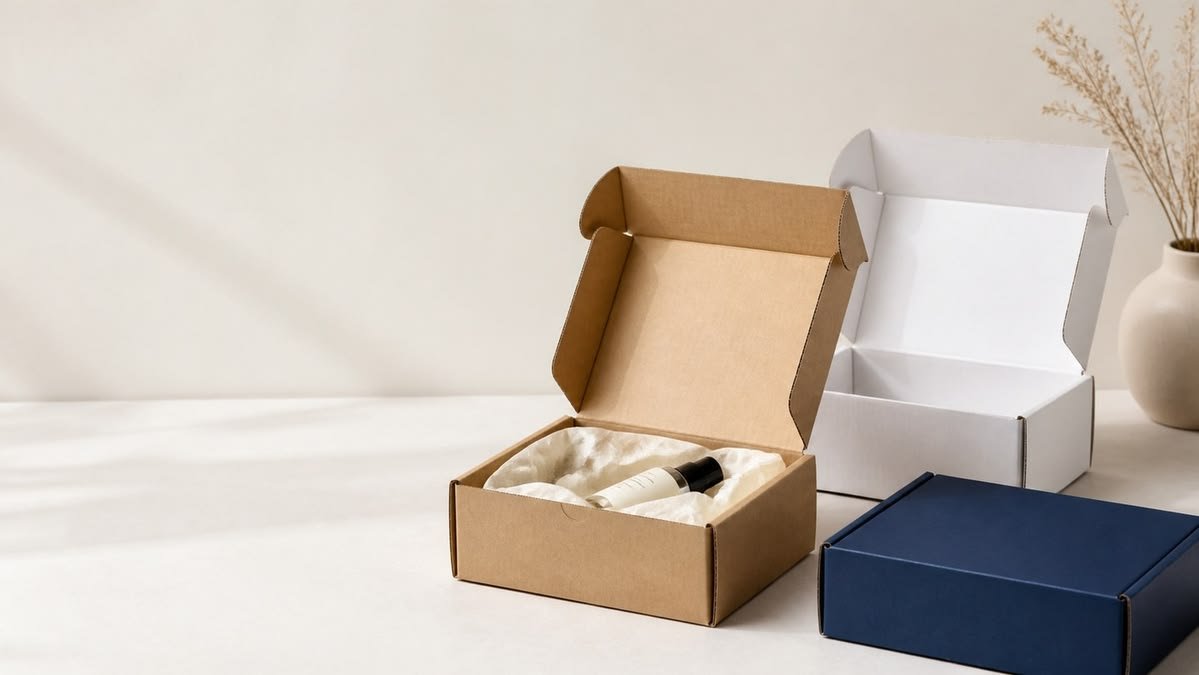
When a customer buys online, the shipping box is the first physical thing they see of your brand, and it is the only thing standing between the product and a long trip through sorting facilities, delivery vans, and doorsteps. A good box prevents damage, keeps shipping costs under control, and makes packing faster for the seller. A poor one leads to breakage, refunds, and unhappy reviews. This guide explains how shipping boxes work, what makes them protective, and how to choose the right one for your products.
Why the shipping box matters more in e-commerce
In a physical store, a product is handled by a few people before it reaches the customer. In e-commerce, a parcel can be scanned, conveyed, stacked, dropped, and tilted many times along the way. It may sit under other parcels in a truck or be tossed onto a belt. The box has to absorb vibration, compression, and impact without passing any of that to the product inside.
The box also affects the seller’s operations. A box that is easy to assemble and the right size for the product speeds up packing. One that is too large wastes material and costs more to ship, and one that is too small can bulge, split, or squash the contents. Getting the box right helps both protection and efficiency.
How corrugated cardboard protects products
Most shipping boxes are made of corrugated board, which consists of a rippled inner layer called the fluting, glued between flat outer layers called liners. The fluting acts like a series of small arches that resist crushing and cushion impact, while the liners add stiffness and give a surface for printing. This is why corrugated board is much stronger than a flat sheet of cardboard of the same weight.
The fluting comes in different profiles. Larger flutes, such as C-flute, offer more cushioning and stacking strength, which suits heavier or more fragile items. Smaller flutes, such as E-flute, give a thinner, smoother board that prints well and suits lighter products and retail-style mailers. Boards can also be single-wall, with one layer of fluting, or double-wall, with two layers, which adds considerable strength for heavy or delicate goods.
Suppliers often rate boxes by a few standard measures. Edge crush strength indicates how well the board resists pressure on its edges and relates to how much stacking weight a box can bear. Burst strength shows how much pressure the board can take before it ruptures. Asking a supplier for these ratings, rather than guessing based on thickness, helps you match the board to the product’s weight and shipping conditions.
Right-sizing: the link between box size, protection, and cost
Choosing the correct size is one of the most useful decisions a seller can make. Carriers commonly charge based on either actual weight or dimensional weight, which is calculated from the package’s dimensions, and they bill the higher of the two. An oversized box for a light product can therefore cost more to ship than the product’s weight would suggest. A box that fits closely reduces that cost.
Size also affects protection. When there is too much empty space, the product can move around, and the force of any impact is greater. When there is too little, the contents press against the walls, and a drop can transmit the shock straight to the item. The aim is a snug fit with enough room for cushioning on all sides, so the product stays suspended and protected.
Right-sizing also reduces waste. Using less cardboard and void fill lowers material costs and reduces the environmental footprint, which matters to many customers.
Choosing between box styles
Different box styles suit different situations. The table below provides a quick comparison before the details that follow.
| Box style | Best for | Protection level | Key consideration |
| Regular slotted carton | General products, bulk shipping | Moderate to high, depending on board | Inexpensive and ships flat |
| Mailer box | Branded e-commerce, light to medium items | Moderate | Polished look, printable inside and out |
| Die-cut box with insert | Specific fragile products at scale | High | Fits the product exactly, saves packing time |
| Double-wall carton | Heavy or delicate goods | Very high | Costs more and weighs more |
| Poly mailer | Clothing and soft goods | Low | Lightweight and cheap, poor impact protection |
Regular slotted cartons are the standard shipping box. They are inexpensive, ship flat, and work for a wide range of products. Mailer boxes, which fold up from a single piece and have a tuck-in or self-locking lid, are popular with online brands because they look more polished and can be printed on the inside and outside. They offer good protection for light to medium products and create a stronger unboxing impression. Die-cut boxes with built-in inserts can hold specific products firmly without extra void fill, which saves packing time at scale. Poly mailers are lightweight and cheap but offer little protection, so they suit only items that cannot be damaged by impact, such as clothing.
Many sellers combine styles, for example placing a branded gift box inside a plain corrugated shipper, so the product is both protected and nicely presented.
Cushioning and void fill
The box is only part of the protection. What goes inside it determines how well the product survives impacts. Common options include paper void fill, which is recyclable and absorbs light impacts; corrugated inserts and dividers that hold items in place; molded pulp trays shaped to fit specific products; and bubble wrap or air pillows for extra cushioning around fragile goods.
The best choice depends on the product and on how you want the customer to experience unboxing. Paper-based materials tend to be easier to recycle and look more natural, while plastic cushioning can be lighter and cheaper but is less welcome with environmentally minded buyers. Whatever you choose, the principle is the same: the product should not be able to touch the box’s walls, and it should not shift when the box is shaken.
Shipping candles: a practical example
Candles show why product-specific packaging matters. A glass-jar candle is heavy for its size, and the glass can crack on impact. A candle in a tin is more durable but can dent. Pillar and taper candles can snap or scuff. Wax can also soften in hot weather, which makes surfaces mark easily and can cause jar candles to shift or leak at the edges, while very cold conditions can make wax contract and pull away from the glass.
For these reasons, sellers usually look for small shipping boxes for candles that fit the jar closely, with corrugated dividers or paper wrap around each piece. A snug fit stops the jar from rattling, and dividers keep multiple candles from knocking together. Wrapping each jar in kraft paper or tissue prevents scuffs on the label and glass, and a layer of cushioning at the base protects against drops. If you ship in warm seasons or to hot climates, consider using insulating liners or choosing faster shipping options so the parcel spends less time in a hot vehicle.
The same thinking applies to other fragile goods, such as ceramics, skincare in glass bottles, and small home décor. Fit the box to the product, and cushion every side.
How the right box simplifies the delivery process
A well-chosen shipping box makes the whole fulfillment process smoother. When boxes are consistent in size, staff can pack faster and make fewer decisions. Standardized sizes also make it easier to stack and store inventory, to estimate shipping costs accurately, and to automate packing lines as order volumes grow.
Clear labeling space matters too. A flat, clean panel for the shipping label helps scanners read barcodes reliably, which reduces misrouted parcels. Handling marks such as “fragile” or “this side up” can help, though they do not guarantee careful treatment; the box and cushioning should be designed to withstand rough handling regardless.
Returns are another consideration. Boxes that are sturdy enough to be reused, or that include a resealable adhesive strip, make returns easier for customers and reduce the cost of replacement packaging.
Testing your packaging before you scale
Before committing to a large order, test your packaging with real products and realistic conditions. Pack a sample exactly as you would for a customer, then shake it, drop it from a typical handling height onto different faces and corners, and check for movement, damage, and crushed corners. Many carriers and industry groups publish standardized test procedures, such as those developed by ISTA, that simulate the stresses of parcel shipping, and these are worth reviewing if you ship fragile or high-value items.
It also helps to send a few test parcels through your actual carrier to a few addresses and see how they arrive. Real-world shipments reveal problems that bench tests can miss, such as a label peeling or a flap that opens in transit.
Sustainability in shipping packaging
Corrugated board is widely recycled and often contains recycled content, which makes it one of the more sustainable shipping materials. You can further reduce the footprint by right-sizing boxes, choosing FSC-certified board, using paper-based cushioning instead of plastic, and printing with water-based inks. Avoid mixing materials that are hard to separate, because a box with plastic windows or heavy coatings can be harder to recycle. If you make environmental claims, make sure your supplier can document them.
Working with a packaging supplier
When sourcing boxes, ask for physical samples, the board’s strength ratings, minimum order quantities, lead times, and whether boxes ship flat. Ask whether custom sizes and printing are available, and how color proofing is handled if branding matters to you. Brands comparing options can request quotes from suppliers such as The Premier Packaging, and it is sensible to collect offers from several companies before deciding.
Final thoughts
A shipping box is much more than a container. It protects the product through a rough journey, controls shipping costs through correct sizing, speeds up fulfillment, and shapes the customer’s first impression. Start by understanding your product’s weight, fragility, and shape; choose a board and style that suit it; cushion it properly; and test the result. That sequence leads to fewer damaged orders, lower costs, and happier customers.
 mark.twain
 atlanta.pools
 shumaila.batool