
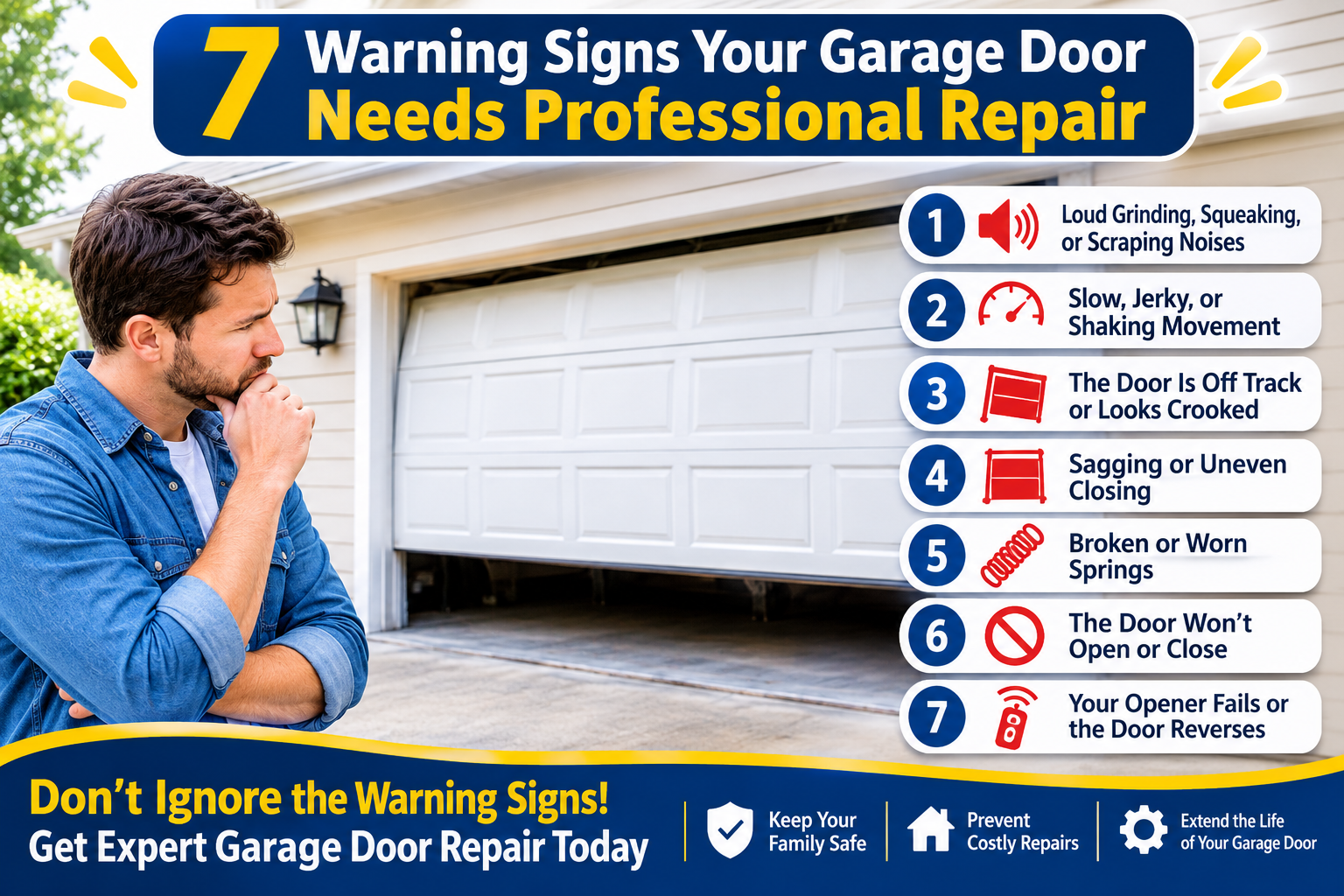
Your garage door is probably the largest moving object in your home. It opens and closes more than a thousand times a year, and it’s held up by springs under enough tension to cause serious injury. Because it works quietly day after day, most homeowners don’t notice a problem until the door fails, often at the worst possible moment.
Catching the warning signs early can save you hundreds of dollars and keep your family safe. Here are seven signs it’s time to call a professional for garage door repair, plus a few quick checks you can safely do yourself.
1. Loud Grinding, Squeaking, or Scraping Noises
A garage door should run with a steady, low hum. Grinding, screeching, or scraping means something is wearing out.
Common causes: dry hinges, worn rollers, loose hardware, or a straining motor.
A light squeak can often be fixed by lubricating the moving parts with a garage-door-specific lubricant (not WD-40, which attracts dust). But if the noise continues after lubrication, or you hear grinding from the springs or the garage opener motor, stop using the door and book an inspection. Persistent noise usually means parts are failing, not just dry.
2. Slow, Jerky, or Shaking Movement
If your door has started to move slowly, shudder, or stop and start while traveling, it’s under strain. Worn rollers, debris in the tracks, weakening springs, or an aging garage opener can all cause it.
This problem is easy to ignore because the door still works. But a struggling door forces the opener to work harder, shortening its life and leading to a more expensive repair later. A technician can find the root cause quickly, often before it damages other components.
3. The Door Is Off Track or Looks Crooked
Look at the tracks on both sides of your door. Do you see gaps, bent metal, or rollers popping out of the rails? An off-track door is one of the most serious problems you can have.
Never try to force an off-track door open or closed. It can fall suddenly, damage your vehicle, or injure someone. Even a small impact, like backing into the door, can knock the tracks out of alignment. This is a job for a professional, every time.
4. Sagging or Uneven Closing
When the door closes, does one side sit lower than the other? Do you see daylight along the bottom edge? Sagging usually points to stretched cables, unbalanced springs, or worn hinges.
Beyond looking bad, an uneven door leaves gaps that let in drafts, moisture, and pests, and it weakens your home’s security.
Try this balance test:
- Close the door and pull the emergency release cord to disconnect the opener.
- Lift the door by hand to about halfway.
- Let go carefully. A balanced door stays in place.
If it drops or shoots upward, the springs are out of balance. Don’t attempt to adjust them yourself. Call a professional.
5. Broken or Worn Springs
Springs do the heavy lifting, counterbalancing the door’s weight (often 150 pounds or more). Most springs last roughly 7 to 10 years, depending on how often you use the door.
Signs of a spring problem:
- A loud bang from the garage (the sound of a spring snapping)
- A visible gap in the spring coil
- A door that feels very heavy when lifted manually
- A door that won’t lift, or lifts only a few inches
Spring repair is the most dangerous DIY job in the garage. The tension stored in these springs can cause serious injuries, including broken bones and worse. Always leave spring replacement to a trained technician offering professional garage door repair.
6. The Door Won’t Open or Close
When your door refuses to move, don’t panic. Start with the basics:
- Replace the remote batteries
- Check that the opener is plugged in and the circuit breaker hasn’t tripped
- Make sure “vacation” or lock mode isn’t switched on
- Check that nothing is blocking the sensors or the path of the door
If none of these work, the cause may be a broken spring, a snapped cable, or a failed motor. If your car is trapped inside or the door is stuck open overnight, don’t wait. Call for emergency service so your home stays secure.
7. Your Opener Fails or the Door Reverses on Its Own
If your door starts to close and then goes back up, the safety sensors are usually the culprit. They sit near the bottom of the tracks and stop the door if something crosses their beam, protecting children, pets, and property.
Quick fix: wipe the sensor lenses clean and make sure both are aligned (the indicator lights should glow steadily).
If the problem keeps coming back, or your garage opener hums without moving the door, responds only sometimes to the remote, or has stopped working entirely, the issue may be in the circuit board, the limit settings, or the motor. Opener repairs involve electrical components, so contact a trusted garage opener company rather than attempting a fix yourself. If your opener is more than 10 to 15 years old, a technician can also tell you whether replacing it makes more sense than repairing it. Newer models offer better safety features, quieter operation, and smartphone control.
DIY vs. Professional Repair: Where to Draw the Line
Some maintenance is safe for homeowners. Other work should never be attempted without training and the right tools.
| Safe to DIY | Call a professional |
|---|---|
| Lubricating hinges, rollers, and springs | Spring or cable repair or replacement |
| Cleaning and realigning sensors | Off-track or bent tracks |
| Replacing remote batteries | Opener motor or circuit board problems |
| Tightening visible loose bolts | Damaged or broken door panels |
DIY attempts at high-risk repairs often cause injuries, void warranties, and end up costing more once a professional has to fix the mistake as well. Investing in expert garage door repair from the start is usually cheaper and safer.
How to Keep Your Garage Door Running Longer
A little routine care goes a long way:
- Look and listen monthly. Watch the door run and note any new noises or movement changes.
- Lubricate twice a year. Focus on rollers, hinges, and springs.
- Test the auto-reverse. Place a piece of wood on the ground in the door’s path. The door should reverse when it touches it.
- Check the weather seal. Replace cracked or worn rubber at the bottom of the door.
- Schedule an annual tune-up. A professional can spot wear you can’t see and adjust your door and garage opener before small issues become failures.
Don’t Wait for a Breakdown
Garage doors rarely fail without warning. The noises, delays, sagging, and sensor glitches described above are your door’s way of asking for help. Addressing them early keeps repair costs down, protects your family and vehicles, and extends the life of your door and opener.
If you’ve noticed any of these seven signs, don’t wait for a bigger problem. As an experienced garage opener company, our team provides fast, reliable garage door repair and expert opener service.
 Admin