
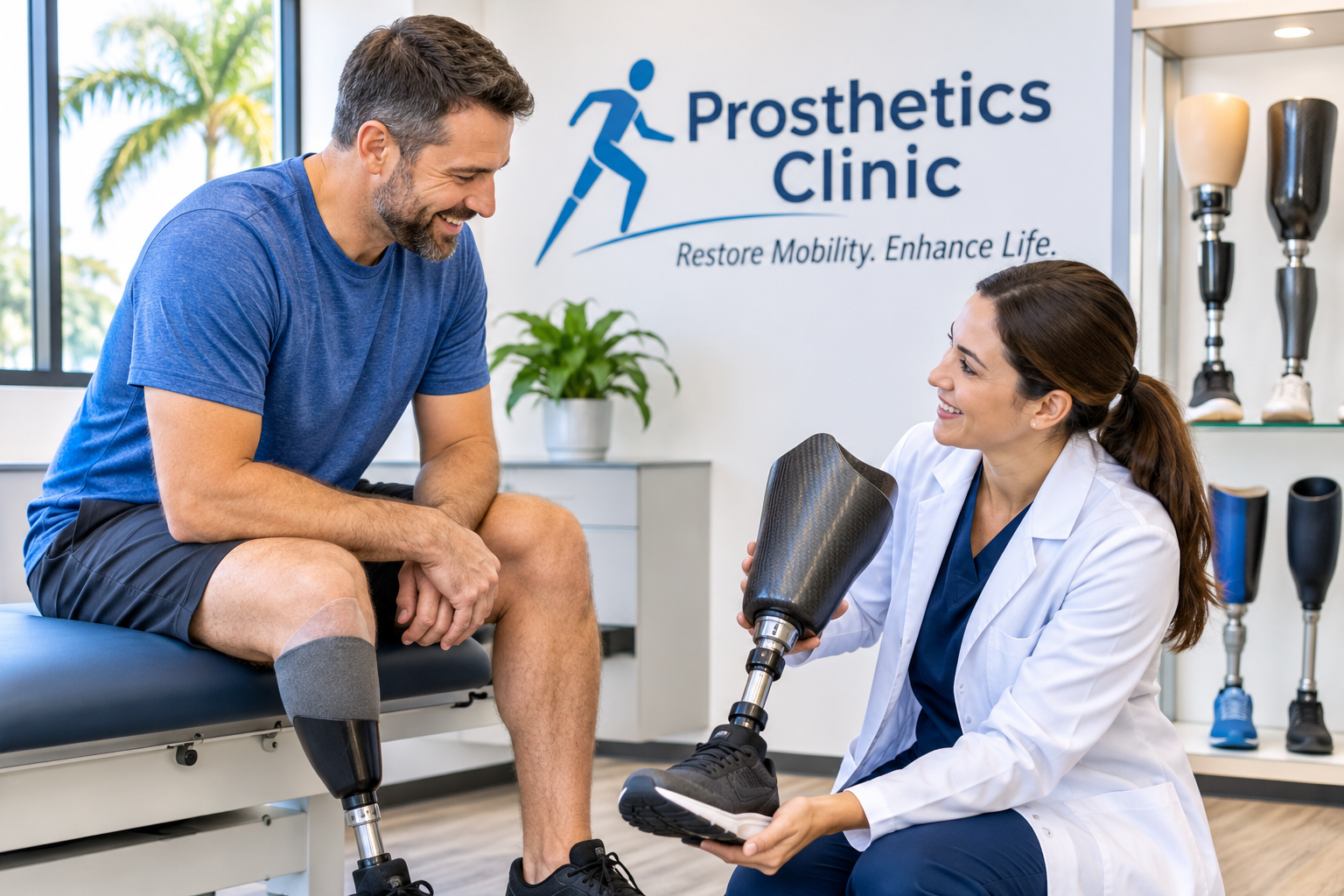
Losing a limb or needing a new prosthesis is a big step, and the clinic you choose will shape your comfort, mobility, and confidence for years. A well-fitted prosthesis can help you walk, work, and enjoy daily life. A poor fit can cause pain, skin problems, and frustration.
With several options across Southwest Florida, how do you know which one is right for you? This guide walks through what to look for so you can find the best prosthetics clinic Fort Myers has to offer.
Why Your Choice of Prosthetics Clinic Matters
A prosthesis is not an off-the-shelf product. Every residual limb is different in shape, length, and sensitivity, and your lifestyle, activity level, and goals are unique too. The right clinic treats the prosthesis as a long-term care relationship, not a one-time purchase.
A good clinic will take time to understand your needs, design a custom device, and support you through fitting, training, and future adjustments. Your body changes over time, so ongoing care matters as much as the first fitting.
1. Check the Prosthetist’s Credentials
The prosthetist is the clinician who evaluates you, designs the device, and fits it. Look for:
- Board certification. In the United States, prosthetists are typically certified through the American Board for Certification in Orthotics, Prosthetics & Pedorthics (ABC) or the Board of Certification/Accreditation (BOC).
- Florida licensure. Florida requires licensing for practitioners, so confirm it is current.
- Experience with your amputation level. Needs differ for a partial foot, below-knee, above-knee, or upper limb amputation. Ask how many patients with your situation the prosthetist treats.
Don’t hesitate to ask about training and experience. A confident, qualified provider will be glad to answer.
2. Look for a Full Range of Services
The best clinics offer more than a single type of device. Look for a team that can handle:
- Initial evaluation and consultation
- Custom design and fabrication
- Fitting, alignment, and adjustments
- Repairs and maintenance
- Replacement and upgrades as your needs change
Clinics with an in-house fabrication lab often have a real advantage. When a repair or adjustment is needed, they can usually turn it around faster, which means less time without your prosthesis.
It also helps if the clinic works with a wide range of devices, from basic mechanical components to advanced options like microprocessor-controlled knees and myoelectric arms or hands.
3. Ask About Experience With Above-Knee Amputations
If you have had a transfemoral (above-knee) amputation, the stakes are higher. Because the knee joint is replaced, the prosthesis has to provide stability, control, and a natural walking pattern. That takes careful component selection, precise socket fitting, and skilled alignment.
Not every clinic has the same depth of experience here. When researching prosthetics above the knee, ask potential clinics:
- Which knee components do you offer, such as mechanical, hydraulic, or microprocessor knees?
- How do you decide which knee suits my activity level?
- What socket designs do you use, and how do you check comfort and suspension?
- What gait training or physical therapy support do you provide?
A clinic that can explain these choices in plain language and match them to your goals is a good sign.
4. Consider the Technology and Fitting Process
Modern prosthetic care has come a long way. Many clinics now use digital tools such as 3D scanning to capture the shape of the residual limb accurately, which can improve socket fit and reduce the number of visits needed.
During your first consultation, pay attention to how the clinic works:
- Do they listen to your goals and daily routine?
- Do they explain your options and the trade-offs between them?
- Do they involve you in decisions rather than simply handing you a device?
The socket is the most important part of any prosthesis. A well-made socket distributes pressure evenly and feels secure, while a poor one leads to blisters, pain, and avoidance of the device altogether.
5. Prioritize Patient-Centered Care and Rehabilitation Support
Getting a prosthesis is only the beginning. Learning to use it takes time, practice, and guidance. The best clinics support the whole journey:
- Gait training to help you walk safely and efficiently
- Coordination with physical and occupational therapists
- Education on residual limb care, including skin checks, hygiene, and sock or liner management
- Connections to amputee support groups and community resources
Emotional support matters too. Adjusting to limb loss is a physical and personal process, and a caring, patient team can make a real difference in your confidence and progress.
6. Understand Insurance, Costs, and Paperwork
Prosthetic care can be expensive, so understanding costs early prevents surprises. Ask the clinic:
- Which insurance plans do you accept, including Medicare and Medicaid?
- Do you handle prior authorizations and documentation?
- What will my estimated out-of-pocket cost be?
- What is included, such as follow-up visits, adjustments, and repairs?
Coverage rules vary by plan and by medical need, and many plans require a physician’s prescription and supporting records. A clinic with experienced administrative staff can take much of this burden off your shoulders. Always confirm details with your insurer as well.
7. Read Reviews and Ask for Real Outcomes
Patient reviews on Google and other platforms can tell you a lot about communication, wait times, comfort, and follow-up care. Look for patterns rather than single comments. Consistent praise for responsiveness and fit is a good sign, and so are thoughtful replies from the clinic to criticism.
You can also ask whether the clinic can share patient outcomes or connect you with current patients. Hearing from someone who has been through the process is often more helpful than any brochure.
8. Ask About Follow-Up Care and Maintenance
Your body and your prosthesis will both change over time. Weight changes, muscle shifts, and normal wear mean your device will need regular attention. Before committing, ask:
- How often are follow-up visits scheduled?
- How quickly can I get an appointment if something feels wrong?
- What is the typical turnaround time for repairs?
- Is there support for urgent issues?
Reliable follow-up care keeps small problems from becoming bigger ones and helps your prosthesis last longer.
Checklist: Questions to Ask Before You Choose
Bring these to your first consultation:
- Is my prosthetist board-certified and licensed in Florida?
- How much experience do you have with my type of amputation?
- Do you fabricate and repair devices on-site?
- What technology and components do you offer?
- Do you provide or coordinate gait training and rehabilitation?
- Which insurance plans do you accept, and will you handle approvals?
- What does follow-up care include, and how fast can I be seen?
- Can I speak with other patients or see outcomes?
Final Thoughts
Choosing a prosthetics clinic is a personal decision, and the right fit is about more than location. Look for certified professionals, a full range of services, modern technology, strong rehabilitation support, clear insurance help, and reliable follow-up care. Take your time, ask questions, and trust your instincts during the consultation.
If you are ready to take the next step, schedule a consultation with a local provider and see how their team approaches your goals. With the right partner, you can move forward with comfort, confidence, and independence.
Frequently Asked Questions
How do I find a good prosthetist in Fort Myers?
Start with referrals from your surgeon, physician, or physical therapist, then compare clinics based on credentials, services, reviews, and how comfortable you feel during a consultation.
How long does it take to get a prosthetic leg?
Timelines vary. After healing and an evaluation, the process of casting or scanning, fabrication, and fitting often takes several weeks, followed by adjustments and training.
How often does a prosthesis need adjusting?
Regular check-ups are recommended, and you should call sooner if you notice pain, skin irritation, or changes in fit.
 william.anderson