
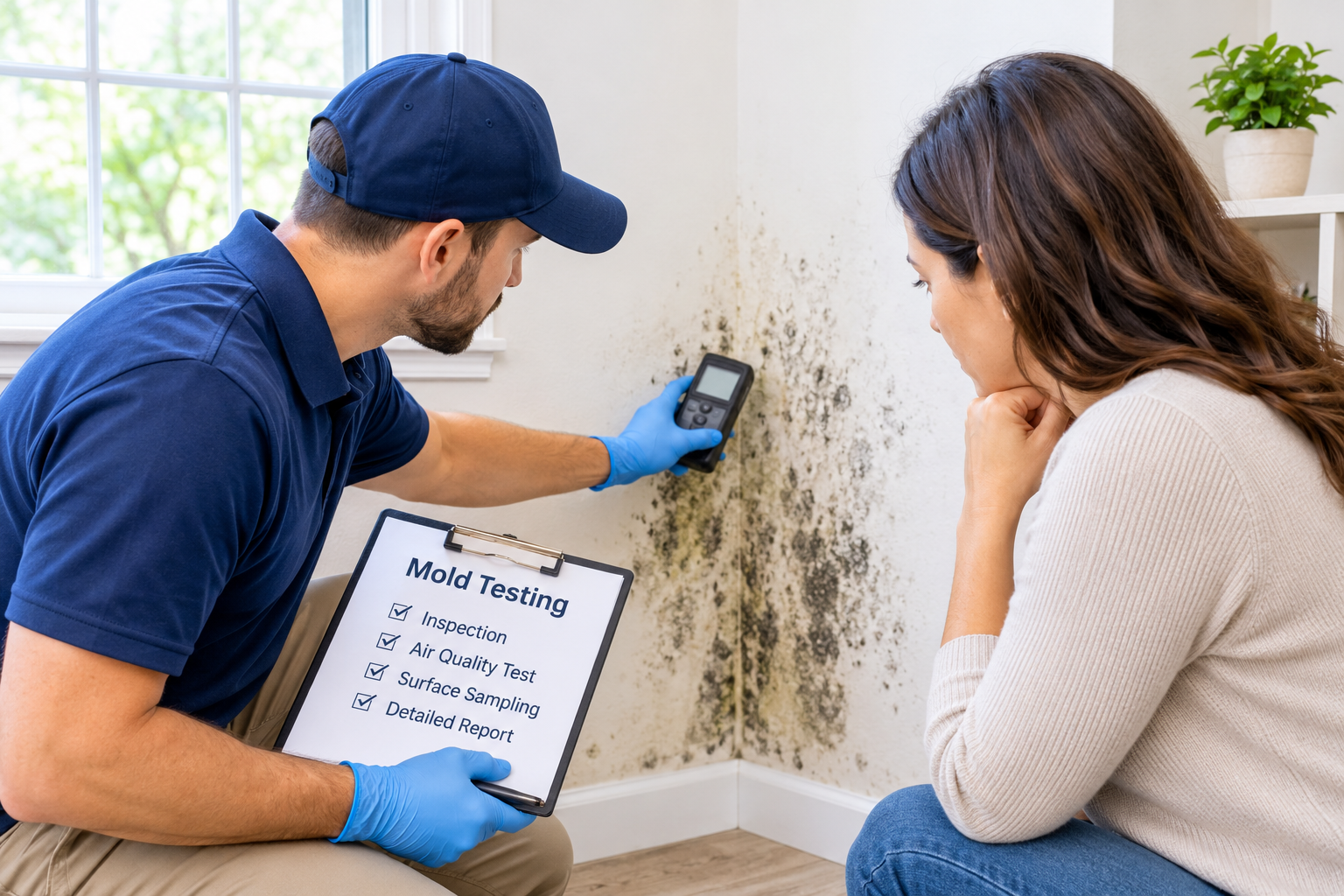
You notice a musty smell in the hallway, a water stain spreading across the ceiling, or a patch of discoloration behind the bathroom vanity. Maybe family members have developed unexplained coughing, sneezing, or itchy eyes. Whatever the sign, you suspect mold, and you need answers fast.
Knowing how to choose a mold testing company can save you money, stress, and time. The wrong provider can miss hidden growth, produce unclear results, or push you into expensive services you may not need. The right one gives you accurate data, a clear report, and an honest path forward.
This guide walks you through what to look for, what to ask, and which red flags to avoid.
Why Professional Mold Testing Matters
Store-bought mold test kits are tempting because they’re cheap and quick. The problem is that mold spores are naturally present in indoor and outdoor air, so a basic kit will almost always show “something.” It can’t tell you how much mold is present, where it’s coming from, or whether it’s a real problem.
Professional testing is different. A trained inspector combines a visual inspection, moisture readings, and lab-analyzed samples to identify the type of mold, the concentration, and, most importantly, the source of moisture feeding it. Without fixing the moisture source, mold will return, no matter how thoroughly it’s cleaned.
Professional testing is worth considering when you see or smell mold, after flooding or a plumbing leak, when someone in the home has unexplained respiratory symptoms, or before buying or selling a property.
1. Check Certifications and Licensing
Credentials are your first filter. Look for inspectors certified by recognized organizations such as the IICRC (Institute of Inspection, Cleaning and Restoration Certification) or the ACAC (American Council for Accredited Certification), which offers designations like Certified Mold Inspector.
Licensing requirements vary by state. Some states require mold assessors to be licensed, while others have no formal rules. Check your state’s requirements, and don’t be shy about asking to see proof of both certification and insurance. A reputable mold testing company will happily provide it.
2. Look for Independence and Avoid Conflicts of Interest
This is one of the most overlooked factors. Some companies offer both testing and removal. That isn’t automatically a problem, but it can create a conflict of interest if the same company profits from the results it reports.
Many homeowners prefer an independent inspector for testing, then bring in separate mold remediation experts for the cleanup. This setup gives you an unbiased assessment and lets you compare remediation quotes against a neutral written protocol.
If you do hire one company for both, ask how they ensure objectivity. Ideally, they’ll have a clear process, such as independent lab analysis and post-remediation verification testing.
3. Evaluate Experience and Testing Methods
Experience matters because mold behaves differently depending on climate, building materials, and moisture conditions. Ask how long the company has been operating and how many residential inspections they’ve completed.
A thorough inspection usually includes:
- Visual inspection of the attic, basement, crawl spaces, HVAC system, and areas with past water damage
- Moisture mapping using moisture meters and, in many cases, thermal imaging cameras
- Air sampling to measure airborne spore levels compared with outdoor baseline samples
- Surface sampling (swab, tape lift, or bulk samples) to identify specific mold types on affected materials
Ask which accredited laboratory they use for analysis. Reputable labs follow standardized procedures, which makes results more reliable.
4. Know What a Quality Report Looks Like
The report is the real product you’re paying for. A vague, one-page summary isn’t enough. A professional mold inspection report should include:
- A description of the areas inspected and the methods used
- Photographs of problem areas
- Moisture readings and the suspected moisture source
- Lab results listing mold types and spore concentrations
- Plain-language explanations of what the results mean
- Clear, written recommendations for next steps
Ask for a sample report before you hire. If the company can’t or won’t provide one, consider that a warning sign. Also ask about turnaround time. Lab results typically take a few business days, though rush options are often available.
5. Read Reviews and Ask for References
Online reviews on Google, Yelp, Angi, and the Better Business Bureau give you a quick look at a company’s reputation. Look past the star rating and read the details. Do customers mention clear communication, punctuality, and easy-to-understand reports? Do any reviews describe pressure tactics or surprise charges?
Ask for a few recent references, especially from homeowners with a similar type of property. A confident company will have no trouble connecting you with satisfied customers.
6. Understand Pricing and What’s Included
Professional mold testing costs vary based on the size of your home, the number of samples taken, the testing methods used, and your location. Many residential inspections fall somewhere in the range of a few hundred dollars up to $1,000 or more for larger homes with extensive sampling, though prices differ widely by region.
Rather than choosing the cheapest option, compare what each quote includes:
- Number and type of samples
- Laboratory fees
- Written report and consultation
- Moisture assessment
- Any follow-up or re-testing
An unusually low price may mean limited sampling or a thin report. An unusually high price isn’t a guarantee of quality either. Get at least two or three written quotes so you can compare.
7. Ask the Right Questions Before You Hire
A few well-chosen questions will tell you a lot about a provider. Before signing anything, ask:
- Are you certified, licensed (where required), and insured?
- Do you perform both testing and remediation? How do you handle conflicts of interest?
- What testing methods will you use in my home?
- Which lab will analyze the samples, and is it accredited?
- How soon will I receive results and a written report?
- Can I see a sample report?
- Do you provide guidance on next steps, including how to find qualified remediation professionals?
Pay attention not only to the answers but to how they’re delivered. Good inspectors explain things clearly and patiently.
Red Flags to Watch For
Some warning signs should make you pause:
- High-pressure sales tactics, such as urging you to book remediation immediately
- No proof of credentials or insurance
- Guaranteeing mold-free results without testing or follow-up verification
- Vague or verbal-only findings with no written report
- Fear-based language that exaggerates health risks to close a sale
- Prices far below everyone else’s, which may signal cut corners
What Happens After Testing?
If results show elevated mold levels or hidden growth, the next step is remediation. At that point, you’ll want qualified mold remediation experts who follow industry standards, such as containment, air filtration, safe removal of affected materials, and moisture correction. Using your inspector’s report as a guide helps ensure the scope of work matches the actual problem.
If results come back normal, the report still has value. It gives you peace of mind and a baseline for future comparison, and it may highlight moisture risks worth fixing before they become mold problems.
Final Thoughts
Choosing the right mold testing company comes down to a handful of factors: credentials, independence, thorough methods, a clear report, solid reviews, and transparent pricing. Take your time, ask questions, and compare more than one provider. A little diligence at the start protects your home, your budget, and your family’s health.
If you suspect mold in your home, don’t wait for it to spread. Contact a trusted mold testing company today to schedule a professional inspection and get clear, reliable answers.
 Admin
 Published