
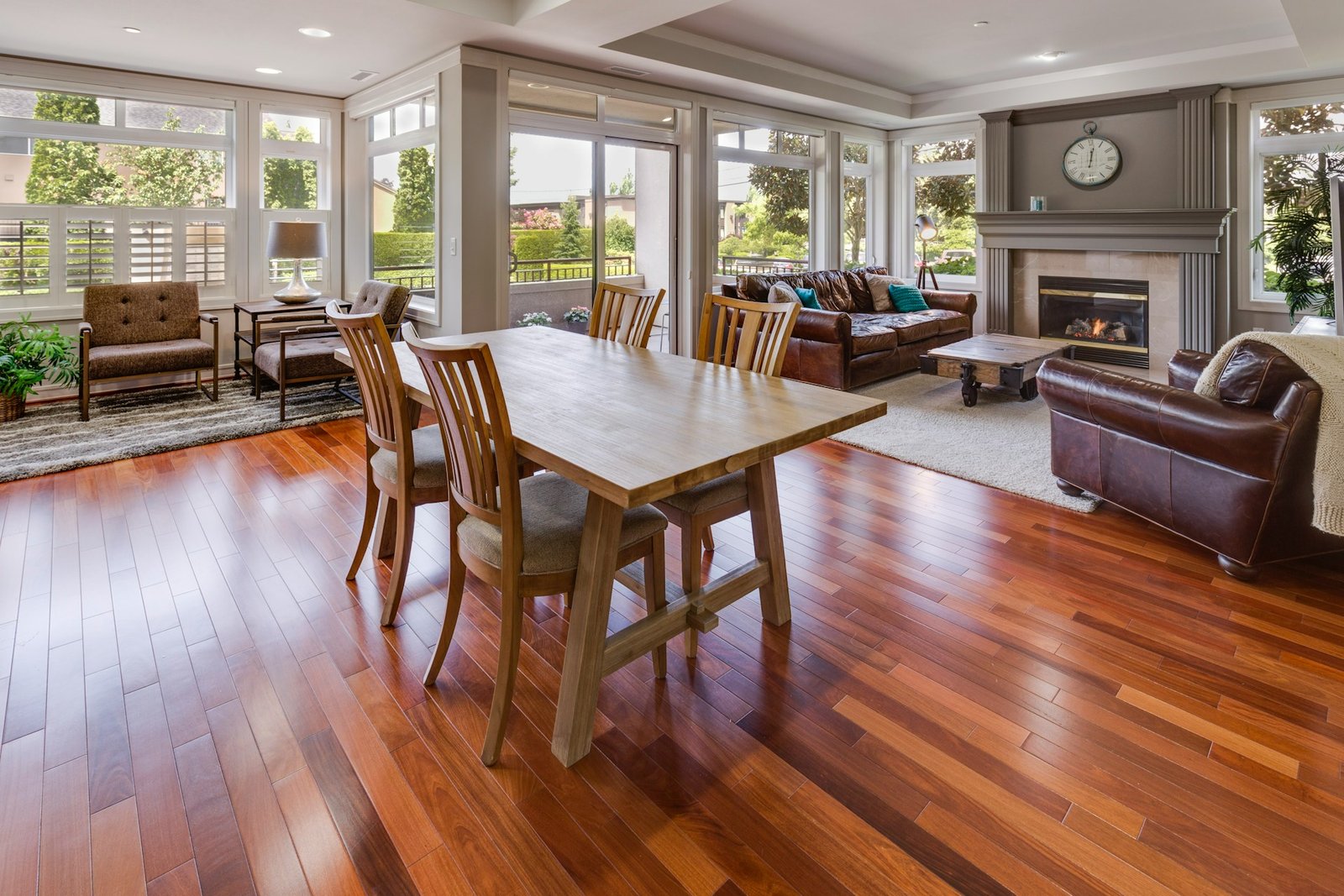
Flooring is one of the highest-impact and longest-lasting decisions a homeowner makes. The right floor transforms a room’s character, durability, and ease of maintenance. The wrong floor — even if it looks acceptable initially — creates problems that compound over years: it wears badly, it is difficult to clean, it looks dated quickly, or it simply does not feel right underfoot. This guide gives you a clear framework for choosing the right flooring for every room, at every budget level.
Flooring Options: The Complete Comparison
| Flooring Type | Best Rooms | Key Consideration |
| Solid hardwood | Living room, bedroom, hallway | Beautiful and long-lasting but sensitive to moisture — avoid in kitchens and bathrooms |
| Engineered wood | Any room including kitchen | Most popular choice — stable, warm, available in wide planks |
| Luxury Vinyl Tile (LVT) | Kitchen, bathroom, hallway | Completely waterproof, warm underfoot, excellent durability |
| Porcelain / ceramic tile | Kitchen, bathroom, utility, hallway | Most durable and waterproof — cold underfoot without underfloor heating |
| Carpet | Bedroom, living room | Warm, quiet, comfortable — avoid in high-traffic or wet areas |
| Laminate | Budget living room and bedroom | Cost-effective but hollow sound — LVT usually a better investment |
The Case for Consistent Flooring Throughout
One of the most effective space-expanding design decisions is using the same flooring material throughout an open-plan area or across multiple connected rooms. Visual continuity eliminates the interruptions that break a floor plan into perceived smaller units. Wide-plank engineered oak or large-format LVT running from hallway through living room and into kitchen creates a sense of flow and spaciousness that no amount of decoration can replicate. The cost difference between consistent flooring and mixed flooring is minimal — the visual benefit is significant.
Flooring Costs: What to Budget
| Flooring Type | Approximate Cost (Supply and Fit) |
| Solid hardwood | £60-£120 per m2 |
| Engineered wood | £35-£90 per m2 |
| Luxury Vinyl Tile (LVT) | £25-£60 per m2 |
| Porcelain tiles | £30-£80 per m2 |
| Carpet | £15-£50 per m2 |
| Laminate | £15-£35 per m2 |
For flooring inspiration that demonstrates how different materials, widths, and finishes affect a room’s character — with guidance on which floors suit which spaces aesthetically as well as practically Decor Luxury Home offers a quality-focused perspective on flooring as a foundational design decision rather than simply a practical one.
For professional flooring installation whether engineered wood, LVT, tiling, or carpet fitting — Guild of Handymen connects homeowners with experienced fitters who ensure a high-quality result that maximises the longevity and appearance of the chosen floor.
Good to Know: Underfloor heating transforms the experience of tiled and stone floors — surfaces that feel cold underfoot without it. If you are laying new tiles in a bathroom or kitchen, installing electric underfloor heating at the same time adds minimal cost to the overall project and a significant improvement to daily comfort.
Q: What is the best flooring for the whole house?
A: Engineered wood or LVT are the two most versatile whole-home flooring options. Engineered wood provides warmth, natural character, and durability across living rooms, bedrooms, and hallways. LVT extends into kitchens and bathrooms where wood is vulnerable to moisture. Running one material consistently throughout creates the most cohesive, spacious result.
Q: What flooring adds the most value to a home?
A: Real or engineered hardwood flooring consistently adds the most value — buyers perceive it as a quality indicator and it improves the visual quality of every room it is in. LVT in kitchens and bathrooms is increasingly valued for its practical durability. For guidance on how flooring choices integrate with overall interior design to maximise both value and daily enjoyment, LifeLine Home Style is an excellent starting point.
 Admin
Admin