
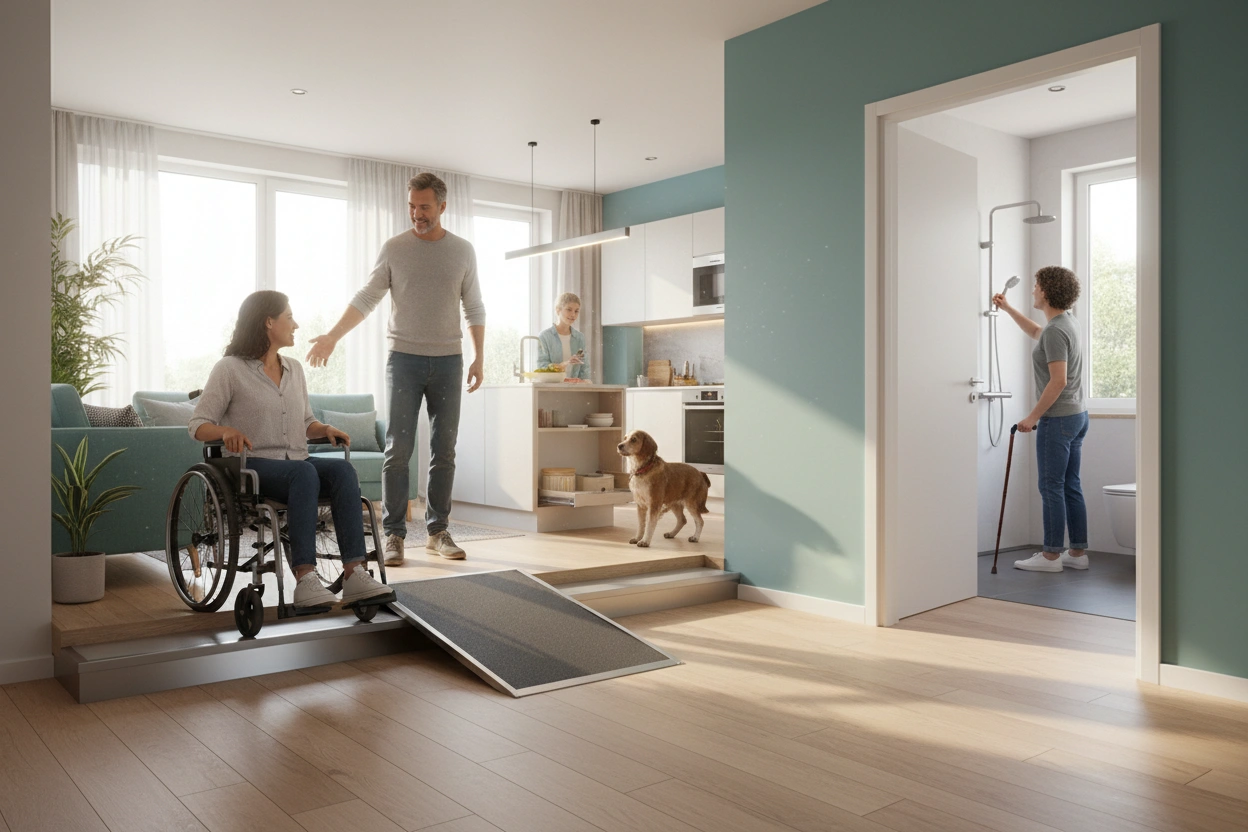
Finding a suitable rental home involves considering comfort, accessibility and everyday safety. For tenants with disabilities, certain property features may need adjustments to support independent living. Special accommodations for disabilities can include physical modifications or changes to tenancy arrangements. Understanding available options, approval requirements, and responsibilities helps tenants and landlords work together to create accessible and comfortable living spaces.
Common Modifications That Improve Accessibility
Accessibility requirements vary depending on a tenant’s mobility, daily activities and property layout. Some modifications involve minor fittings, while others require professional assessment and installation.
Common adjustments include:
- Bathroom Grab Rails: Install secure rails near toilets and showers for added support.
- Entrance Ramps: Provide suitable ramp access for wheelchair users and people with limited mobility.
- Accessible Fixtures: Fit lever-style taps and door handles for easier operation.
- Improved Lighting: Install brighter lighting or visual alerts to support visibility and awareness.
- Clear Pathways: Adjust furniture arrangements or widen doorways where feasible to improve movement.
These special accommodations for disabilities should reflect individual requirements while maintaining appropriate safety standards and property conditions.
Discussing Accessibility Needs With Landlords
Tenants can start by explaining which areas of the property need adjustments and how the proposed changes would improve accessibility. Written requests help document requirements and proposed solutions. An occupational therapist may also recommend modifications suited to individual circumstances and the property’s layout.
Landlords and property managers can review requests, discuss installation arrangements and consider relevant property requirements. Open communication helps establish practical solutions, including suitable materials, professional assistance and reasonable timelines. Written agreements clarify responsibilities throughout the modification process.
Understanding Permissions, Costs and Legal Requirements
Rental modifications in Australia are subject to applicable tenancy legislation and disability discrimination protections. Requirements vary between states and territories, particularly regarding landlord consent, installation expenses and restoration obligations.
Before arranging modifications, tenants should consider the following:
- Written Permission: Confirm whether the proposed alteration requires the landlord’s approval.
- Installation Costs: Establish who will cover materials, professional services and ongoing maintenance.
- Legal Requirements: Check relevant state or territory tenancy rules and applicable discrimination laws.
- Property Restoration: Clarify whether modifications must be removed when the tenancy ends.
- Financial Assistance: Explore available disability support programmes and eligibility for modification funding.
Local tenancy authorities and disability advocacy services can guide you on procedures and your rights.
Planning Modifications for Long-Term Comfort
Effective modifications should support everyday activities while meeting appropriate building and safety requirements. Tenants and landlords can agree on installation schedules, qualified contractors and maintenance responsibilities. Keeping written approvals, quotations, and professional recommendations helps maintain clear records throughout the tenancy.
Accessibility needs may change over time, making periodic reviews valuable. Tenants can discuss additional adjustments when their circumstances change. Regular communication supports suitable property arrangements and helps ensure modifications remain practical, safe and appropriate for continued independent living.
Conclusion
Accessible rental housing supports independence, comfort and participation in everyday life. Suitable modifications, clear agreements and an understanding of legal responsibilities help tenants and landlords make informed decisions. Approaching accommodation disability requirements through respectful communication and careful planning can create living environments that better reflect individual needs. Appropriate adjustments can make rental homes more accessible while supporting positive tenancy relationships.
 Heritage Route Travels